Understanding Viscometers: Functions, Types, and Working Principles in the Laboratory
In the worlds of chemical manufacturing, pharmaceuticals, and food processing, liquid consistency is a crucial parameter. Have you ever wondered why engine oil has specific viscosity codes, or why tomato sauce must have the exact right texture—not too runny and not too solid?
The answer lies in viscosity. The primary instrument used to measure this parameter in the laboratory is known as a Viscometer. This article will explore the functions, types, and working principles of viscometers in material analysis in depth.
What Is a Viscometer?
Simply put, a viscometer is a laboratory instrument used to measure the viscosity of a fluid (liquid). Viscosity itself is a measure of a liquid's resistance to flow or internal friction.
The higher the viscosity, the "thicker" the liquid (e.g., honey). Conversely, the lower the viscosity, the more easily the liquid flows (e.g., water). Understanding this property is vital for Quality Control (QC) and product research.
Primary Functions of Viscometers in Various Industries
The use of a viscometer is not limited to a single field. Its function is vital to ensuring product quality standards are maintained:
- Pharmaceutical Industry: Ensures syrups, ointments, or creams have the correct texture so that active ingredients can be properly absorbed by the body. This also relates to testing standards in educational and research institutions. For example, positive initiatives can be seen when the Pharmacy Research Lab at UIN Maliki Malang opened sample testing services to outside parties, demonstrating the importance of public access to precision testing tools.
- Food & Beverage Industry: Controls the texture of sauces, yogurt, liquid chocolate, and batters to ensure consistency in every package.
- Automotive & Petrochemical Industry: Measures the thickness of lubricant oils to ensure engines function optimally at different temperatures.
Types of Viscometers and How They Work
There are various methods to measure viscosity, and each type of viscometer utilizes different physical principles. Here are the most common types found:
1. Ostwald Viscometer (Capillary)
This is the most classic type. It works by utilizing gravity. Liquid is allowed to flow through a U-shaped glass capillary tube. The time it takes for the liquid to travel a certain distance is converted into a viscosity value.
- Advantage: Inexpensive and accurate for low-viscosity liquids (such as water or solvents).
2. Rotational Viscometer
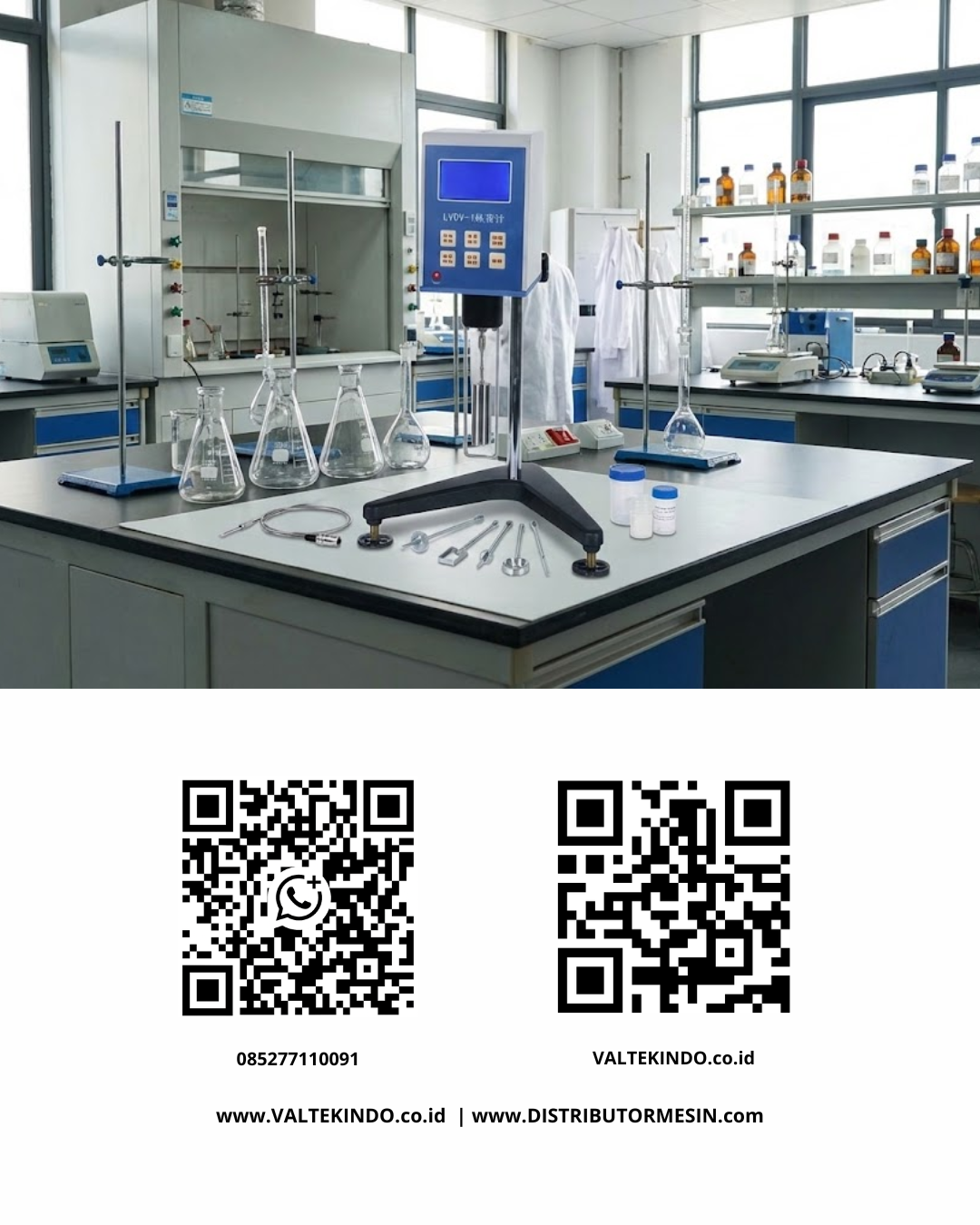
This type is very popular in modern laboratories due to its flexibility. It works by rotating a spindle submerged in the liquid. The device measures the torque or force required to rotate the spindle. The thicker the liquid, the more force is required.
This technology continues to evolve into digital versions capable of providing real-time data regarding fluid behavior, both Newtonian and Non-Newtonian. For researchers needing in-depth technical data on this instrument, studying viscometer specifications can provide insight into advanced features such as automatic RPM settings and data logging capabilities.
3. Falling Ball Viscometer
This principle uses Stokes' Law. A ball with a specific density and size is dropped into a tube containing the sample liquid. The time it takes for the ball to fall to the bottom of the tube is measured to determine its viscosity.
4. Vibration Viscometer
This measures the damping oscillation of an electrostatic resonator submerged in the fluid. This type is often used in inline industrial processes (directly in production pipes) because of its fast readings and durability against harsh process conditions.
The Relationship Between Viscosity and Production Processes
Understanding viscosity isn't just about numbers in a lab; it's about production efficiency. Fluid flow characteristics significantly affect how factory machinery operates, especially during the filling stage.
If a liquid is too viscous but the machine is set for thin liquids, blockages or volume inaccuracies will occur. Conversely, liquids that are too thin can cause leaks or splashing.
Read also: Chemical Liquid Filling Challenges and Automated Machine Solutions
Conclusion
The viscometer is a fundamental instrument that bridges the gap between chemical formulation in the laboratory and the reality of mass production. By understanding the correct working principles and types of viscometers—whether capillary, rotational, or vibrational—laboratories can provide accurate data to guarantee the quality of the final product that reaches the consumer.
The selection of the right tool must always be based on the type of sample being tested, the viscosity range, and the regulatory standards applicable to the relevant industry.
Optimize Your Industry Today!
Achieve production efficiency and the highest quality standards with a trusted industrial machinery provider. Explore our wide selection of premium processing and testing equipment at:
Website : valtekindo.co.id
Wesbite : distributormesin.com
Consult your technical needs with our expert sales team:
WhatsApp 1: +62 852-2211-0091
WhatsApp 2: +62 852-7711-0091

Admin
AuthorAdmin is a writer on the Valtekindo website, providing informative content about High Quality Industrial Machinery and Testing Machines.
Related post:
- Pharmaceutical Factory Production Escalation Strategy: Why Investing in an Automatic Capsule Filling Machine is the Most Crucial Business Decision
- High-Precision Wire Cut EDM Technology in 2026: The Ultimate Solution for Mold Making, Stamping Dies, and Automotive Component Fabrication Without Thermal Distortion
- 2026 Automated Carton Sealer & Erector Investment Guide: End-of-Line Automation Strategies for Industrial Plant Efficiency