2026 Automated Carton Sealer & Erector Investment Guide: End-of-Line Automation Strategies for Industrial Plant Efficiency
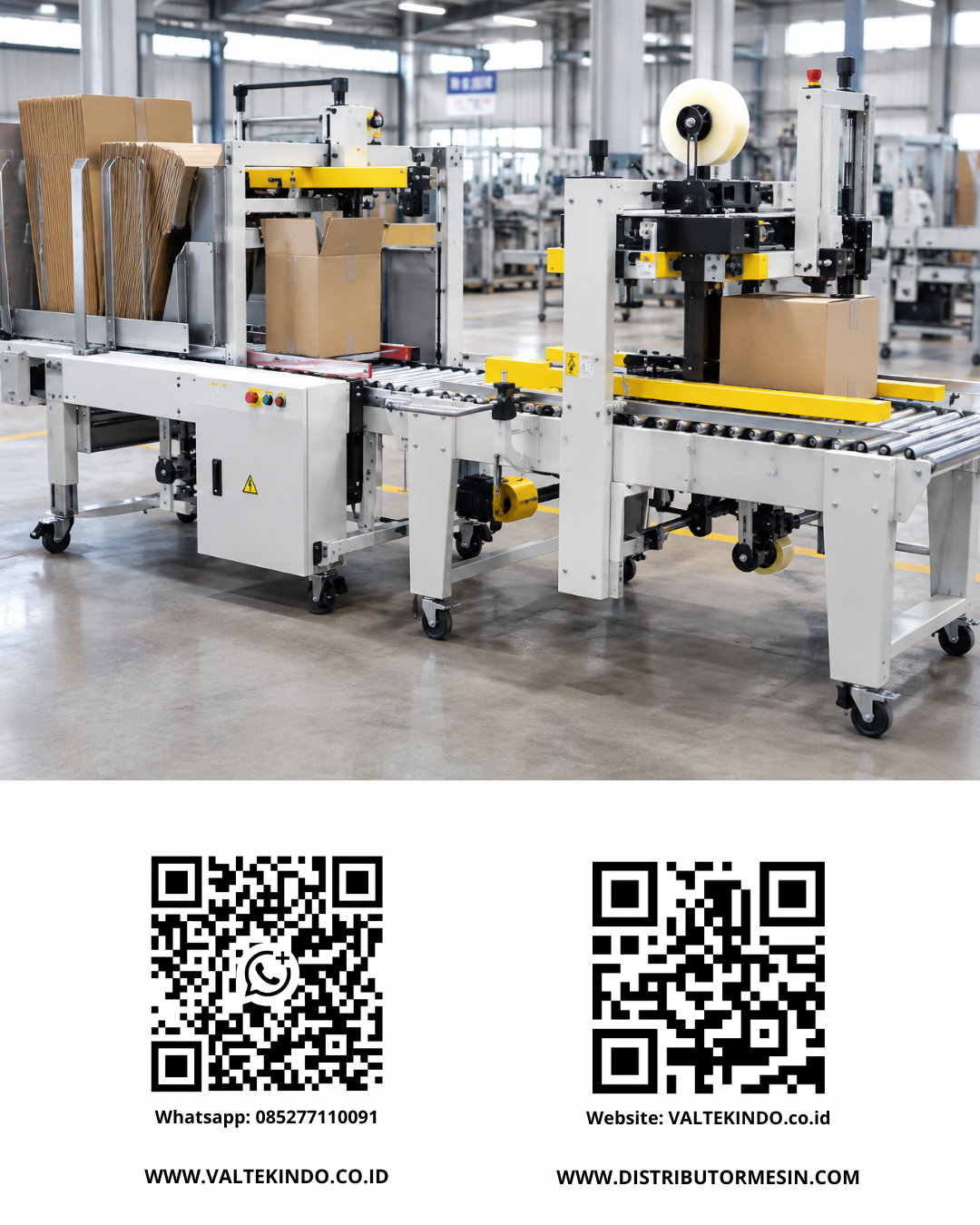
Surging production outputs across industrial manufacturing facilities demand precise synchronization at the end-of-line packaging stage. Production plants across the Fast-Moving Consumer Goods (FMCG), pharmaceutical, food & beverage, personal care, and warehousing logistics sectors frequently encounter a shared bottleneck: high-speed upstream assembly lines constrained by slow, manual, or semi-automated carton erecting and case sealing operations. Relying on manual carton handling restricts daily dispatch volumes and drives up long-term operating expenditures (OPEX).
Integrating automated carton erectors and carton sealers is no longer an optional upgrade, but an essential strategic investment. Implementing secondary packaging automation eliminates floor bottlenecks, ensures carton structural integrity across complex distribution logistics, and sustainably reduces plant labor overhead.
Resolving Secondary Packaging Bottlenecks on the Factory Floor
Manually handling corrugated packaging blanks involves repetitive physical actions: unfolding flat blanks, squaring the box, folding bottom flaps, taping the base, loading goods, and subsequently closing top flaps before taping the outer joint. At high manufacturing outputs requiring thousands of cartons per shift, manual case handling creates severe operational liabilities:
- Inconsistent Sealing Quality: Manual tape application results in uneven tensioning, loose joints, or off-center alignment. This structural weakness causes carton failure and flap opening during transit, directly escalating product return rates.
- Unstable Line Speeds: Manual packing throughput declines as operator fatigue sets in during consecutive shifts and overtime hours, causing container loading delays and dispatch backlogs.
- Material Wastage: Without automated cutting controls, line workers frequently pull excess tape to secure cartons, driving up consumable packaging costs across monthly operations.
An automated carton erector completely eliminates these inefficiencies. The machine pulls flat blanks directly from an onboard magazine using pneumatic suction arms, squares the case to a precise 90-degree angle, folds the bottom flaps, and instantly applies adhesive tape or hot-melt glue to the base. The rigid carton travels via powered conveyor toward the loading station. Once filled, an automated carton sealer folds the top flaps and seals both top and bottom seams simultaneously without manual intervention.
Upstream-to-Downstream Integration: Primary to Secondary Packaging
Modern packaging automation operates as a continuous, synchronized ecosystem. To ensure carton erectors and sealers function at maximum rated capacity, upstream product handling must deliver uniform, continuous output. Before individual goods are consolidated into master outer cartons, items such as pharmaceutical blisters, bottles, tubes, or pouches must first be packed into inner cartons with an advanced automatic cartoning machine for fast and precise product packaging.
When primary cartoning produces uniform boxes delivered steadily via conveyor systems, secondary erecting and sealing units operate without mechanical jams or buffer overruns. Designing such integrated systems requires an established partner with deep expertise in mechanical engineering, sensory integration, and PLC control logic. Serving as a premier industrial machinery distributor, PT Valtekindo Global Intertek provides turnkey solutions ranging from floor layout studies and machinery selection to mechanical installation, testing, and full on-site commissioning.
Technical Comparison: Semi-Automatic versus Fully Automatic Systems
When drafting a Request for Quotation (RFQ), plant managers and procurement departments should evaluate machinery performance across several critical technical parameters:
- Throughput Speed and Capacity:
Semi-automatic systems deliver between 8 and 15 cartons per minute, heavily bounded by operator handling speed. Conversely, high-speed fully automated lines process between 18 and 40+ cartons per minute continuously with consistent operational rhythm.
- Drive Mechanics and Motion Accuracy:
Semi-automatic units utilize basic top/bottom or side drive belts powered by standard motors. Fully automated machinery integrates servo-driven mechanical linkages and precision pneumatic actuators, ensuring cartons are formed with square, true corners every cycle.
- Labor Requirements:
Semi-automatic stations require one or two active operators to form or guide cartons into the drive belts. Fully automatic packaging cells operate unmanned, requiring labor only for periodic blank restocking in the feed magazine.
- Carton Size Changeover:
Adjusting carton dimensions on semi-automatic machines requires manual hand-crank adjustments taking 15 to 20 minutes. Modern automatic machines feature quick, tool-less changeovers with PLC touchscreen recipe selection, cutting product changeover downtime to under 5 minutes.
- Tape Application Precision:
Fully automated sealers utilize constant-tension tape heads and clean auto-cutting blades. Tape overlap length is standardized (typically 50 mm on leading and trailing edges), ensuring a clean aesthetic and reliable closure while preventing waste.
Return on Investment (ROI) & Financial Feasibility
The business case for deploying automated carton erectors and sealers is supported by analyzing the Total Cost of Ownership (TCO). Quantifiable operational savings stem from three main pillars:
- Labor Cost Rationalization: Reallocating 4 to 6 manual packing workers per line across consecutive shifts enables facilities to direct labor toward high-value manufacturing tasks.
- Adhesive Tape Optimization: Standardized tape overlap lengths applied by automated taping heads eliminate adhesive waste by 20% to 30% annually compared to unmonitored manual taping.
- Damage Claim Reductions: Rigidly squared and securely sealed corrugated cartons provide maximum compressive strength during pallet stacking, safeguarding goods against crushing, moisture, and dust during logistics transit.
For industrial facilities running two or more daily shifts, capital payback periods on automated carton erector and sealer installations generally range from 10 to 18 months, representing one of the highest-yield automation investments available to production management.
Industrial Spare Parts Availability and After-Sales Support
Packaging line continuity requires dependable long-term technical support. Critical wear components, including tape cutter blades, friction drive belts, vacuum suction cups, and optical sensors, must be readily accessible from domestic stock. Partnering with a machinery provider that provides certified local field service technicians, scheduled preventive maintenance programs, and verified warranties ensures that your plant maintains high Overall Equipment Effectiveness (OEE) and avoids costly downtime.
Contact Our Sales Team Today
Looking for high-quality industrial machinery, factory automation solutions, or customized equipment for your business? Our experienced sales team is ready to help you find the right solution, provide technical consultation, and offer the best pricing.
Contact Our Official WhatsApp Sales Team:
- WhatsApp Sales 1: 085222110091
- WhatsApp Sales 2: 085277110091
Visit our official websites to explore our complete product catalog, machine operation videos, technical information, and exclusive offers:
PT. Valtekindo Global Intertek is your trusted partner for industrial machinery, processing equipment, recycling systems, laboratory instruments, and factory automation solutions. Contact us today for a free consultation and receive the best solution tailored to your business needs.

Admin
AuthorAdmin is a writer on the Valtekindo website, providing informative content about High Quality Industrial Machinery and Testing Machines.
Related post:
- Pharmaceutical Factory Production Escalation Strategy: Why Investing in an Automatic Capsule Filling Machine is the Most Crucial Business Decision
- High-Precision Wire Cut EDM Technology in 2026: The Ultimate Solution for Mold Making, Stamping Dies, and Automotive Component Fabrication Without Thermal Distortion
- Modern Pipe Making Machine Technology: Optimizing Conical Twin-Screw Extruders for Zero-Defect SNI Standard PVC Pipe Production