Understanding Tire Retreading: What It Is, the Process, and Industrial Applications
In the world of transportation and logistics, tires represent one of the highest operational costs after fuel. The high intensity of heavy vehicle usage causes tire treads to wear out quickly. This is where retreading technology becomes crucial. Far from being just a cost-saving measure, tire retreading is a technical solution that combines financial efficiency with principles of environmental sustainability.
What is Tire Retreading?
Tire retreading is the process of reconditioning worn tires by applying a new layer of rubber tread. A common misconception among the public is equating retreading with "re-grooved" tires, which can be dangerous. In reality, industrial-standard retreading involves precise chemical and mechanical processes to bond the new rubber with a sound tire casing.
As long as the tire casing or structure is not fatally damaged, it can be given a "second life." This practice is standard for bus fleets, container trucks, and even aircraft tires, where the cost of a single new unit can be prohibitively expensive.
Stages of a Precision Retreading Process
Modern retreading is a systematic workflow designed to ensure the safety and durability of the reconditioned tire:
- Initial Inspection: The tire undergoes a deep manual and electronic inspection to ensure no damage to the steel belts or internal structure. Only tires with a healthy casing are approved for processing.
- Buffing: The remains of the old rubber on the tire surface are shaved off using specialized machinery to achieve a uniform size and texture. This ensures the new rubber layer adheres perfectly.
- Skiving and Repair: Small holes or injuries on the tire are cleaned and filled with specialized rubber material to restore the structural integrity.
- Building (Applying New Rubber): A new layer of rubber (tread) is wrapped onto the buffed surface. In "cold" retreading, the tread applied is already pre-molded with a pattern.
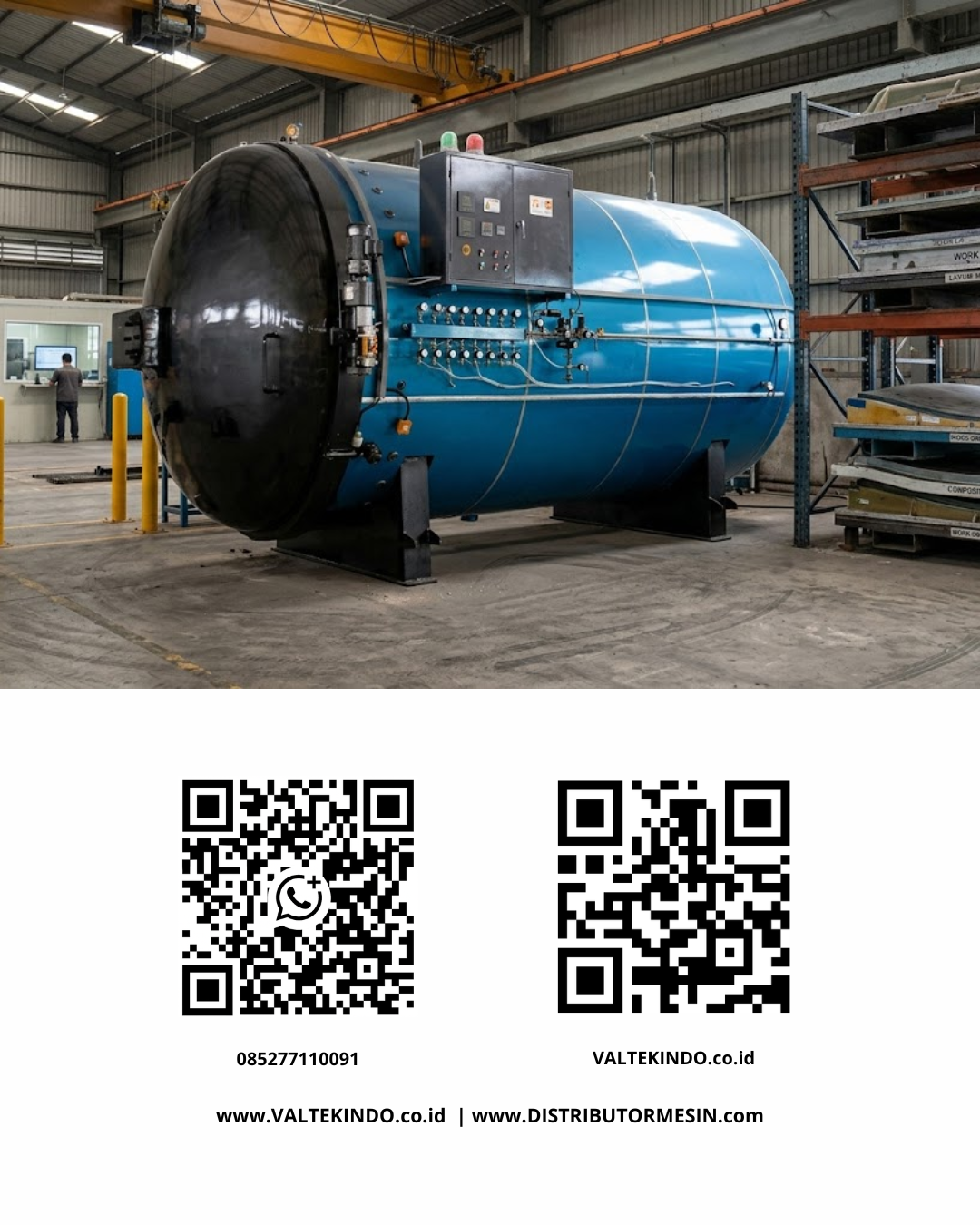
- Curing (Vulcanization): This is the most critical stage. The tire is placed inside a high-pressure heating chamber. Inside this chamber, a chemical reaction occurs between the new rubber, bonding materials, and the old casing, making them a single, unified entity. The quality of the final product depends heavily on the stability of temperature and pressure within the heating tube.
To achieve reconditioning quality equivalent to original tires, industrial players often require high-performance equipment. The use of a curing chamber for precision vulcanization has become the mandatory standard for large-scale retreading workshops to guarantee road user safety.
Industrial Applications and Benefits
The application of retreading technology brings significant positive impacts across various sectors:
- Operational Cost Efficiency: For logistics companies, using high-quality retreaded tires can slash tire costs by 30% to 50% compared to constantly purchasing new tires.
- Environmental Sustainability: Manufacturing one new truck tire requires approximately 83 liters of oil, whereas retreading only requires about 26 liters. Additionally, this process reduces the volume of solid tire waste in landfills.
- Proven Performance: With modern technology, the durability of a retreaded tire nearly matches that of a new one, provided the curing process is performed with the correct parameters.
The rubber industry in Indonesia continues to grow rapidly alongside increasing infrastructure demands. For business owners looking to upgrade production standards or seeking references for rubber industry support machinery and other heavy equipment, you can explore various solutions through this comprehensive industrial equipment catalog currently available.
Conclusion
Tire retreading is a smart solution amidst the economic challenges of the global industry. By understanding that this process involves strict safety standards and advanced heating technology, the negative stigma surrounding reconditioned tires is gradually fading. The key to a safe retreaded tire lies in high-quality materials and a production process utilizing industrial-grade machinery.
Optimize Your Industry Today!
Achieve production efficiency and the highest quality standards with a trusted industrial machinery provider. Explore our wide selection of premium processing and testing equipment at:
Website : valtekindo.co.id
Website : distributormesin.com
Consult your technical needs with our expert sales team:
WhatsApp 1: +62 852-2211-0091
WhatsApp 2: +62 852-7711-0091

Admin
AuthorAdmin is a writer on the Valtekindo website, providing informative content about High Quality Industrial Machinery and Testing Machines.
Related post:
- Pharmaceutical Factory Production Escalation Strategy: Why Investing in an Automatic Capsule Filling Machine is the Most Crucial Business Decision
- High-Precision Wire Cut EDM Technology in 2026: The Ultimate Solution for Mold Making, Stamping Dies, and Automotive Component Fabrication Without Thermal Distortion
- 2026 Automated Carton Sealer & Erector Investment Guide: End-of-Line Automation Strategies for Industrial Plant Efficiency