Understanding the Functions and Parts of a Precision Horizontal Lathe
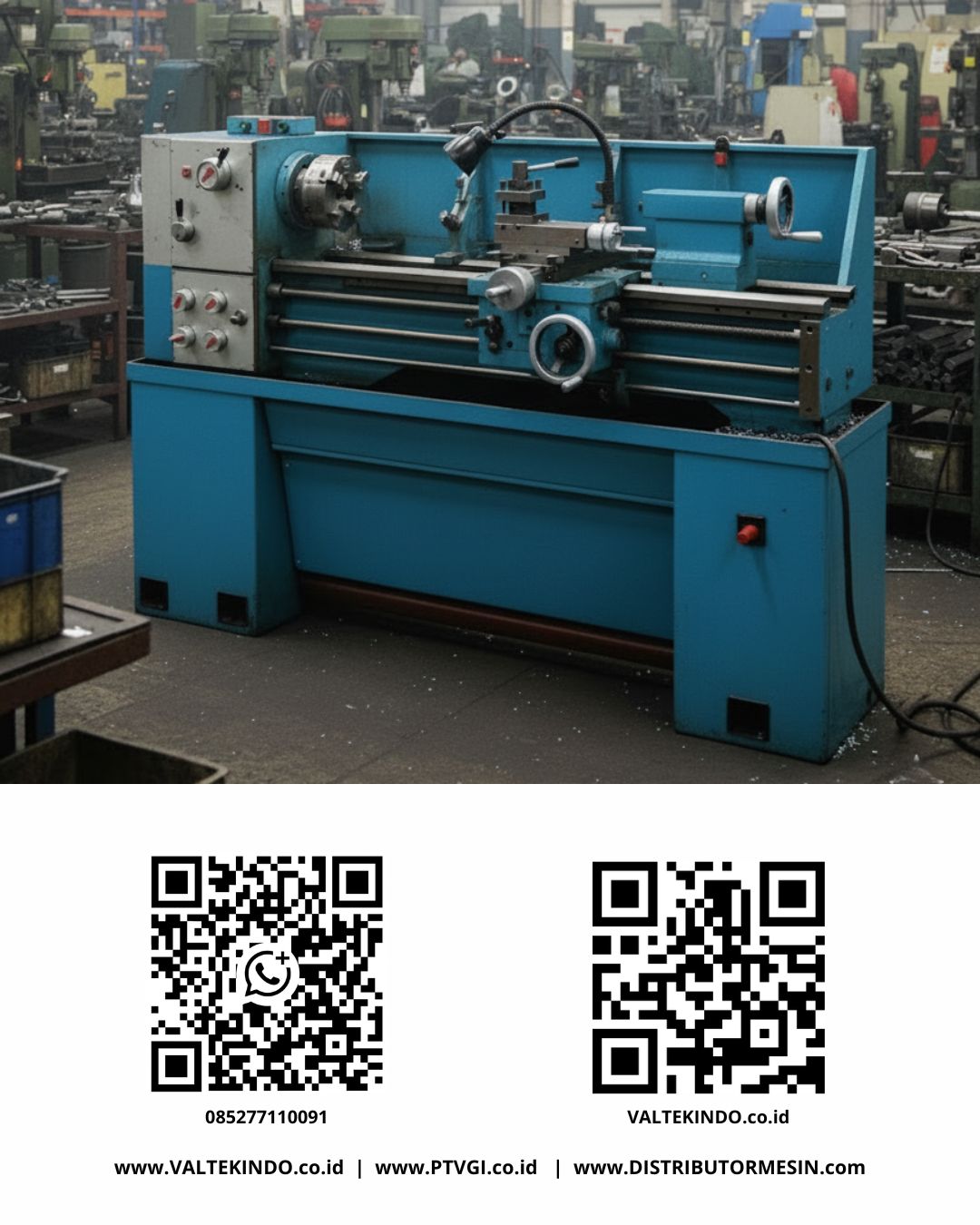
Modern manufacturing, from small-scale workshops to mass-production factories, relies heavily on one machine often dubbed the "mother of machine tools": the lathe. Specifically, the precision horizontal lathe is the backbone of nearly every metal machining operation. Its ability to shape material with high accuracy makes it a crucial investment.
But what exactly classifies a lathe as "precision"? The answer lies in the design, construction, and synergy of its every component. Understanding the anatomy of this machine is not just vital for operators, but also for purchasing managers and business owners looking to optimize production. This article will thoroughly explore the functions and key parts of a precision horizontal lathe, referencing the specifications of a capable machine in its class. When selecting the right machine, partnering with a trusted provider like PT Valtekindo Global Intertek is a critical first step to ensure quality and after-sales support.
Primary Functions: From Raw Stock to a Precise Workpiece
At its core, a lathe's primary function is to rotate a workpiece on its axis while a cutting tool moves linearly to remove material. This process allows for the creation of various symmetrical shapes.
The basic functions of a horizontal lathe include:
- Turning: This is the most common operation, where the cutting tool moves parallel to the workpiece's axis of rotation to reduce its diameter. It is used to create shafts, pins, or bolts.
- Facing: The cutting tool moves perpendicular to the axis of rotation, usually from the center outwards, to create a flat, smooth surface on the end of the workpiece.
- Threading: By precisely coordinating the spindle's rotation and the carriage's movement via the leadscrew, the lathe can cut internal (on a nut) or external (on a bolt) threads.
- Drilling & Boring: By mounting a drill bit in the tailstock, the lathe can create a hole in the center of the workpiece. The boring process is then used to enlarge an existing hole to a very high degree of accuracy.
- Knurling: Using a special tool to press a pattern (usually diamond or straight lines) onto the workpiece surface. This is often found on handles or knobs to provide a better grip.
- Taper Turning: Creating conical shapes by setting the compound rest at an angle or using a taper attachment.
Anatomy of a Precision Horizontal Lathe
The precision of a lathe is determined by the rigidity, accuracy, and quality of its components. Let's break down the main parts based on the technical specifications of a reliable 1-meter lathe.
1. The Headstock
The headstock is the "heart" of the lathe. It is a sturdy housing that contains the main drive motor, the gear train, and the main spindle.
- Spindle: This is the rotating component that holds the workpiece (usually via a chuck). A key specification here is the Spindle Bore. On a 1-meter precision machine, a 38mm (1-1/2") spindle bore is ideal. This allows long raw material stock to be fed through the spindle, increasing workflow efficiency.
- Spindle Speeds: The ability to adjust the rotational speed is vital. Different materials (like aluminum vs. stainless steel) and different diameters require different cutting speeds. A quality machine typically offers a wide speed range, for example, 8 steps from 70 to 2000 RPM (Revolutions Per Minute). This broad range ensures a fine finish (high speed) and powerful torque for heavy cuts (low speed).
2. The Bed
The bed is the foundation of the entire machine. It is a heavy, horizontal beam made of cast iron that has been hardened and ground to ensure maximum rigidity and wear resistance. All other components (headstock, tailstock, carriage) are mounted on it.
- Distance Between Centers: This defines the maximum length of the workpiece that can be machined. For a 1-meter lathe machine, the specification is 1000mm (40"), making it highly versatile for a wide range of projects.
- Swing Over Bed: This is the maximum diameter of a workpiece that can rotate over the bed without hitting it. A specification of 330mm (13") indicates a capable machine for most workshop jobs.
- Swing in Gap (Gap Bed): Many modern lathes feature a removable "gap" in the bed near the headstock. This is a brilliant feature that allows the machine to turn much larger diameter workpieces (e.g., flanges or discs) over a short distance. With a Swing in Gap of 476mm, the machine offers flexibility far beyond a non-gap machine.
3. The Carriage
The carriage is the "hand" of the machine that holds the cutting tool and moves along the bed. It is a complex system consisting of:
- Saddle: The part that slides on the bed's ways.
- Cross Slide: Moves perpendicularly to the bed, used to set the depth of cut and for facing operations. The Swing over Cross Slide (198mm) determines the maximum diameter when using this slide.
- Compound Rest: A small, 360-degree swiveling slide on top of the cross slide. This is the key to cutting tapers.
- Apron: The front-facing part of the carriage that contains the mechanisms for moving the carriage manually (with a handwheel) or automatically (engaging the feed rod or leadscrew).
4. The Tailstock
Located at the right end of the machine, the tailstock can slide along the bed and be locked in position. It serves two functions:
- To support the end of a long workpiece using a center, preventing it from flexing under cutting pressure.
- To hold tools like a drill chuck, reamers, or taps for machining operations at the center of the workpiece.
Specifications like its Taper (MT.3) and Quill Travel (100mm) determine the size of tools it can hold and the maximum drilling depth in a single pass.
5. The Threading & Feed System
This is what truly separates a precision lathe from a standard one.
- Leadscrew: A high-precision threaded rod used only for cutting threads.
- Feed Rod: A separate rod used for automatic feeding movements (auto-feed) during standard turning or facing.
A capable 1-meter lathe will offer an extensive range of threads, both metric and imperial. The ability to cut 26 kinds of Metric Threads (0.4-7mm) and 34 kinds of Inch Threads (4-56 T.P.I) demonstrates a sophisticated and precise gearbox. (See the full specifications here).
6. The Motor
Powered by a strong motor, such as 1.5kW (2HP), the machine has enough power to take significant cuts on hard materials without losing speed or torque.
Conclusion: An Investment in Precision
Understanding the parts of a precision horizontal lathe reveals it is an integrated system where every component contributes to the final result. From the rigidity of the bed, the speed range of the spindle, to the accuracy of the leadscrew, everything must work in harmony.
Choosing a machine with the right specifications—such as a 1000mm working distance, 330mm swing, and a 38mm spindle bore—provides the flexibility and capacity to handle the vast majority of jobs. In a world where micrometer accuracy matters, investing in a quality lathe from an official distributor like PT Valtekindo Global Intertek is not an expense; it is the foundation for quality, efficiency, and long-term profitability. As the foundation of a workshop, a precision horizontal lathe is an investment that keeps on giving.
Optimize Your Industry Today!
Achieve production efficiency and the highest quality standards with a trusted industrial machinery provider. Explore our wide selection of premium processing and testing equipment at:
Website : valtekindo.co.id
Wesbite : distributormesin.com
Consult your technical needs with our expert sales team:
WhatsApp 1: +62 852-2211-0091
WhatsApp 2: +62 852-7711-0091

Admin
AuthorAdmin is a writer on the Valtekindo website, providing informative content about High Quality Industrial Machinery and Testing Machines.
Related post:
- Pharmaceutical Factory Production Escalation Strategy: Why Investing in an Automatic Capsule Filling Machine is the Most Crucial Business Decision
- High-Precision Wire Cut EDM Technology in 2026: The Ultimate Solution for Mold Making, Stamping Dies, and Automotive Component Fabrication Without Thermal Distortion
- 2026 Automated Carton Sealer & Erector Investment Guide: End-of-Line Automation Strategies for Industrial Plant Efficiency