Understanding Inkjet and Offset Technology in Industrial Pipe Marking Processes
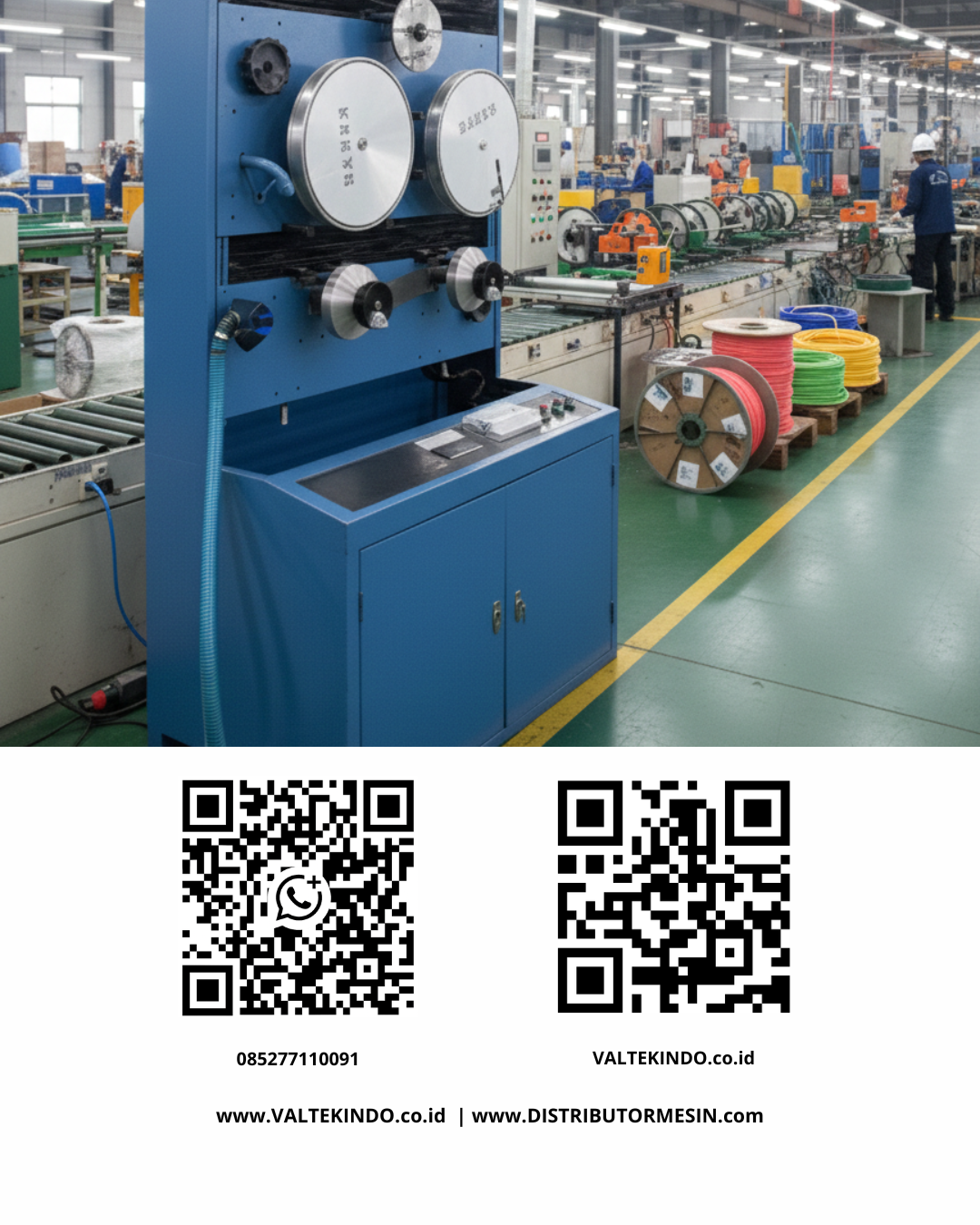
In the world of pipe manufacturing—whether steel, PVC, or HDPE—the marking process is a crucial stage that cannot be overlooked. Information such as serial numbers, production codes, dimensions, and quality standards (such as SNI, ASTM, or ISO) must be printed clearly and permanently on the pipe surface. To achieve this, industries typically rely on two primary technologies: Inkjet Printing and Offset Printing.
Understanding the differences in mechanisms, advantages, and efficiency between these two is essential for industry players to determine which method best suits their production volume and material.
Inkjet Printing Mechanisms on the Production Line
Inkjet technology, specifically Continuous Inkjet (CIJ), is the most popular non-contact marking method in automated production lines. This system works by spraying microscopic ink droplets through a nozzle directly onto the pipe surface as it moves underneath. Since there is no physical contact, this technology is highly flexible for printing on curved or uneven pipe surfaces.
The primary advantage of the inkjet system is its ability to perform real-time data customization. Operators can easily change batch codes or production timestamps via a digital control panel without stopping the machine. Additionally, the inks used are generally quick-drying and designed to adhere strongly to non-porous materials like plastic and metal.
Offset Printing Technology: Precision for Static Marking
Unlike inkjet, Offset Printing (often called Contact Printing) involves direct physical contact between the printing tool and the pipe. The mechanism uses a cylinder or rubber roller that has raised patterns of letters or numbers. Ink is transferred from a reservoir to the ink roller, then to the printing wheel, and finally onto the pipe surface.
This method is highly effective for printing static or fixed information in large quantities, such as product names or standard specifications. The physical pressure from the printing wheel ensures that the ink adheres very strongly and precisely. However, its main drawback is a lack of flexibility; if you need to change the printed data, you must manually replace the printing wheel or the physical characters on the machine.
Efficiency and Durability Comparison
Choosing between inkjet and offset often comes down to a trade-off between flexibility and long-term operational costs. Here are several comparison points to consider:
- Data Flexibility: Inkjet is the clear winner due to its digital nature. It is perfect for traceability, which requires a unique code every meter. Offset is better suited for static information that does not change within a large batch.
- Production Speed: Both technologies can keep up with high speeds on pipe extrusion lines. However, inkjet tends to have an edge in extremely fast production environments because no mechanical components are in direct friction with the product.
- Maintenance Costs: Inkjet machines require routine maintenance on filter systems and nozzle cleaning to prevent clogging. Meanwhile, offset machines have simpler mechanical components but require printing wheel replacements if wear occurs.
- Print Quality: Offset produces very sharp and consistent prints for the same design. Inkjet provides excellent results, but quality can be affected by the distance between the nozzle and the pipe, as well as machine vibration stability.
System Integration in the Manufacturing Line
In practice, many manufacturers are beginning to integrate specialized devices to improve marking accuracy. For instance, using a measuring meter printer unit allows for automatic and accurate pipe length printing every single meter. Such integration minimizes human error in measurement and ensures consumers receive products with precise specifications.
Selecting the right technology must also consider the factory environment. If your facility has high dust levels, a closed inkjet system may be better protected than an open offset system. However, for heavy-duty applications where pipes are frequently subjected to friction, certain offset inks sometimes offer slightly higher abrasion resistance.
Conclusion
Both inkjet and offset technologies play vital roles in pipe industry standardization. Inkjet offers digital flexibility and ease of customization, while offset provides stability for mass static printing. The final decision depends on your specific production line needs, pipe material type, and how often the marking data needs to be updated.
To ensure production results meet global standards, selecting the right supporting machinery from a primary industrial solution provider will help you optimize operational costs while enhancing brand image in the eyes of the customer.
Optimize Your Industry Today!
Achieve production efficiency and the highest quality standards with a trusted industrial machinery provider. Explore our wide selection of premium processing and testing equipment at:
Website : valtekindo.co.id
Website : distributormesin.com
Consult your technical needs with our expert sales team:
WhatsApp 1: +62 852-2211-0091
WhatsApp 2: +62 852-7711-0091

Admin
AuthorAdmin is a writer on the Valtekindo website, providing informative content about High Quality Industrial Machinery and Testing Machines.
Related post:
- Pharmaceutical Factory Production Escalation Strategy: Why Investing in an Automatic Capsule Filling Machine is the Most Crucial Business Decision
- High-Precision Wire Cut EDM Technology in 2026: The Ultimate Solution for Mold Making, Stamping Dies, and Automotive Component Fabrication Without Thermal Distortion
- 2026 Automated Carton Sealer & Erector Investment Guide: End-of-Line Automation Strategies for Industrial Plant Efficiency