Understanding Hose Knitting Machines: Core Components, Working Mechanism, and Production Challenges
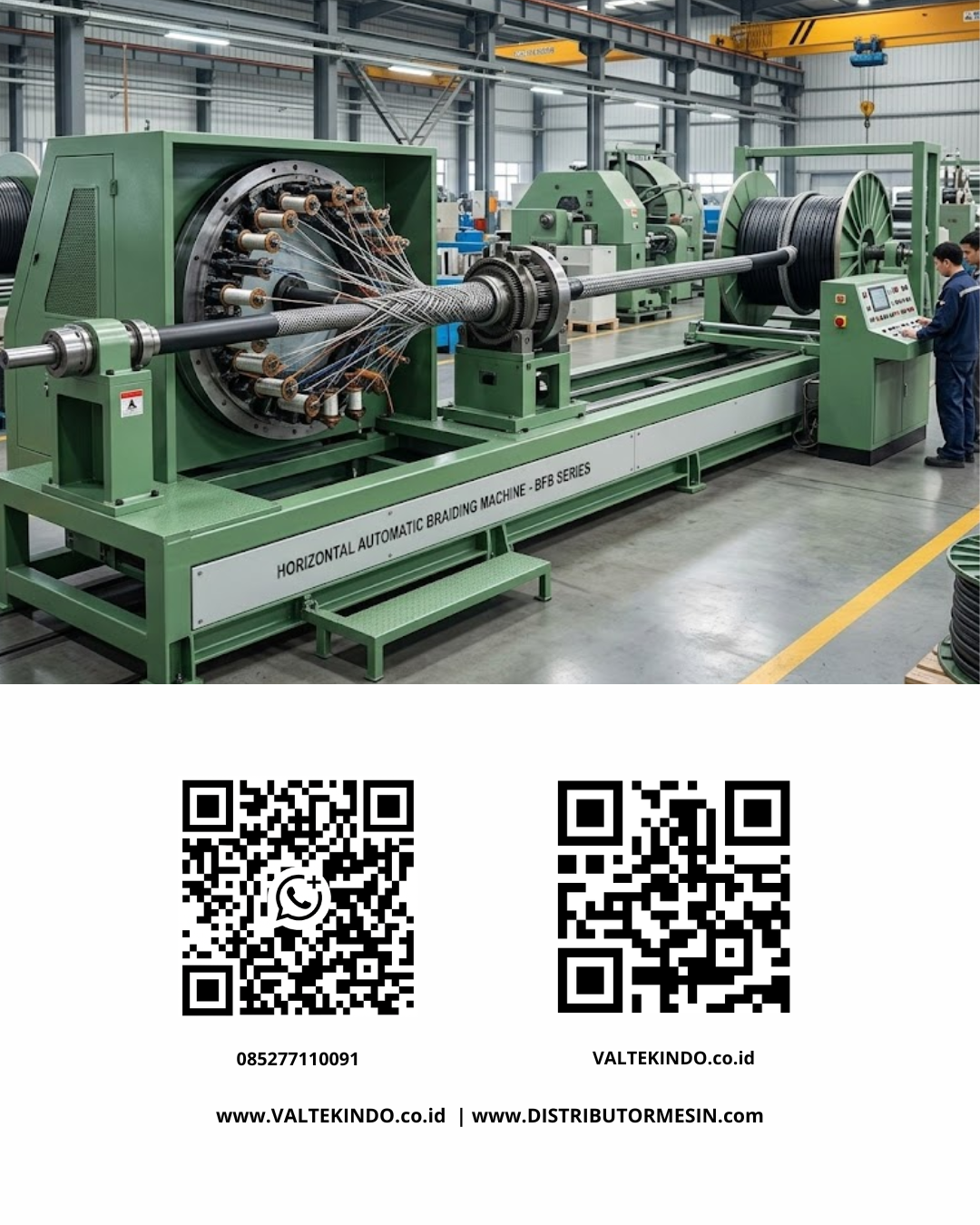
In the manufacturing world of automotive components, hydraulics, and household appliances, high-strength hoses are vital elements. However, rubber or polymer alone is often insufficient to withstand high internal pressures. This is where the hose knitting machine plays a crucial role by providing a reinforcement layer made of synthetic yarn or fine wire.
Key Components in a Hose Knitting System
A hose knitting machine is a precision device consisting of several main parts that work in perfect synchronization. Understanding these components is the first step toward maintaining production efficiency.
- Knitting Head: This is the heart of the machine. Inside, knitting needles move vertically or circularly to form interlocking loops around the surface of the hose.
- Yarn Carrier: This component supplies the yarn from the bobbins to the needles. The yarn tension at this stage is critical in determining the density of the knit.
- Mandrel: A rod or cylindrical core that acts as a guide for the raw hose, ensuring its round shape is maintained during the knitting process.
- Caterpillar Puller: A device that pulls the hose out of the machine at a constant speed. This puller speed must be synchronized with the rotation of the knitting head to ensure a consistent knitting pattern.
- Control System (PLC): Modern machines are typically equipped with automation systems to adjust the knitting pitch and automatically detect broken threads.
Working Mechanism: From Yarn to Strength
The hose knitting process begins as the raw rubber inner tube enters the knitting zone via the mandrel. The primary mechanism follows the principle of circular knitting. As the hose moves forward, the knitting head rotates, and the needles begin to form an interlocking web of yarn over the hose surface.
Unlike the braiding process, knitting tends to be faster and offers better flexibility for the final product. This knitted pattern creates a structure capable of distributing pressure evenly, ensuring the hose does not burst when conveying high-pressure fluids or gases. After the reinforcement layer is formed, the hose usually undergoes an outer extrusion process (outer cover) to protect the knit from abrasion and weather.
To achieve optimal production results, selecting reliable hardware is decisive. You can study further technical specifications regarding supporting industrial equipment through this industrial machinery brochure to ensure your manufacturing standards remain competitive.
Challenges in Knitted Hose Production
Despite being highly automated, the hose knitting process faces several technical challenges commonly encountered in the field:
- Consistent Yarn Tension: If the tension is unstable, the knit will be loose in some areas, resulting in weak points during pressure testing.
- Speed Synchronization: A mismatch between the rotation speed of the knitting head and the pulling speed of the caterpillar will disrupt the pattern density.
- Needle Wear: Knitting needles operate at high speeds and are constantly in contact with the yarn. Undetected needle wear can cause permanent defects in the reinforcement layer.
- Material Compatibility: Not all yarns are suitable for all types of rubber. The chemical or physical interaction between the reinforcement yarn and the inner tube must be considered to prevent delamination.
Facing these challenges, the integration of the latest technology is an absolute solution. Choosing the right technology partner will assist in selecting high-quality industrial machines that offer high durability and accurate control systems.
Conclusion
A hose knitting machine is a strategic investment for industries prioritizing product quality and durability. By understanding the core components and working mechanisms, manufacturers can minimize production obstacles and produce goods that meet international standards. Reliable technological support ensures that every loop of yarn provides maximum protection for every meter of hose produced.
Optimize Your Industry Today!
Achieve production efficiency and the highest quality standards with a trusted industrial machinery provider. Explore our wide selection of premium processing and testing equipment at:
Website : valtekindo.co.id
Website : distributormesin.com
Consult your technical needs with our expert sales team:
WhatsApp 1: +62 852-2211-0091
WhatsApp 2: +62 852-7711-0091

Admin
AuthorAdmin is a writer on the Valtekindo website, providing informative content about High Quality Industrial Machinery and Testing Machines.
Related post:
- Pharmaceutical Factory Production Escalation Strategy: Why Investing in an Automatic Capsule Filling Machine is the Most Crucial Business Decision
- High-Precision Wire Cut EDM Technology in 2026: The Ultimate Solution for Mold Making, Stamping Dies, and Automotive Component Fabrication Without Thermal Distortion
- 2026 Automated Carton Sealer & Erector Investment Guide: End-of-Line Automation Strategies for Industrial Plant Efficiency