Understanding Compression Principles in Cone Crusher Machines for Hard Materials
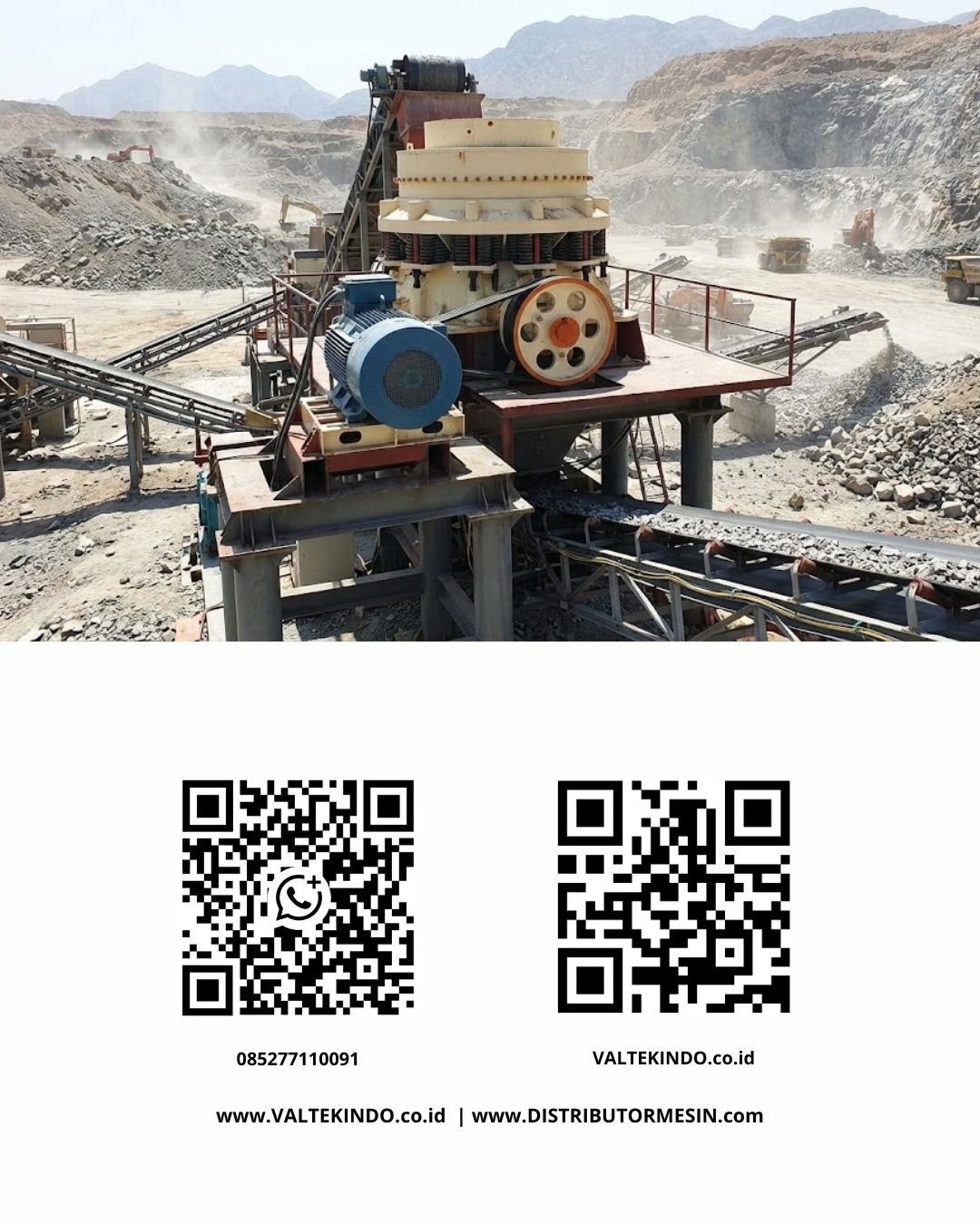
In the demanding sectors of mining, quarrying, and aggregate production, the ability to process high-hardness materials efficiently is a cornerstone of operational success. Among the various types of crushing equipment available, the cone crusher stands out as a preferred choice for secondary and tertiary stages. Its primary strength lies in its specialized method of reduction: the compression principle. Unlike impact-based methods, compression offers a controlled and powerful way to break down tough ores and rocks.
The Fundamentals of Compression Crushing
The compression principle, often referred to as "inter-particle crushing," involves applying a massive mechanical force to material trapped between two hard surfaces. In a cone crusher, this force is not instantaneous like a hammer blow; rather, it is a steady, rhythmic squeeze.
This method is particularly effective for abrasive and hard materials such as granite, basalt, and quartzite. Because the reduction happens through pressure, the internal structure of the rock is forced to fracture along its natural lines of weakness. This results in a high-quality end product with a more uniform, cubical shape—a critical requirement for high-strength concrete and asphalt applications.
Key Components of the Crushing Chamber
To understand how the compression occurs, one must look at the internal geometry of the machine. The process takes place within the "crushing chamber," which is defined by two primary components:
- The Mantle: A cone-shaped moving part that sits on an eccentric shaft.
- The Concave (or Bowl Liner): A stationary ring-shaped component fixed to the upper frame.
The interaction between these two parts defines the efficiency of the machine. When selecting industrial heavy equipment solutions, engineers focus heavily on the metallurgy of these liners, as they must withstand extreme pressure and abrasion over long operational hours.
The Step-by-Step Mechanism of Action
The compression cycle in a cone crusher is a sophisticated display of mechanical engineering. It can be broken down into four distinct phases:
1. Controlled Feeding
Material enters the top of the machine. The design of the feed hopper ensures that the material is distributed evenly around the crushing chamber. An even distribution is vital to prevent "one-sided loading," which can lead to uneven wear and mechanical strain.
2. Eccentric Compression
The heart of the machine is the eccentric motion. As the main shaft rotates, the mantle does not just spin; it moves in an eccentric path, meaning it continuously moves toward and away from the concave. When the mantle moves toward the concave, the "crushing stroke" occurs, exerting thousands of pounds of pressure on the material.
3. Gradual Size Reduction
The chamber is tapered, being wider at the top and narrower at the bottom. As the material is crushed, it falls lower into a narrower zone, where it is compressed again during the next cycle. This progressive reduction ensures that the material is broken down systematically. Utilizing high-efficiency cone crusher technology allows for a optimized stroke length, which maximizes throughput while maintaining precision.
4. Final Discharge
Once the particles are smaller than the "Closed Side Setting" (CSS)—the narrowest gap between the mantle and concave—they fall through the bottom of the machine and are transported away.
Advantages of the Compression Method
Why is compression favored over impact for hard materials? The reasons are primarily economic and structural:
- Reduced Wear Costs: In impact crushers, high-speed contact with hard rock leads to rapid deterioration of blow bars. Compression crushers operate at lower speeds, significantly extending the life of the wear parts.
- Energy Efficiency: Direct compression requires less energy per ton of processed material compared to the high-kinetic energy requirements of impactors.
- Safety Features: Modern units are equipped with hydraulic tramp release systems. If an uncrushable object (like a piece of steel) enters the chamber, the system automatically opens the gap to let the object pass, preventing catastrophic internal failure.
Conclusion
The science of compression in cone crushers is what allows modern industry to transform massive, stubborn boulders into the precise aggregates needed for global infrastructure. By understanding the synergy between the mantle's eccentric movement and the chamber's geometry, operators can better optimize their production lines for maximum longevity and performance.
Technical Consultation and Support
Selecting the right crushing configuration requires a detailed analysis of your material’s moisture content, hardness, and desired output size. If you require further technical insights or wish to discuss how to optimize your crushing circuit for better efficiency, our technical team is available for professional consultation.
Optimize Your Industry Today!
Achieve production efficiency and the highest quality standards with a trusted industrial machinery provider. Explore our wide selection of premium processing and testing equipment at:
Website : valtekindo.co.id
Website : distributormesin.com
Consult your technical needs with our expert sales team:
WhatsApp 1: +62 852-2211-0091
WhatsApp 2: +62 852-7711-0091

Admin
AuthorAdmin is a writer on the Valtekindo website, providing informative content about High Quality Industrial Machinery and Testing Machines.
Related post:
- Pharmaceutical Factory Production Escalation Strategy: Why Investing in an Automatic Capsule Filling Machine is the Most Crucial Business Decision
- High-Precision Wire Cut EDM Technology in 2026: The Ultimate Solution for Mold Making, Stamping Dies, and Automotive Component Fabrication Without Thermal Distortion
- 2026 Automated Carton Sealer & Erector Investment Guide: End-of-Line Automation Strategies for Industrial Plant Efficiency