Transforming Tire Waste into Valuable Products: How Does the Pyrolysis System Work?
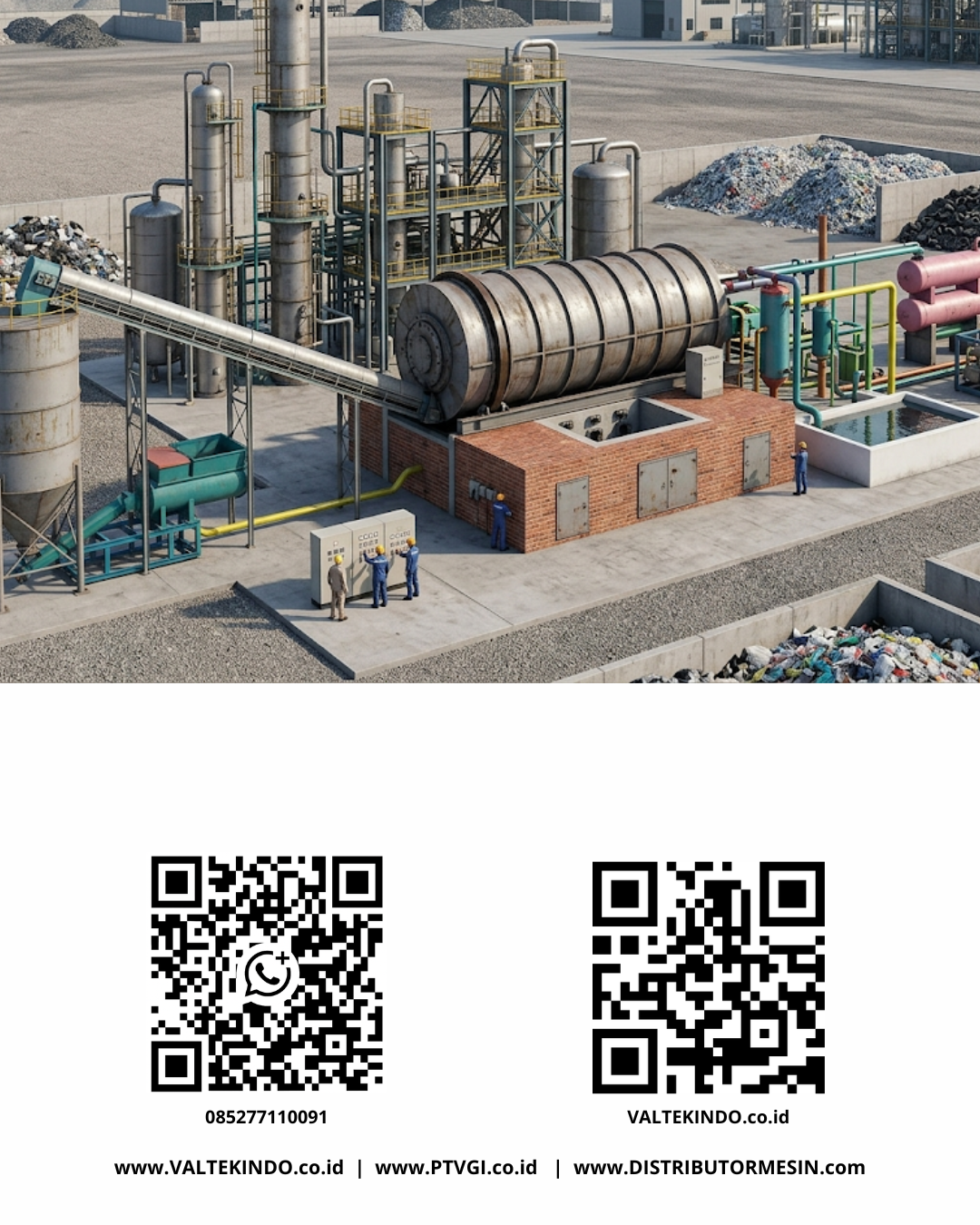
The issue of waste tires has long been a serious environmental challenge worldwide. Tires are not easily biodegradable, and if burned openly, they release toxic emissions into the atmosphere. However, with technological advancements, a solution has emerged that is not only environmentally friendly but also economically viable: the pyrolysis system. This technology is capable of turning useless rubber heaps into high-value energy sources and industrial raw materials.
Understanding the Pyrolysis System
Pyrolysis is a thermochemical decomposition process of organic materials conducted through heating in the absence of oxygen (or with very limited oxygen). In the context of tire waste management, this process breaks down the rubber polymer chains into smaller molecules in liquid, gas, and solid forms. Because it occurs in a vacuum or oxygen-free environment, the material does not combust into ash; instead, it transforms into new usable substances.
The primary advantage of this method is its ability to process rubber waste completely without leaving residues that contaminate the soil. This makes pyrolysis a cornerstone of the circular economy concept, where waste from one process becomes a valuable input for other industrial sectors. The implementation of eco-friendly technology for industrial waste recycling is increasingly sought after by manufacturing sectors aiming to improve efficiency while preserving nature.
Working Stages of a Tire Pyrolysis System
Technically, the transformation of used tires through a pyrolysis system involves several crucial stages that must be monitored to ensure optimal results:
- Feedstock Preparation: Used tires are usually cut into smaller pieces (shredding) or fed whole into the reactor, depending on the machine's design and capacity. Size reduction aims to accelerate the uniform heating process.
- Heating inside the Reactor: The raw material is heated in a tightly sealed reactor. The temperature inside is typically maintained between 350°C and 500°C. At this point, the rubber begins to evaporate and turns into oil gas.
- Condensation Process: The generated gas is channeled into a cooling system or condenser. Here, a phase change occurs from gas to liquid, known as pyrolysis oil or bio-oil. Non-condensable gases are usually recycled to serve as fuel for heating the reactor itself, making the system energy-efficient.
- Purification and Separation: Besides oil, this process leaves behind solid materials in the form of carbon black and steel wires. These three components are then separated to be processed further according to market demand.
Pyrolysis Products and Their Benefits
The output from processing tire waste is diverse and has a high market demand. These products can be reabsorbed into the global industrial supply chain:
- Pyrolysis Oil (Fuel Oil): This liquid product has an excellent calorific value, often used as a diesel substitute for industrial furnaces, heating machines, or independent power plants.
- Carbon Black: This solid material is highly valuable as a reinforcing agent in the new tire industry, cables, plastic coloring, and as a raw material for inks and paints.
- Steel Wire: Vehicle tires are reinforced with high-quality steel wire. After the pyrolysis process is complete, this steel remains intact and clean, giving it high resale value in the metal smelting market.
Adopting the right processing system is key to minimizing negative environmental impacts. With an integrated system, the potential for pollution caused by tire stockpiling in landfills can be significantly reduced. More in-depth explanations regarding the mechanical and operational aspects of this equipment can be found at the official website of a trusted industrial equipment provider.
Conclusion
A pyrolysis system is more than just a waste disposal method; it is a long-term investment in environmental sustainability. By converting tire waste into energy resources, we not only reduce pollution but also support energy independence within the industrial sector. For business owners, understanding how this system works is a strategic step toward creating greener, more sustainable, and economically value-added operations.
Optimize Your Industry Today!
Achieve production efficiency and the highest quality standards with a trusted industrial machinery provider. Explore our wide selection of premium processing and testing equipment at:
Website : valtekindo.co.id
Website : distributormesin.com
Consult your technical needs with our expert sales team:
WhatsApp 1: +62 852-2211-009
WhatsApp 2: +62 852-7711-0091

Admin
AuthorAdmin is a writer on the Valtekindo website, providing informative content about High Quality Industrial Machinery and Testing Machines.
Related post:
- Pharmaceutical Factory Production Escalation Strategy: Why Investing in an Automatic Capsule Filling Machine is the Most Crucial Business Decision
- High-Precision Wire Cut EDM Technology in 2026: The Ultimate Solution for Mold Making, Stamping Dies, and Automotive Component Fabrication Without Thermal Distortion
- 2026 Automated Carton Sealer & Erector Investment Guide: End-of-Line Automation Strategies for Industrial Plant Efficiency