The Yarn Dyeing Process: Challenges and Solutions for Achieving Color Levelness in Package Dyeing
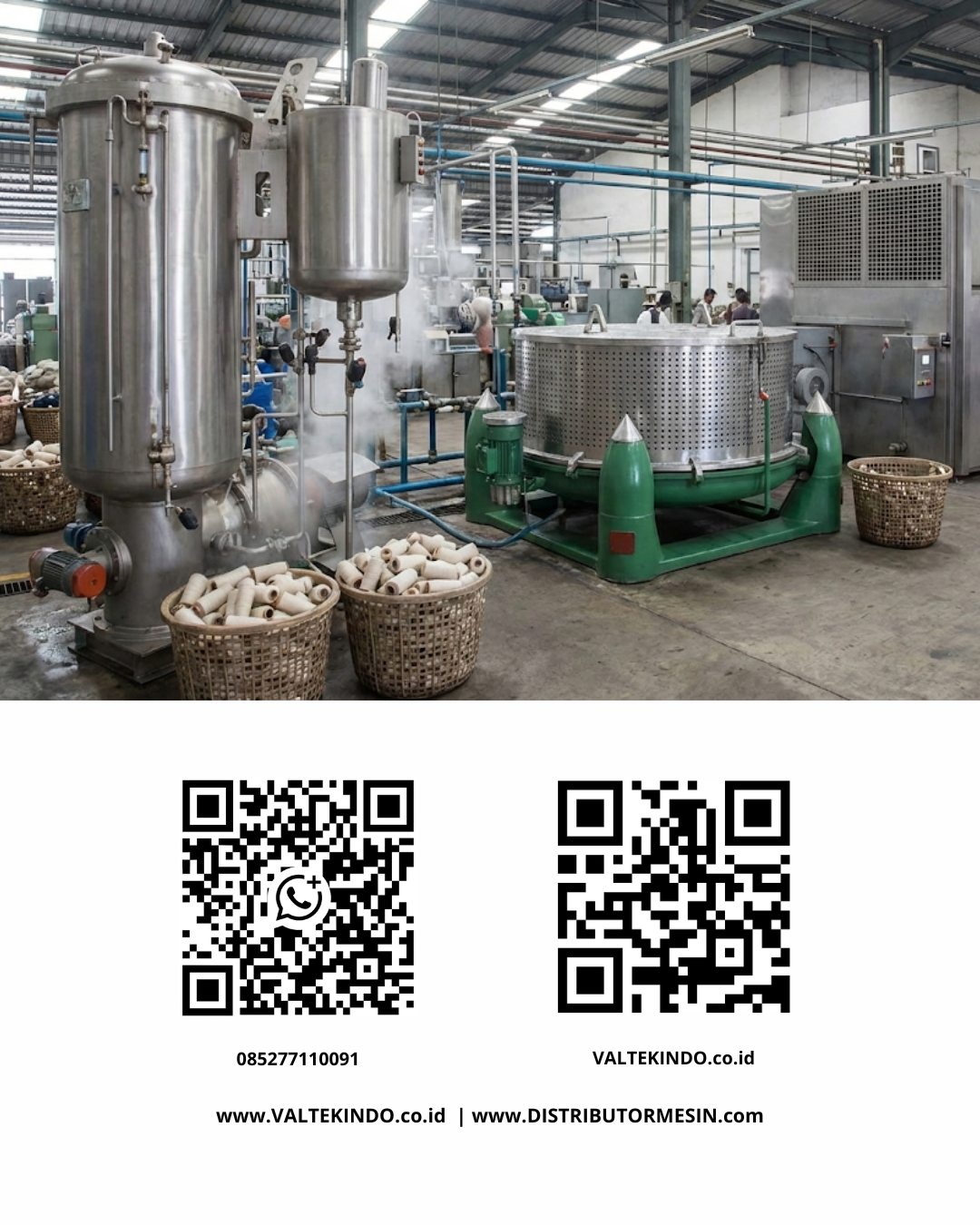
In the textile industry, yarn dyeing plays a vital role, particularly in the production of woven patterned fabrics such as plaid, stripes, jacquard, or denim. One of the most common and efficient methods used on an industrial scale is package dyeing (dyeing yarn in wound forms/bobbins).
While this method offers high efficiency, it presents complex technical challenges: ensuring levelness (color uniformity) from the deepest layers of the yarn package to the outermost surface.
Color unlevelness is a fatal production defect. If the dyeing is uneven, the yarn cannot be used for subsequent weaving or knitting processes, resulting in significant material and time losses. This article delves into the dynamics of the yarn dyeing process, the challenges frequently faced, and the technical solutions to overcome them.
Understanding the Package Dyeing Mechanism
Fundamentally, the package dyeing process involves pumping a high-pressure dyestuff solution through yarn packages placed on perforated spindles within a closed vessel (kier). This liquid circulation typically occurs in two directions:
- In-to-Out: Liquid flows from the center of the spindle outward through the yarn layers.
- Out-to-In: Liquid flows from the outside of the package inward toward the center of the spindle.
The key to the success of this process lies in the ability of the dye liquor to penetrate every fiber with consistent speed, temperature, and pressure.
Main Challenges: Why is Color Often Uneven?
Dyeing machine operators often face issues where the inner part of the package (near the spindle) is darker or lighter than the outer part. Here are the primary causes:
1. Inconsistent Winding Density This is the most common root cause. If the yarn package is too dense (hard winding), the dye liquor struggles to penetrate the yarn layers, causing high resistance and uneven coloring. Conversely, if the winding is too loose, channeling can occur (liquid seeks the easiest path through loose gaps without perfectly dyeing the surrounding fibers).
2. The Channeling Phenomenon Channeling happens when the dye solution finds a path of low resistance within the yarn package. Consequently, the majority of the liquid flows through this path, ignoring other denser areas. This is often caused by imprecise yarn stacking at the shoulders (edges) of the package.
3. Flow Rate and Pressure Control The balance between pump pressure and flow rate is crucial. Excessive pressure on soft yarn can damage the package structure, while pressure that is too low will fail to push the dyestuff through to the fiber core.
Strategic Solutions for Perfect Dyeing Results
Overcoming unlevelness requires a holistic approach that combines proper material preparation with the use of the right technology.
Precision Soft Winding Preparation The first step to successful dyeing begins long before the yarn enters the dyeing machine. The soft winding process must produce packages with uniform density (typically between 0.35 – 0.40 g/cm³, depending on the fiber type). The ends of the packages should have round edges to prevent the dye liquor from bypassing the yarn at the corners.
Utilization of Modern Machinery Technology The role of the machine determines the final output. Conventional dyeing machines often struggle to maintain pressure stability during flow reversal. Therefore, the modern textile industry is shifting toward advanced yarn dyeing machines equipped with inverters and automated pump controls. This technology allows for precise differential pressure regulation, ensuring the dye solution is distributed evenly during both in-to-out and out-to-in cycles without damaging the yarn structure.
Use of Chemical Auxiliaries Beyond machinery, chemical formulation is vital. The use of a leveling agent functions to retard the absorption rate of the dye at the beginning of the process, allowing color molecules time to migrate throughout the yarn before fixation occurs. Control of pH and water hardness must also be monitored strictly to prevent dye precipitation on the yarn surface.
Temperature Ramping Curve A drastic rise in temperature can cause "shock" to the fibers, where the dye rushes massively onto the outer surface of the yarn only. The solution is to implement a gradual temperature ramping curve, giving the circulating liquid the opportunity to equalize dye concentration before reaching the optimal fixation temperature.
The Importance of Standardization and Testing
In a competitive textile ecosystem, consistency is everything. Every production batch must meet the same color standards. Failure in the yarn dyeing process wastes not only raw materials but also energy and water, which contradicts the principles of a Green Industry.
Therefore, textile laboratories play a critical role in conducting small-scale color matching before mass production begins. The success of the yarn dyeing process relies heavily on coordination between competent operators, accurate laboratory testing, and the implementation of standardized operating procedures. The use of calibrated equipment and consistent process condition control plays a significant role in minimizing the risk of re-dyeing, which impacts production costs and resource consumption.
Conclusion
The yarn dyeing process is a combination of art and science. The challenge of achieving levelness in yarn packages is indeed complex, involving mechanical variables (machines and pumps) and chemical variables (dyestuff and water). However, with proper winding density control, accurate machine parameter settings, and the selection of appropriate technology, the issue of unlevelness can be eliminated. The result is high-quality yarn ready to be processed into superior fabrics with high market value.
Optimize Your Industry Today!
Achieve production efficiency and the highest quality standards with a trusted industrial machinery provider. Explore our wide selection of premium processing and testing equipment at:
Website : valtekindo.co.id
Website : distributormesin.com
Consult your technical needs with our expert sales team:
WhatsApp 1: +62 852-2211-0091
WhatsApp 2: +62 852-7711-0091

Admin
AuthorAdmin is a writer on the Valtekindo website, providing informative content about High Quality Industrial Machinery and Testing Machines.
Related post:
- Pharmaceutical Factory Production Escalation Strategy: Why Investing in an Automatic Capsule Filling Machine is the Most Crucial Business Decision
- High-Precision Wire Cut EDM Technology in 2026: The Ultimate Solution for Mold Making, Stamping Dies, and Automotive Component Fabrication Without Thermal Distortion
- 2026 Automated Carton Sealer & Erector Investment Guide: End-of-Line Automation Strategies for Industrial Plant Efficiency