The Importance of Physical Characteristic Validation to Prevent Product Failure in the Market
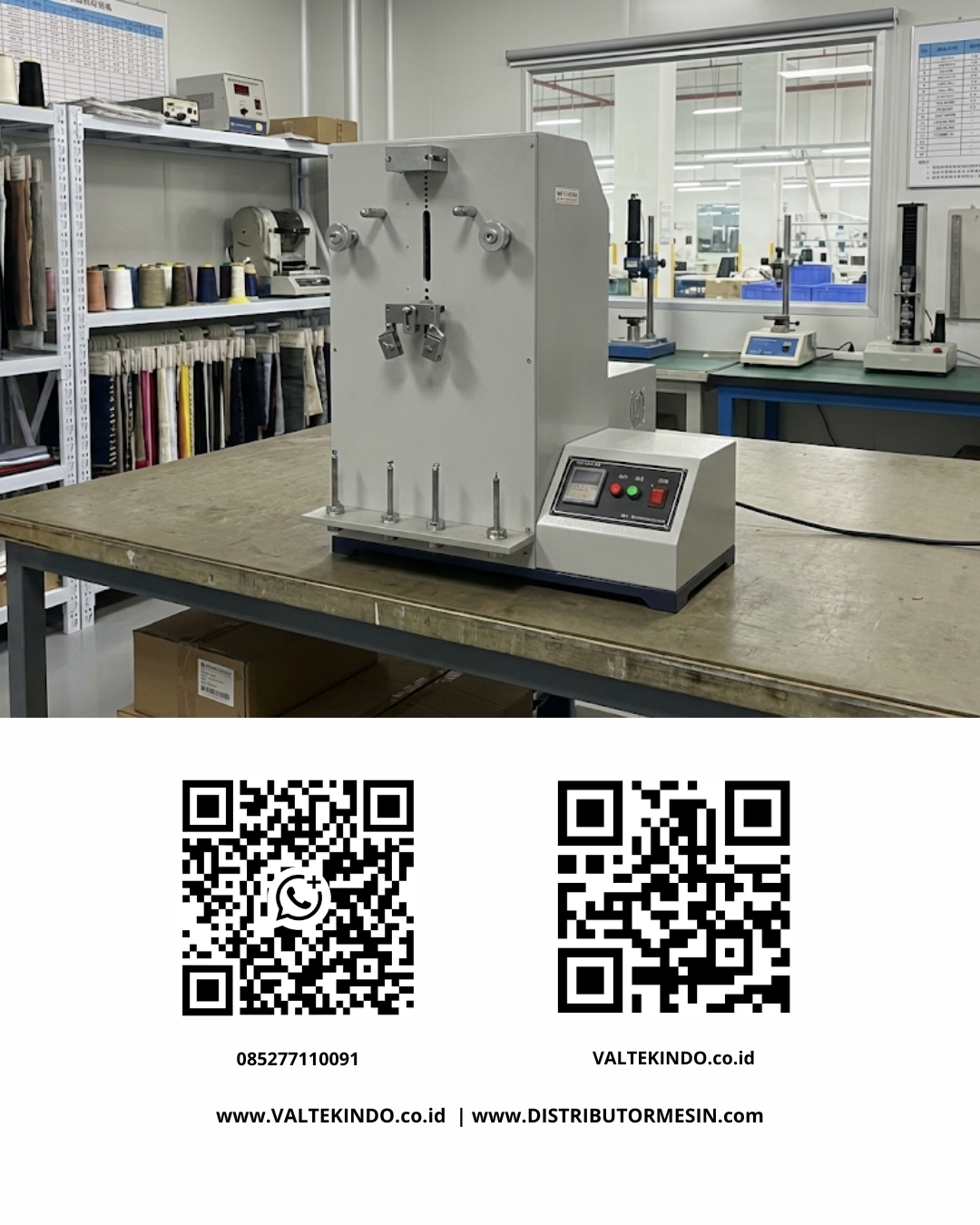
In the product development lifecycle—whether in the textile sector, polymer manufacturing, or industrial component production—post-launch product failure is a nightmare scenario for any company. A product recall not only incurs massive logistical costs and financial compensation but can also shatter a brand reputation that took years to build. One of the primary root causes of these failures is often a lack of comprehensive physical characteristic validation during the Research and Development (R&D) and Quality Control (QC) phases.
Validating physical characteristics is not merely a formality to meet regulatory standards; it is a critical line of defense to ensure end-user functionality and safety. This process involves a series of mechanical tests to understand how materials react to stress, friction, temperature fluctuations, and repeated use over extended periods.
Understanding the Mechanics of Material Failure
Products often fail not because of poor visual design, but because the constituent materials cannot withstand operational workloads. Physical characteristics such as tensile strength, elasticity, melting points, and abrasion resistance are crucial parameters that must be validated.
For example, in the garment industry or outdoor gear sector, a failure in even the smallest connecting component can render the entire product dysfunctional. Imagine an industrial protective jacket or a mountaineering backpack made of high-strength primary fabric, but the locking mechanism jams or snaps after a few uses. This illustrates that testing must not focus solely on the main material but also on supporting accessories. In this context, the implementation of rigorous testing standards using instruments for evaluating opening and closing durability is essential to simulate real-world usage across thousands of cycles before a product is approved for mass production.
The Role of Repeated Use Simulation
One aspect most frequently overlooked in physical validation is fatigue testing. Many materials appear strong when tested once (static testing) but degrade rapidly when used repeatedly (dynamic testing). This phenomenon is common in moving components, such as hinges, buttons, or fasteners.
Physical characteristic validation must answer the question: "Will this product function just as well on the 1,000th use as it did on the first?" Without empirical data from laboratory testing, manufacturers are merely guessing at the quality of their products. Failing to detect weaknesses at this phase can be fatal once the product is in the hands of consumers, potentially leading to customer complaints or even legal action if the failure results in injury.
Cost Efficiency Through Early Testing
There is a common misconception that investing in physical validation testing is an unnecessary added cost. However, viewed from a risk management perspective, it is a significant cost-saving measure. The cost to rectify a design defect during the prototyping stage is exponentially lower than the cost of handling warranty claims or a mass product recall.
Furthermore, accurate physical validation allows manufacturers to select the most efficient materials. Engineers often use materials that are too expensive (over-spec) because they are unsure of the durability requirements. With valid testing data, companies can optimize materials—using more economical options that still strictly meet the required strength thresholds.
Technology Integration in Testing Laboratories
In the modern industrial era, manual estimation methods are no longer relevant. Data accuracy relies heavily on the precision of the testing equipment used. Quality testing laboratories are now required to possess equipment capable of providing accurate quantitative data, ranging from microscopic analysis to heavy load testing.
The availability of adequate testing infrastructure is key for industries to compete in the global market. For companies looking to elevate their quality standards, collaborating with a trusted provider of laboratory and industrial solutions is a strategic step to ensure every instrument used is calibrated and compliant with international standards such as ISO or ASTM. Validation performed with the right equipment provides the certainty that the products released to the market are robust and reliable.
Conclusion
Preventing product failure in the market is not a matter of luck; it is the result of a disciplined, data-driven process of physical characteristic validation. By prioritizing testing on every component—from raw materials to the smallest mechanisms—companies not only protect their consumers but also secure the future sustainability of their business. Quality is a long-term investment that cannot be compromised.
Optimize Your Industry Today!
Achieve production efficiency and the highest quality standards with a trusted industrial machinery provider. Explore our wide selection of premium processing and testing equipment at:
Website : valtekindo.co.id
Website : distributormesin.com
Consult your technical needs with our expert sales team:
WhatsApp 1: +62 852-2211-0091
WhatsApp 2: +62 852-7711-0091

Admin
AuthorAdmin is a writer on the Valtekindo website, providing informative content about High Quality Industrial Machinery and Testing Machines.
Related post:
- Pharmaceutical Factory Production Escalation Strategy: Why Investing in an Automatic Capsule Filling Machine is the Most Crucial Business Decision
- High-Precision Wire Cut EDM Technology in 2026: The Ultimate Solution for Mold Making, Stamping Dies, and Automotive Component Fabrication Without Thermal Distortion
- 2026 Automated Carton Sealer & Erector Investment Guide: End-of-Line Automation Strategies for Industrial Plant Efficiency