The Evolution of Vibration Testing Technology: From Manual Monitoring to Digital Diagnosis
In the modern industrial landscape, structural integrity and product durability are paramount. One of the most critical parameters determining this quality is how an object responds to vibration. Vibration testing has undergone a remarkable transformation over the decades, shifting from simple manual observation methods to highly precise digital diagnostic systems.
The Early Era: Manual and Mechanical Observation
In the early days of industrial development, vibration monitoring was conducted using very conventional methods. Technicians often relied on their senses of touch or hearing to detect anomalies in machinery. If a machine felt like it was vibrating more intensely than usual or emitting unusual noise, that was the primary indicator that something was wrong.
Gradually, simple mechanical tools like vibrometers began to be used. These devices operated on the principle of springs and masses to roughly measure vibration amplitude. However, this method had significant limitations: the data produced was not real-time, it was difficult to analyze deeply, and it relied heavily on the subjectivity of the operator.
Transition to Analog and Piezoelectric Sensors
Entering the mid-20th century, sensor technology began to take over. The invention of piezoelectric sensors marked a major turning point. These sensors were capable of converting mechanical pressure from vibrations into electrical signals. This data was then displayed on oscilloscopes or recorded on chart paper.
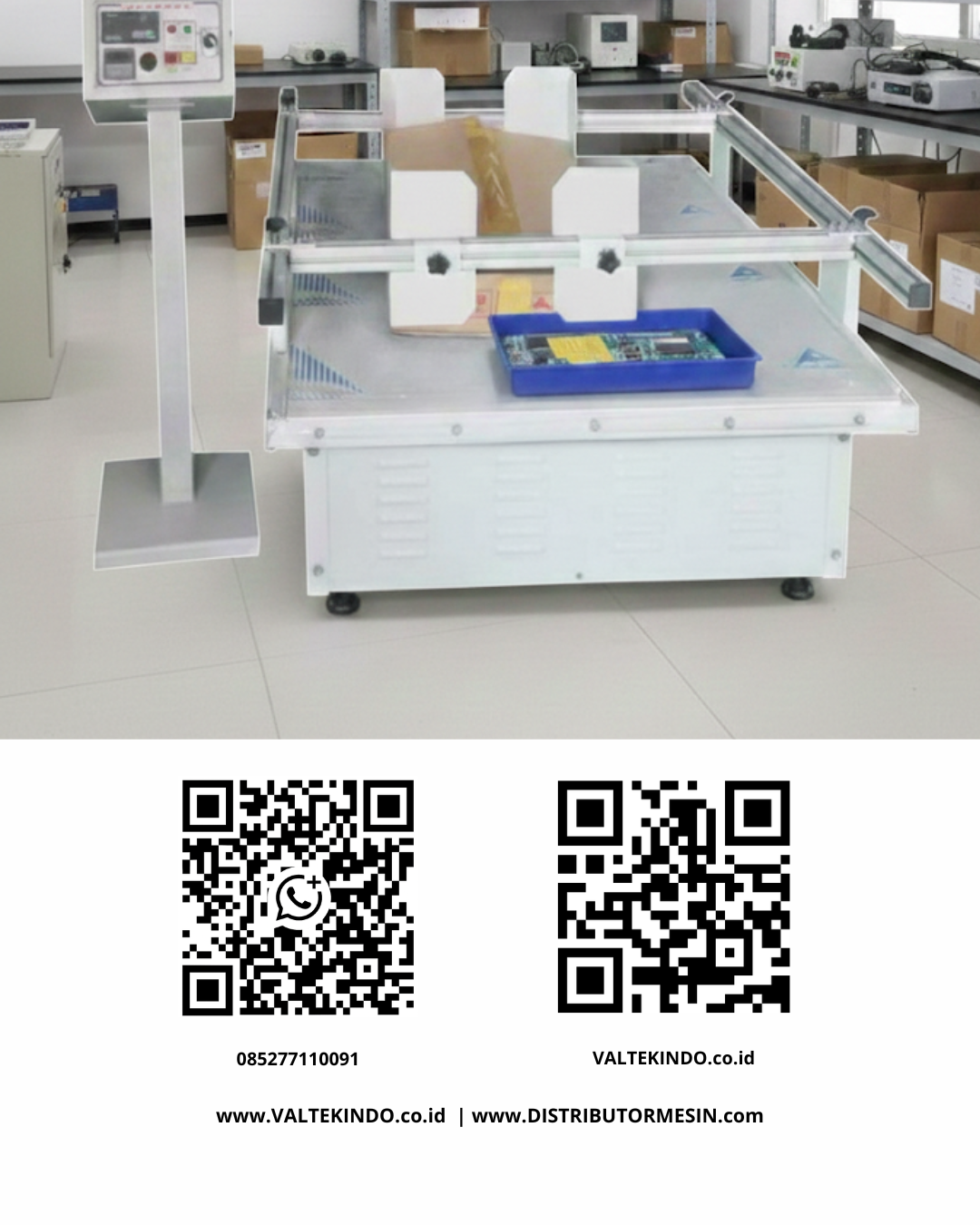
While much more advanced than manual methods, these analog systems still required lengthy data processing. Engineers had to manually calculate frequency and magnitude to determine if a product could withstand extreme conditions, such as during a laboratory test for simulation of damage due to shipping vibration.
The Digital Revolution and Advanced Signal Processing
Today, we are in an era of digital diagnosis where sensor technology is integrated with intelligent analytical software. Vibration testing is no longer just about "seeing" vibration, but "understanding" its character through Fast Fourier Transform (FFT) and spectral analysis.
Modern testing systems now utilize digital shaker tables that can be programmed to mimic various real-world vibration profiles. This is vital for ensuring product safety before it reaches the consumer. Utilizing specialized equipment allows manufacturers to identify weak points in packaging or internal components with nearly perfect accuracy.
The Role of Artificial Intelligence and Predictive Maintenance
Moving forward, this evolution is heading toward the utilization of Artificial Intelligence (AI) and Machine Learning. This technology enables systems to perform predictive maintenance. Instead of waiting for a machine to fail, digital algorithms can detect microscopic vibration patterns indicating early wear, allowing preventive action to be taken much sooner.
This digital transformation ensures that every data point collected is stored centrally in the cloud, allowing for instant collaboration between technicians across different locations. This speed and accuracy are the main pillars of a competitive manufacturing industry.
Conclusion
The evolution of vibration testing technology proves that data is the most valuable asset. From a mere touch of a hand to algorithmic digital analysis, the goal remains the same: creating products that are safer, more durable, and more efficient. For those interested in exploring the technical specifications of the latest testing solutions, comprehensive information can be found on the official laboratory solution provider page.
Optimize Your Industry Today!
Achieve production efficiency and the highest quality standards with a trusted industrial machinery provider. Explore our wide selection of premium processing and testing equipment at:
Website : valtekindo.co.id
Website : distributormesin.com
Consult your technical needs with our expert sales team:
WhatsApp 1: +62 852-2211-0091
WhatsApp 2: +62 852-7711-0091

Admin
AuthorAdmin is a writer on the Valtekindo website, providing informative content about High Quality Industrial Machinery and Testing Machines.
Related post:
- Pharmaceutical Factory Production Escalation Strategy: Why Investing in an Automatic Capsule Filling Machine is the Most Crucial Business Decision
- High-Precision Wire Cut EDM Technology in 2026: The Ultimate Solution for Mold Making, Stamping Dies, and Automotive Component Fabrication Without Thermal Distortion
- 2026 Automated Carton Sealer & Erector Investment Guide: End-of-Line Automation Strategies for Industrial Plant Efficiency