The Evolution of Fabric Cutting Technology: From Manual Scissors to Automatic Laser Machines
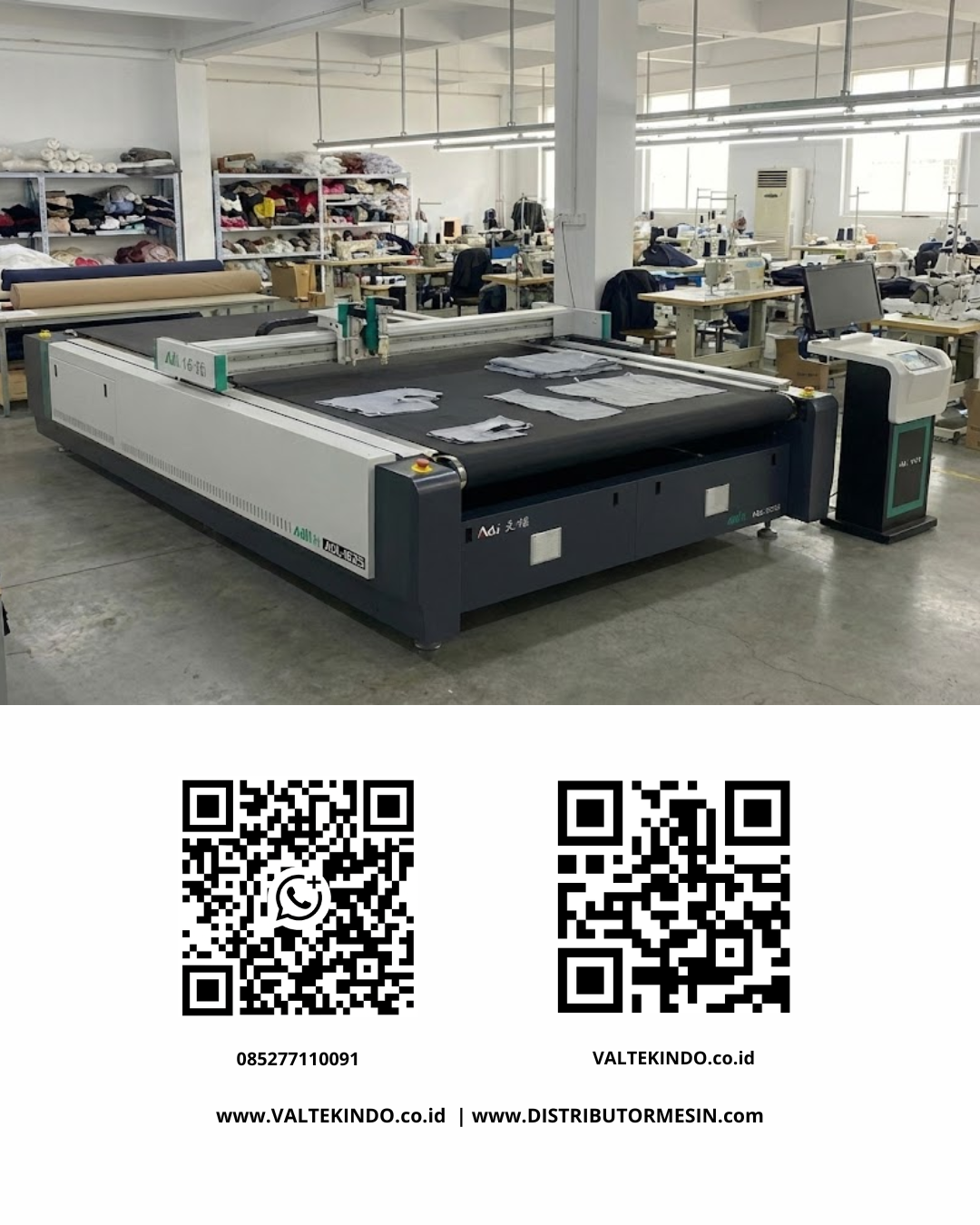
The textile and garment industry is one of the oldest sectors in human civilization. For centuries, the process of making clothes relied heavily on human hand skills, particularly during the material cutting stage. However, with market demands for production speed and increasingly complex design precision, fabric cutting technology has undergone a drastic evolution.
The shift from manual cutting tools to laser-based automation is not merely an industrial lifestyle trend, but an urgent necessity for efficiency and material waste reduction.
The Conventional Era: Hand Skills and Electric Knives
Initially, manual scissors were the only tools available. The quality of the cut depended entirely on the stability of the tailor's hand. Although artistic, this method had major drawbacks: it was time-consuming and carried the risk of inconsistent sizing, especially when producing in mass quantities (wholesale).
Later, the industry shifted to electric-powered straight knife and round knife cutting machines. These tools were capable of cutting through thick stacks of fabric at once. Although they significantly sped up the production process compared to manual scissors, this method still had physical limitations. Sharp blades often caused fabric fibers to fray at the edges, and the friction of the blade could shift the layers of fabric, causing the bottom cuts to be less precise than the top ones.
The Digital Revolution: The Arrival of Laser Technology
Entering the Industry 4.0 era, Laser technology (Light Amplification by Stimulated Emission of Radiation) began to be widely adopted. Unlike physical knives that rely on friction, lasers use focused heat beams to "vaporize" material along the cutting path. This change brought a new standard to the fashion industry.
In production practice, conventional cutting methods are beginning to be replaced by laser technology due to its ability to produce precise and stable cuts. The main advantage of this technology is its "contactless" capability. Since there is no blade pressing against the fabric, the material does not shift or stretch when cut, making it ideal for delicate fabrics such as silk, chiffon, or slippery synthetic materials.
Furthermore, the heat from the laser beam automatically seals the edges of synthetic fabrics, preventing threads from fraying without the need for additional overlocking (obras) processes. This allows designers to create intricate lace patterns that would be impossible to achieve with scissors or electric knives.
Innovation and Local Adaptation
This sophisticated technology is not dominated solely by imported products or giant factories. The spirit to adopt and develop laser cutting technology is also thriving domestically, involving educational institutions and local industry players.
This proves that Indonesian human resources are ready to compete in mastering manufacturing technology. A concrete example can be seen in the initiatives of educational institutions in Indonesia that have developed and launched laser cutting machine technology. Such initiatives show that access to high-precision technology is becoming increasingly open, enabling MSMEs (Micro, Small and Medium Enterprises) in the convection sector to "level up" and improve their product quality to match export standards.
Material Efficiency and Sustainability
Beyond speed, the primary reason for the evolution toward automation is material efficiency. Modern laser machines are usually integrated with computer software featuring nesting. This feature is capable of automatically arranging cutting patterns as densely as possible on the fabric spread, minimizing wasted material. In an industry where raw material prices continue to rise, saving a few centimeters of fabric per product can have a massive impact on final profitability.
Read also: The Efficiency Revolution: Dissecting the Sophistication of Automatic Die Cutting Creasing Machines
Conclusion
The evolution from manual scissors to automatic laser machines is the industry's response to the demands of the times. For garment and convection business owners, understanding and applying this technology can be a crucial step in improving the quality and efficiency of the production process. High precision, production speed, and material efficiency offered by laser technology are the keys to winning the future market.
Optimize Your Industry Today!
Achieve production efficiency and the highest quality standards with a trusted industrial machinery provider. Explore our wide selection of premium processing and testing equipment at:
Website : valtekindo.co.id
Wesbite : distributormesin.com
Consult your technical needs with our expert sales team:
WhatsApp 1: +62 852-2211-0091
WhatsApp 2: +62 852-7711-0091

Admin
AuthorAdmin is a writer on the Valtekindo website, providing informative content about High Quality Industrial Machinery and Testing Machines.
Related post:
- Pharmaceutical Factory Production Escalation Strategy: Why Investing in an Automatic Capsule Filling Machine is the Most Crucial Business Decision
- High-Precision Wire Cut EDM Technology in 2026: The Ultimate Solution for Mold Making, Stamping Dies, and Automotive Component Fabrication Without Thermal Distortion
- 2026 Automated Carton Sealer & Erector Investment Guide: End-of-Line Automation Strategies for Industrial Plant Efficiency