The Difference Between Fiber Laser Cutting and Plasma for Metalworking
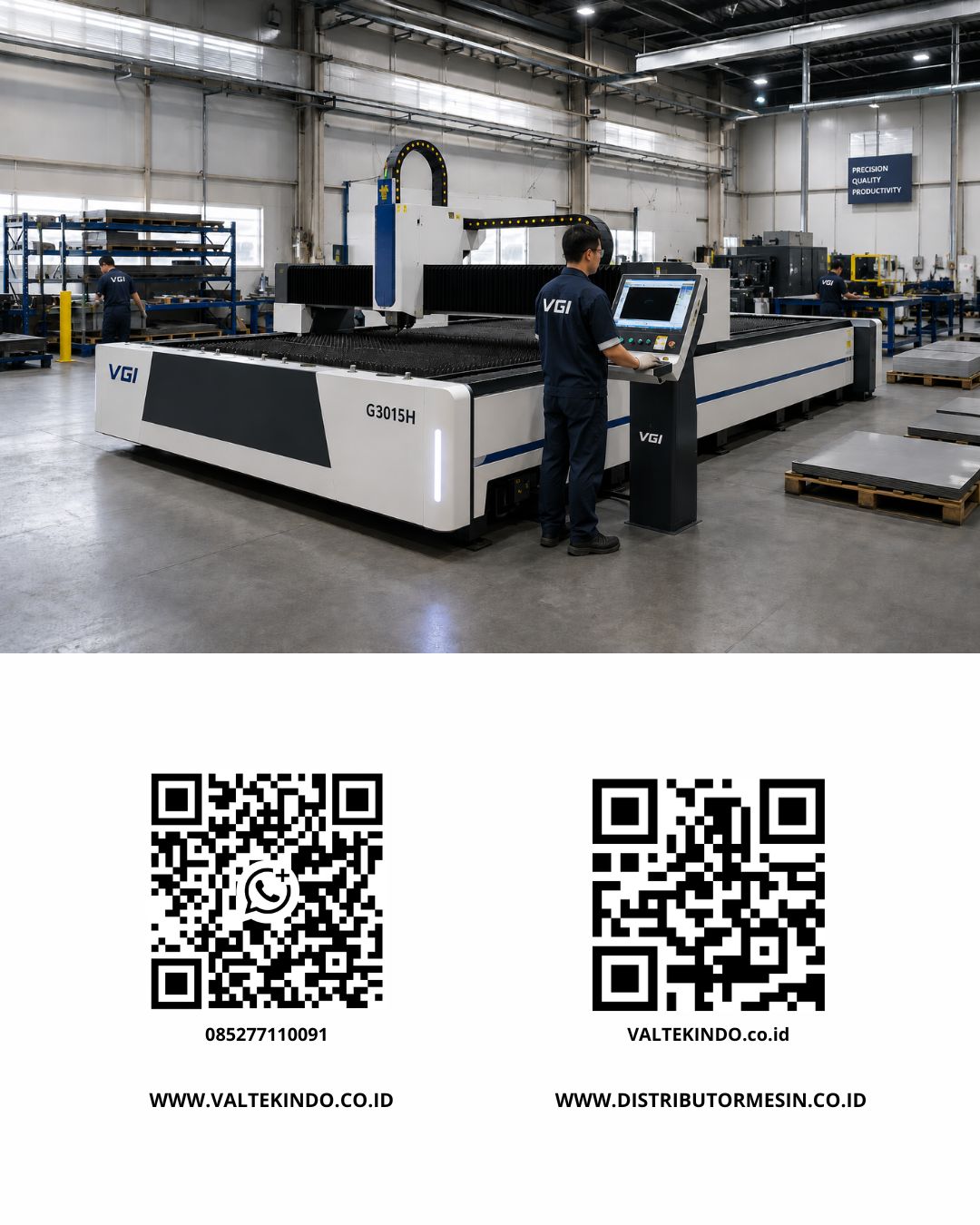
In the era of modern manufacturing and the Fourth Industrial Revolution (Industry 4.0), efficiency, speed, and precision have become the primary pillars that determine the competitiveness of a factory or metal fabrication workshop. The high market demand for highly precise components across various sectors—ranging from the automotive industry, aerospace, heavy equipment, to architectural construction—compels industry players to continuously upgrade the technology in their production lines. One of the most crucial decisions in metalworking is selecting the most appropriate, efficient, and long-term profitable sheet metal cutting method.
Up to this day, the two cutting technologies most frequently compared and dominating the metalworking market are plasma cutting machines and fiber laser cutting machines. At first glance, both serve a similar basic function, which is to cut steel sheets or other metals. However, the physical mechanisms working behind these machines, the quality of the resulting cuts, and their operational efficiency levels present highly significant differences. A profound understanding of the differences between these two types of industrial machine technologies is paramount for investors, production managers, and technical decision-makers to avoid capital expenditure (CapEx) misallocations and ensure maximum return on investment.
Understanding Plasma Cutting Technology
Plasma cutting technology has been the backbone in many heavy-duty workshop facilities for decades. This cutting process operates by sending an electrical arc through a gas (such as nitrogen, argon, or oxygen) passing through a highly constricted nozzle opening. This electrical arc heats the gas to an extreme temperature, transforming it into the fourth state of matter, namely plasma. This intensely hot plasma is then blown at high velocity toward the metal material, melting it while simultaneously blowing the molten metal away from the cut area.
Plasma machines excel when faced with extremely thick metal cutting tasks, particularly carbon steel. This machine is capable of penetrating iron plates with thicknesses that are difficult for other technologies to handle economically. For the shipbuilding industry or heavy structural steel construction, which prioritize the ability to slice through thick materials quickly rather than achieving a perfectly smooth final finish, plasma is often the initial choice.
However, plasma technology has inherent weaknesses regarding quality and precision. The cut width (kerf) produced by a plasma machine tends to be larger. Furthermore, the extreme heat from the plasma creates a broad Heat-Affected Zone (HAZ) around the cut area. This can alter the metallurgical structure of the metal around the incision, causing warping, and frequently leaving behind molten metal residue (dross) on the cut edges. Consequently, metals cut with plasma almost always require secondary finishing processes, such as grinding, before they can be welded or assembled.
Exploring the Advantages of Fiber Laser Cutting
On the other hand, fiber laser cutting represents the pinnacle of modern metalworking technology evolution. This machine operates by utilizing a solid-state laser source generated from diodes, which is then channeled and amplified through fiber optic cables. This highly intense and concentrated laser beam is then focused by a lens onto the surface of the metal material, producing instantaneous melting at a microscopic point.
To support factory operations that demand flawless tolerance standards, many companies are shifting to advanced specifications, such as those offered by high-precision metal laser cutting machines for modern industry, to ensure production lines run with absolute accuracy and are free from production defect risks. This sharp concentration of the beam allows the machine to cut materials at an extraordinarily high speed, especially on metals with thin to medium thicknesses, making it an indispensable tool for high-volume manufacturing facilities.
Primary Comparison: Fiber Laser vs. Plasma
To determine which technology best suits your fabrication needs, we must dissect the differences through several specific operational parameters.
1. Precision and Accuracy
In terms of accuracy, the fiber laser is the absolute winner. The laser beam can be focused to a size of less than one millimeter, allowing this machine to cut highly complex geometric contours, exceptionally small diameter holes, and sharp angles with precision tolerances of up to 0.02 mm. Conversely, the plasma arc has a wider physical shape and is less centralized, making it impossible to use for cutting intricate patterns and minute details that require strict adherence to technical drawings.
2. Edge Quality
The quality of the incision is the factor where the fiber laser demonstrates its exceptional economic value. Cuts from a fiber laser machine are exceedingly smooth, perpendicular, clean, and almost entirely free of dross (residual molten crust). The Heat-Affected Zone (HAZ) produced is also very minimal, ensuring the material does not experience thermal distortion. This means that components coming out of a fiber laser machine can proceed directly to the assembly or painting stage without the need for grinding. Plasma often leaves edges that are slightly angled (beveling) and filled with rough residue that requires time-consuming manual labor to remove.
3. Production Speed
For processing sheet metals with thin thicknesses up to approximately 15mm (depending on the machine's wattage capacity), a fiber laser can cut significantly faster than plasma. The penetration speed of a fiber laser can reach three to five times faster on thin carbon steel plates or stainless steel. Plasma can only surpass the speed of a laser when the thickness of the steel material exceeds the economical limits of laser optical penetration, usually in heavy industrial applications.
4. Material Compatibility
Fiber lasers possess an extensively broad range of material capabilities. Fiber optic technology is unaffected by material reflectivity, making this machine highly safe and efficient for cutting reflective metals such as aluminum, copper, and brass. Plasma, although capable of cutting all conductive metals, often struggles to produce neat incisions on pure non-ferrous metals like aluminum due to its specific melting characteristics and heat dispersion.
5. Operational Costs and Maintenance Efficiency
The initial investment for a fiber laser machine is generally higher compared to plasma. However, in the calculation of Total Cost of Ownership (TCO), the fiber laser is vastly more efficient. Fiber machines boast a wall-plug power conversion efficiency of up to 30-40%, meaning electricity bills will be substantially lower. Furthermore, this machine has fewer consumable components. In contrast, plasma requires routine replacement of electrodes and nozzles, and consumes significantly more electrical power and compressor gas supply on a daily operational basis.
Setting Your Factory Facility Standards
The choice between these two machines ultimately depends on the majority work profile of your factory. If your core business involves roughly cutting extremely thick steel plates (above 25mm) for heavy construction, plasma remains relevant. However, if the primary goal is the mass production of precision metal components such as electronic chassis, automotive body parts, industrial machinery, to export-standard home furnishings, a fiber laser is a mandatory investment for your facility.
In maintaining the standardization of manufacturing lines, it is crucial to select equipment from sources that can guarantee their after-sales quality. The standardization of machining equipment quality is typically facilitated by national-scale industrial machinery distributors like PT Valtekindo Global Intertek, which focuses on providing reliable and precisely calibrated cutting machine infrastructure. Ensuring the availability of spare parts, laser optical warranties, and troubleshooting services is a guarantee that the machine can produce continuously without any detrimental downtime to the company.
The decision to transition to fiber laser technology is not merely replacing a machine, but elevating your factory's capacity to the highest level of efficiency mandated by the global market today. Faster production, the absence of time-consuming post-production processes, and energy savings form a value-added combination that will directly multiply the profit margins of your metalworking business.
Contact Our Sales Team Today
Looking for high-quality industrial machinery, factory automation solutions, or customized equipment for your business? Our experienced sales team is ready to help you find the right solution, provide technical consultation, and offer the best pricing.
Contact Our Official WhatsApp Sales Team:
- WhatsApp Sales 1: 085222110091
- WhatsApp Sales 2: 085277110091
Visit our official websites to explore our complete product catalog, machine operation videos, technical information, and exclusive offers:
PT. Valtekindo Global Intertek is your trusted partner for industrial machinery, processing equipment, recycling systems, laboratory instruments, and factory automation solutions. Contact us today for a free consultation and receive the best solution tailored to your business needs.

Admin
AuthorAdmin is a writer on the Valtekindo website, providing informative content about High Quality Industrial Machinery and Testing Machines.
Related post:
- Pharmaceutical Factory Production Escalation Strategy: Why Investing in an Automatic Capsule Filling Machine is the Most Crucial Business Decision
- High-Precision Wire Cut EDM Technology in 2026: The Ultimate Solution for Mold Making, Stamping Dies, and Automotive Component Fabrication Without Thermal Distortion
- 2026 Automated Carton Sealer & Erector Investment Guide: End-of-Line Automation Strategies for Industrial Plant Efficiency