Modern Waste Processing Machinery Solutions to Transform 1,000 Tons of Waste Into Alternative Fuel
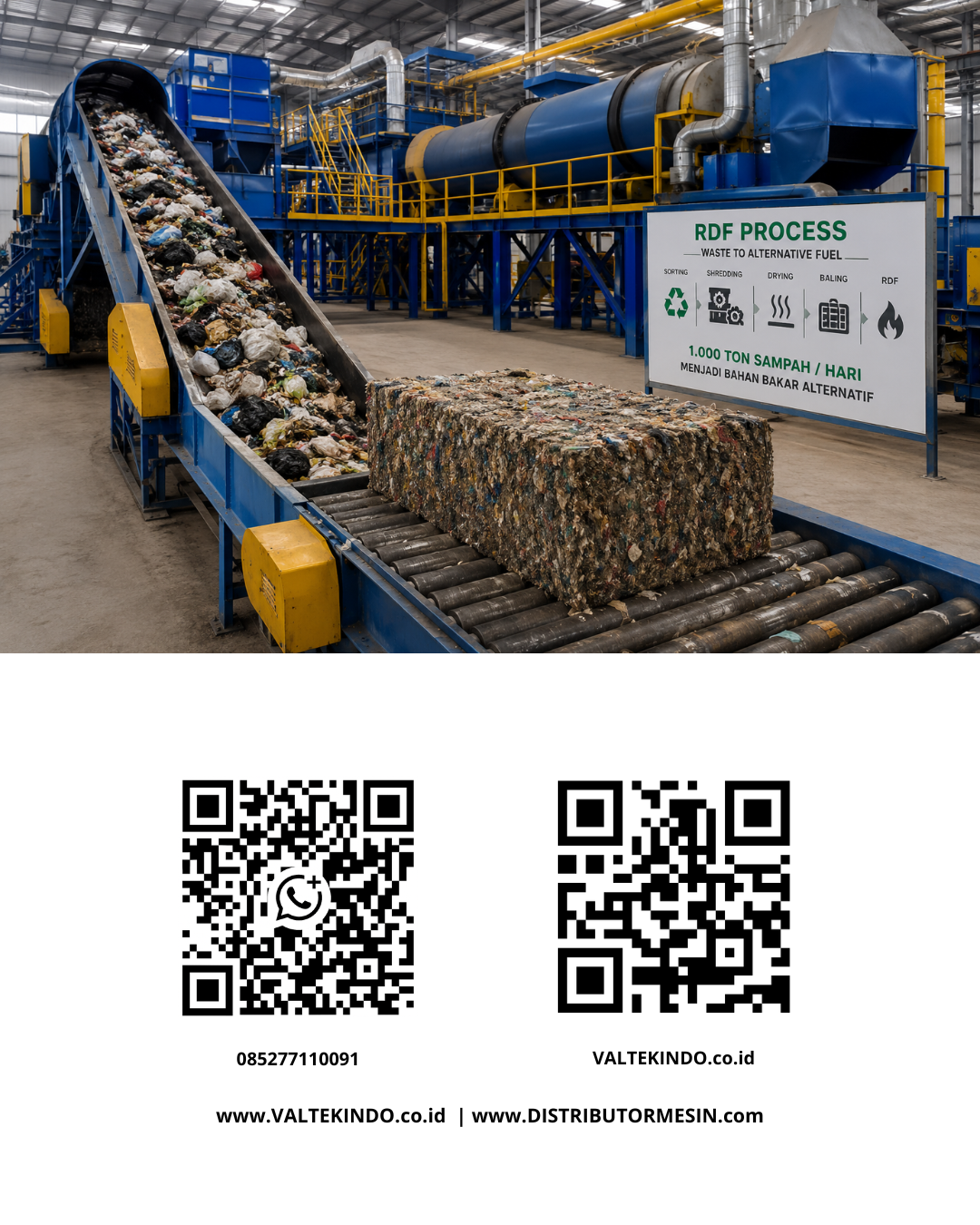
The issue of waste in Indonesia continues to be a major challenge, especially in industrial and urban areas with high population growth such as Bekasi Regency. As a strategic move, leading industrial technology providers like PT Valtekindo Global Intertek continue to drive the adoption of modern mechanized systems to address this emergency. This urgency is further highlighted by the local government's masterplan, where an RDF facility is being built at TPA Burangkeng Bekasi to process 1,000 tons of waste per day, which is expected to be a turning point for integrated upstream-to-downstream waste management.
The overcapacity condition at the Burangkeng Landfill (TPA) proves that the conventional "collect-transport-dump" method is no longer capable of handling the ever-increasing volume of waste daily. Therefore, the construction of a Refuse Derived Fuel (RDF) facility at TPA Burangkeng is a vital step toward a more modern and sustainable waste management system.
The RDF program is designed to process approximately 1,000 tons of waste per day into alternative fuel to substitute coal for industrial purposes. Apart from helping to reduce waste accumulation, this technology also delivers economic added value, as waste that was previously discarded as refuse can now be utilized as an alternative energy source.
RDF technology works through several processing stages. Incoming waste is first sorted to separate organic materials, metals, plastics, and substances with high calorific value. Following the sorting process, the waste undergoes a shredding stage using a shredder or crusher machine to achieve a more uniform material size. Subsequently, the material is dried to reduce moisture content, producing solid fuel with a more stable quality.
In modern processing systems, the availability of machinery is the primary factor determining the success of RDF production. Without the support of the right technology, large-scale waste processing will struggle to run efficiently. Several machines commonly deployed in RDF facilities include automated conveyors, waste shredders, rotary dryers, magnetic separators, vibrating screens, and RDF baling or packaging machines.
As a company engaged in the distribution of various types of industrial machinery, PT Valtekindo Global Intertek plays an essential role in supporting the demand for modern waste processing technology in Indonesia. Industrial demand for waste processing machinery and automation systems is currently rising alongside the growth of waste-to-energy and RDF projects across various regions.
In projects like TPA Burangkeng, the deployment of appropriate industrial machinery helps accelerate the sorting and processing of large volumes of waste. For instance, conveyor machines facilitate automated material distribution between production lines, thereby reducing reliance on manual labor. Meanwhile, industrial shredder machines are capable of crushing various types of solid waste into smaller sizes for easier processing into RDF.
Furthermore, drying technology is also a critical component in alternative fuel production. Waste with high moisture content can degrade the quality of RDF and lower combustion efficiency for end-user industries like cement factories and coal-fired power plants (PLTU). Therefore, the implementation of modern drying systems is highly necessary to maintain the quality of the final RDF output.
The application of modern waste processing technology also yields positive environmental impacts. By reducing the volume of waste dumped in landfills, the risks of soil contamination, leachate, and methane gas emissions can be minimized. On the other hand, utilizing RDF as a coal substitute helps industries reduce their dependence on fossil fuels.
The Bekasi Regency Government even targets the revitalization of TPA Burangkeng to become a blueprint for modern waste management in Indonesia through a combination of RDF technology and Waste-to-Energy (PSEL) power plants. This system is considered capable of being a long-term solution to tackle urban waste emergencies while creating new renewable energy sources.
Moving forward, the demand for waste processing machinery technology is projected to keep increasing in line with government incentives toward a circular economy and renewable energy. Industries no longer just require waste disposal systems, but rather technology capable of converting waste into economically valuable products.
Through the backing of modern industrial machinery, production automation, and continuously evolving waste processing technology, waste management in Indonesia holds a major opportunity to transform from an environmental burden into a beneficial alternative energy source for both industry and society at large.
Optimize Your Industry Today!
Achieve production efficiency and the highest quality standards with a trusted industrial machinery provider. Explore our wide selection of premium processing and testing equipment at:
Website : valtekindo.co.id
Wesbite : distributormesin.com
Consult your technical needs with our expert sales team:
WhatsApp 1: +62 852-2211-0091
WhatsApp 2: +62 852-7711-0091

Admin
AuthorAdmin is a writer on the Valtekindo website, providing informative content about High Quality Industrial Machinery and Testing Machines.
Related post:
- Pharmaceutical Factory Production Escalation Strategy: Why Investing in an Automatic Capsule Filling Machine is the Most Crucial Business Decision
- High-Precision Wire Cut EDM Technology in 2026: The Ultimate Solution for Mold Making, Stamping Dies, and Automotive Component Fabrication Without Thermal Distortion
- 2026 Automated Carton Sealer & Erector Investment Guide: End-of-Line Automation Strategies for Industrial Plant Efficiency