How Precision Machinery and Smart Manufacturing Help the Aviation Industry Survive
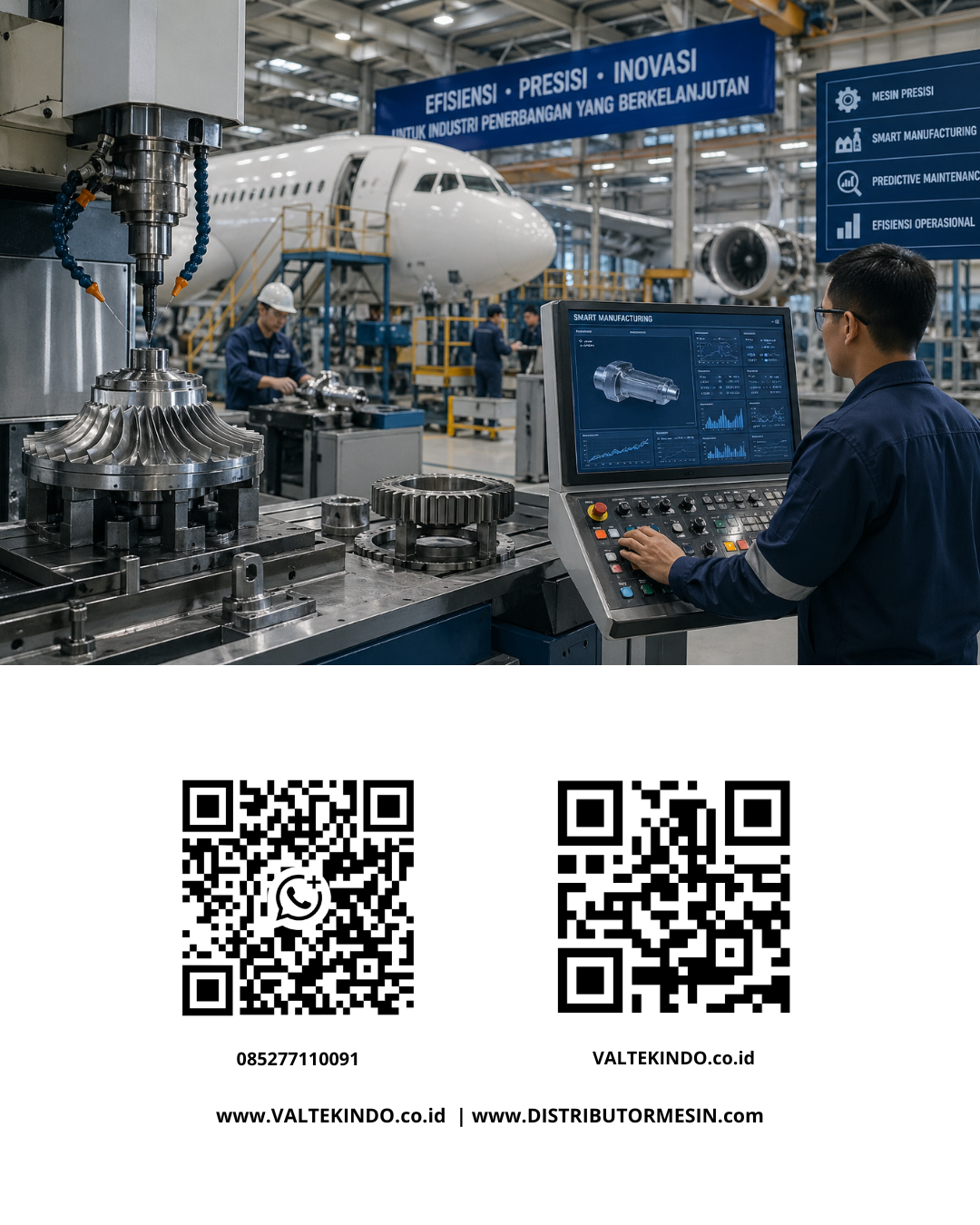
Government policies to maintain airfares for the sake of purchasing power and a competitive aviation industry serve as a vital signal for strengthening the national aviation ecosystem. As the government limits airfare increases to the 9–13 percent range amidst jet fuel costs that account for 40 percent of airline operating expenses, the issue of industrial efficiency has become increasingly critical. Amidst these challenges, the sustainability of this sector depends not only on fiscal policy but also on the industry's ability to improve efficiency through smarter manufacturing technologies.
As a provider of industrial technology solutions, PT Valtekindo Global Intertek recognizes that operational efficiency begins with the right infrastructure. A factor often overlooked in public discussion is the role of precision machinery and smart manufacturing in supporting the aviation ecosystem, particularly in Maintenance, Repair, and Overhaul (MRO), component production, and supply chain efficiency. As operating cost pressures rise, the industry is required not only to cut expenses but also to maintain reliability and safety—two non-negotiable factors in the aviation sector.
Precision machinery plays a vital role in manufacturing and processing components with extremely tight tolerances, ranging from mechanical parts and fuel system support components to aircraft maintenance tooling. High accuracy helps reduce scrap, minimize production errors, and extend the service life of components. In an industry facing cost pressures, this level of efficiency has a tangible impact on reducing the total cost of ownership.
Furthermore, a smart manufacturing approach enables the integration of automation, sensors, data monitoring, and predictive maintenance to create more adaptive operations. Instead of relying on corrective maintenance—which is often costly and risks causing downtime—the industry is moving toward predictive models that detect potential disruptions before damage occurs. Studies on AI-assisted predictive maintenance even show significant potential for additional cost efficiencies without compromising safety standards.
In the aviation industry, downtime means cost. Maintenance delays, spare part shortages, or manufacturing process inefficiencies can directly impact fleet utilization. Therefore, modernizing production and MRO facilities has become a key survival strategy, especially as the government provides incentives by eliminating import duties on aircraft spare parts to reduce operating costs.
This is where the smart factory concept becomes relevant. Through the integration of precision machinery, digital control systems, and process automation, companies can increase production consistency, reduce human error, and accelerate turnaround times. Technologies such as precision CNC, automated inspection systems, and data-driven monitoring are increasingly becoming the foundation of the manufacturing industry supporting aviation.
Additionally, the adoption of advanced manufacturing, such as precision machining and additive manufacturing, is being seen as a solution for efficient component production, particularly to reduce lead times and support supply chain flexibility. Amid global volatility, the ability to produce or process components more efficiently becomes a strategic advantage.
In the Indonesian context, strengthening the aviation support industry involves more than just airlines; it encompasses the entire industrial ecosystem. Providers of industrial technology, precision manufacturing, and automation solutions play a key role in supporting this transformation. This is where professional industrial capabilities become relevant as part of industrial solutions, offering machine technology, manufacturing systems, and automation integration that help industry players improve operational efficiency and readiness for modern manufacturing.
This approach is not just about replacing old machines with new ones; it is about building a more resilient production process. When energy costs rise, margins are squeezed, and market pressures increase, industrial endurance is often determined by behind-the-scenes process efficiency—something built through technology, not just policy.
Ultimately, efforts to keep airfares affordable cannot be separated from transformation at the industrial level. Government policies help mitigate short-term pressure, but long-term sustainability depends on how the industry responds with innovation. Precision machinery, predictive maintenance, and smart manufacturing are no longer just modernization agendas; they are strategic instruments for the aviation industry to remain competitive, efficient, and resilient amidst global uncertainty.
Optimize Your Industry Today!
Achieve production efficiency and the highest quality standards with a trusted industrial machinery provider. Explore our wide selection of premium processing and testing equipment at:
Website : valtekindo.co.id
Wesbite : distributormesin.com
Consult your technical needs with our expert sales team:
WhatsApp 1: +62 852-2211-0091
WhatsApp 2: +62 852-7711-0091

Admin
AuthorAdmin is a writer on the Valtekindo website, providing informative content about High Quality Industrial Machinery and Testing Machines.
Related post:
- Pharmaceutical Factory Production Escalation Strategy: Why Investing in an Automatic Capsule Filling Machine is the Most Crucial Business Decision
- High-Precision Wire Cut EDM Technology in 2026: The Ultimate Solution for Mold Making, Stamping Dies, and Automotive Component Fabrication Without Thermal Distortion
- 2026 Automated Carton Sealer & Erector Investment Guide: End-of-Line Automation Strategies for Industrial Plant Efficiency