Getting to Know the Universal Testing Machine: Functions, Working Principles, and Industrial Applications
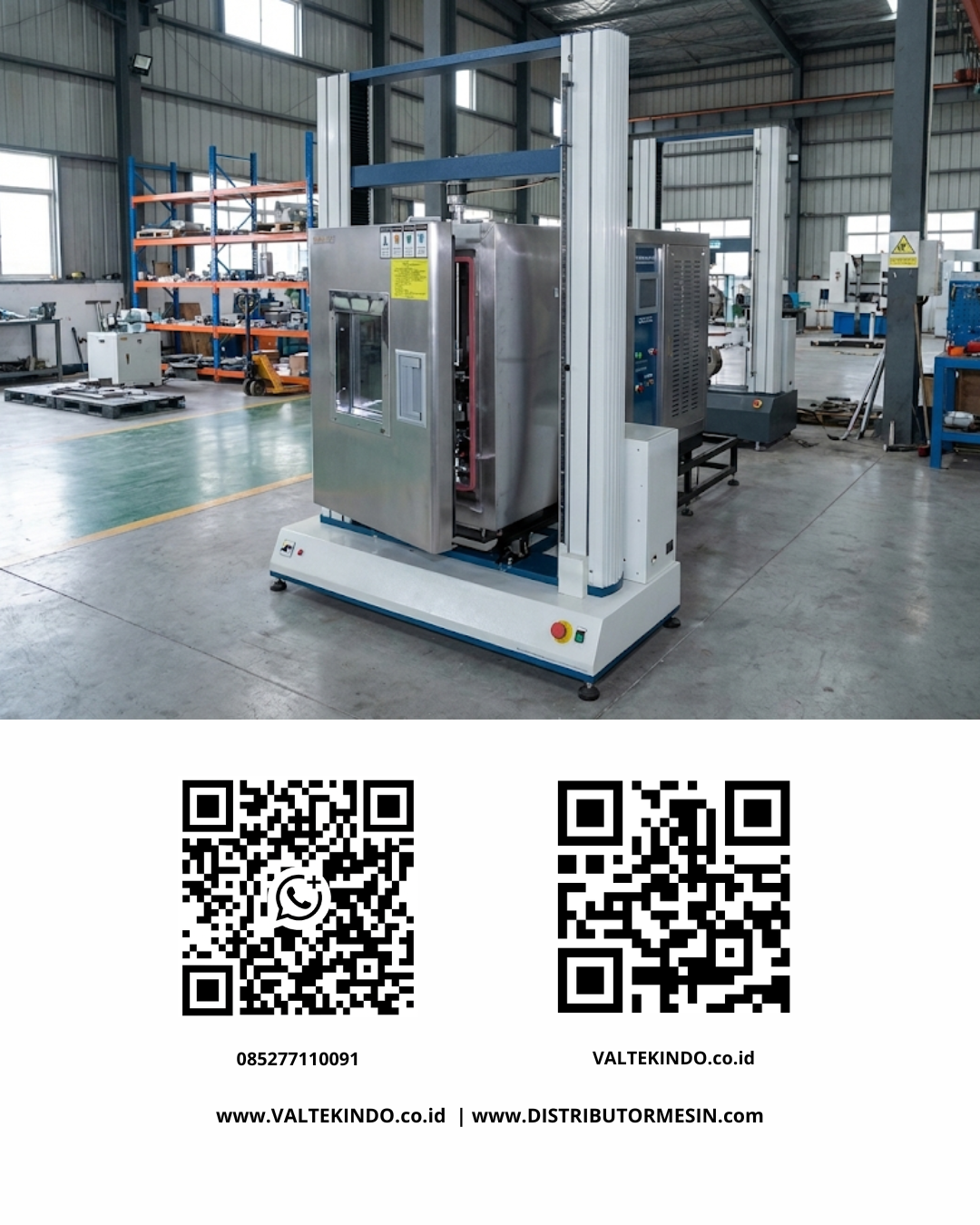
In the world of engineering and manufacturing, ensuring material quality is a non-negotiable step to guarantee the safety and durability of the final product. One of the most vital instruments used in Quality Control (QC) and Research and Development (R&D) laboratories is the Universal Testing Machine (UTM).
Often referred to as a "versatile material testing machine," the UTM plays a key role in measuring the mechanical properties of various types of materials, ranging from metals, concrete, rubber, plastics, to textiles. This article will discuss in depth its functions, working principles, and applications across various industrial sectors.
Main Functions of the Universal Testing Machine
As the name implies, the Universal Testing Machine is designed to perform various types of mechanical tests using a single machine. This flexibility is achieved by changing the grips or fixtures according to the desired testing standards. Here are its main functions:
- Tensile Test: Measures material strength when pulled until rupture. The resulting parameters include yield strength, ultimate tensile strength, and elongation.
- Compression Test: The opposite of the tensile test, this method measures material resistance when subjected to compressive load. It is commonly used on concrete or hard foams.
- Flexural/Bending Test: Measures material strength when bent. This is crucial for beam construction materials or composites.
- Shear Test and Peel Test: Used to test the strength of joints, glues, or adhesive layers.
How Does a UTM Work?
Simply put, a UTM works by applying a controlled force (load) to a test specimen while measuring the material's response. The machine consists of two main parts: the load frame and the control system.
The specimen is clamped onto grips connected to a crosshead. When testing begins, the crosshead moves (up for tension, down for compression) at a highly precise speed. During this process, a load cell (force sensor) records the force occurring, while an extensometer measures length changes or deformation in the material.
This data is then sent to computer software to be processed into a Stress-Strain Graph. This graph serves as the reference for engineers to determine whether a material passes SNI, ASTM, or ISO standards.
Read also: Understanding Tensile Testing: An Important Method for Material Quality Control
Applications Across Various Industrial Sectors
The use of UTMs crosses various industrial sector boundaries because every physical object possesses mechanical properties that must be validated.
- Automotive Industry: Used to test the strength of metal in car frames, bumper hardness, and seat upholstery elasticity.
- Construction and Civil Engineering: Mandatory for testing the strength of concrete, reinforcing steel (rebar), and asphalt to prevent building structural failures.
- Textiles and Polymers: Tests the strength of threads, fabrics, and packaging plastics to ensure they do not tear easily during distribution.
Apart from routine Quality Control, UTMs are crucial in the research sector. In the development of new materials like super-alloys or aerospace composites, standard room temperature testing is often insufficient. Researchers frequently require extreme environmental condition simulations. Therefore, the use of high and low-temperature tensile testing machines becomes very important in material Research and Development (R&D) activities to analyze mechanical behavior under extreme temperature conditions, whether exposed to high heat or low temperatures (cryogenic). Data from these environmental tests helps predict material lifespan in the real world.
Conclusion
The Universal Testing Machine is not merely a measuring tool, but a primary gateway in product safety validation. By understanding its functions and working principles, industry players can optimize production processes, reduce the risk of material failure, and ensure compliance with international standards. Investment in accurate material testing is an investment in long-term reputation and safety.
Optimize Your Industry Today!
Achieve production efficiency and the highest quality standards with a trusted industrial machinery provider. Explore our wide selection of premium processing and testing equipment at:
Website : valtekindo.co.id
Wesbite : distributormesin.com
Consult your technical needs with our expert sales team:
WhatsApp 1: +62 852-2211-0091
WhatsApp 2: +62 852-7711-0091

Admin
AuthorAdmin is a writer on the Valtekindo website, providing informative content about High Quality Industrial Machinery and Testing Machines.
Related post:
- Pharmaceutical Factory Production Escalation Strategy: Why Investing in an Automatic Capsule Filling Machine is the Most Crucial Business Decision
- High-Precision Wire Cut EDM Technology in 2026: The Ultimate Solution for Mold Making, Stamping Dies, and Automotive Component Fabrication Without Thermal Distortion
- 2026 Automated Carton Sealer & Erector Investment Guide: End-of-Line Automation Strategies for Industrial Plant Efficiency