Essential Maintenance for PP Spunbond Machines: Ensuring Longevity and Maximum Production
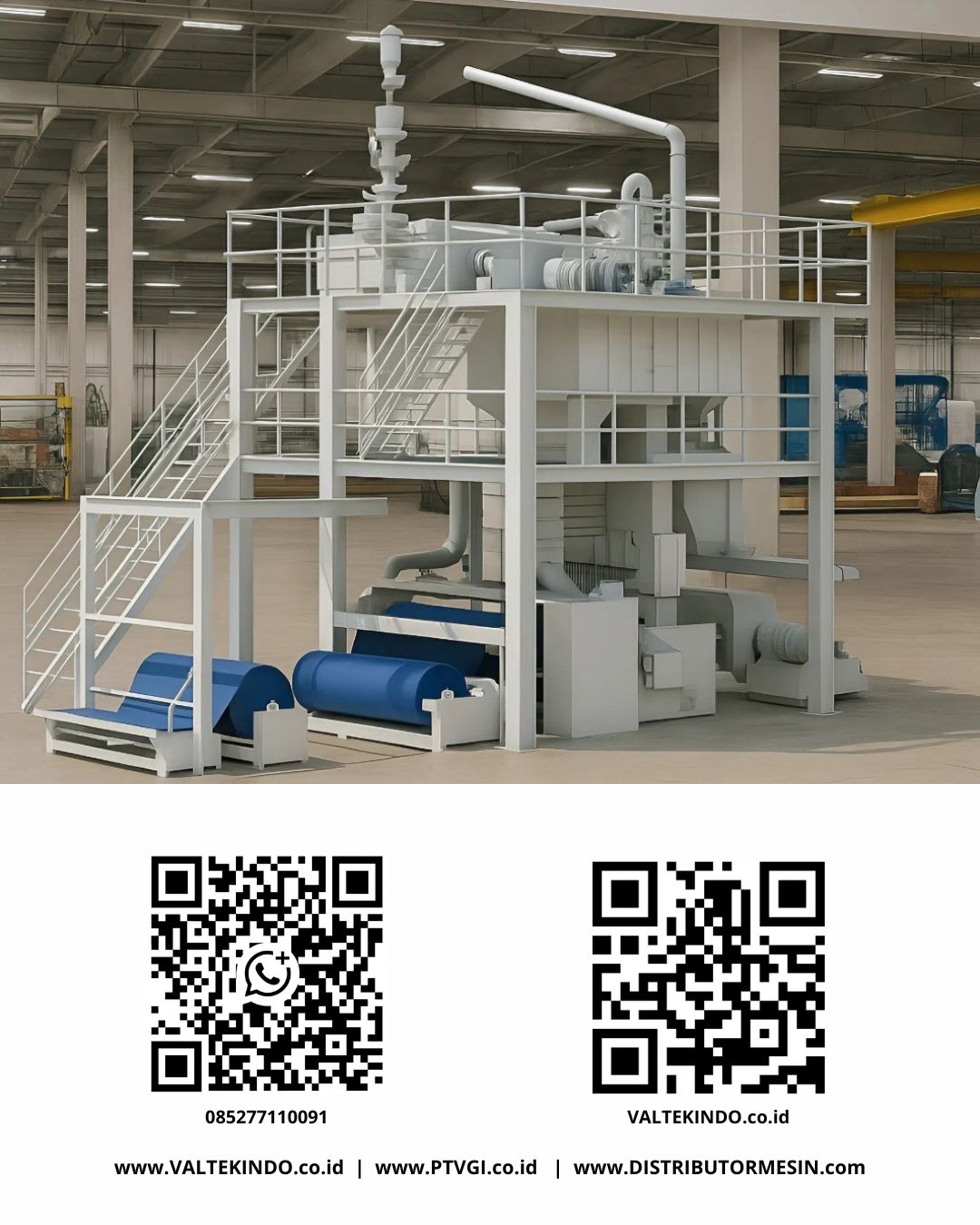
The non-woven industry has become the backbone for many sectors, from medical (raw materials for masks) to consumer goods (shopping bags or goodie bags). At the heart of this production lies the PP Spunbond Machine, a sophisticated technological investment that transforms raw Polypropylene (PP) pellets into functional fabric rolls. However, owning an advanced machine is just the first step. Without proper maintenance, a machine that should be a profit-generating asset can turn into a source of costly downtime.
PP Spunbond machines, such as those offered by a trusted distributor PT Valtekindo Global Intertek, are designed for high-speed, high-volume operations. These machines are complex, integrated systems. Understanding how to maintain them is essential to ensure long-term durability and, most importantly, keep production capacity at its maximum. This article will provide an in-depth review of the critical maintenance points for your PP Spunbond machine.
Understanding the Machine's Anatomy: Critical Maintenance Points
Before diving into the maintenance schedule, we must understand the most crucial components of a PP Spunbond machine. Based on technical specifications, this machine operates in one continuous flow:
- Extruder: Where PP pellets are melted at high temperatures. The vital components here are the screw and the screen changer (filter).
- Die Head (Spinneret): The heart of the machine. This is a precision-engineered metal block with thousands of microscopic holes (microns) where the molten PP is "spun" into continuous filaments. Specifications like Filament Denier (1.5 - 2.5 d) indicate just how fine these holes are.
- Quenching & Drawing System: After exiting the spinneret, the filaments are rapidly cooled by air (quenching) and then stretched (drawing) to increase their strength.
- Web Former: The drawn filaments are laid down randomly but uniformly onto a moving conveyor belt to form a web.
- Calender (Thermal Bonding): The filament web is then passed between two large heated rollers (one of which usually has an embossed pattern). This heat and pressure "bond" the fibers together, creating the strong non-woven fabric.
- Winder: The finished product is wound into large (jumbo) rolls.
Specifications like the PP Spunbond maker machine for mask raw material, which come in various widths (e.g., 1600mm, 2400mm, up to 4200mm) and GSM ranges (10-180 g/sq.m), show that every component must work in harmony. Poor maintenance at one point will ruin the entire output.
Preventive Maintenance Schedule: Daily, Weekly, Monthly
The key to maximum production is preventive maintenance, not reactive maintenance (fixing it when it breaks).
Daily Maintenance (Every Shift):
- Visual Check: Inspect the entire production line for oil leaks, loose bolts, or abnormal noises.
- Monitor Temperature & Pressure: Ensure temperatures in each extruder zone and the calender rollers are stable and match the settings for the GSM being produced.
- Screen Changer Check: Monitor the pressure before and after the filter in the extruder. A drastic pressure increase indicates a dirty screen that needs immediate replacement to avoid contamination of the spinneret.
- Area Cleanliness: Clean up residual PP fibers or dust around the web former and winder. Stray fibers can get pulled back into the roll and cause product defects.
- Calender Roller Check: Ensure no molten PP is sticking or hardening on the roller surface.
Weekly Maintenance:
- Lubrication: Perform greasing on all manufacturer-recommended bearings and moving points, especially in high-speed areas like the drawing system and winder.
- Belt Inspection: Check the tension and cleanliness of the conveyor belt on the web former. A dirty or loose belt will result in a non-uniform web.
- Sensor Calibration: Check the accuracy of temperature sensors (thermocouples) and pressure sensors.
- Quenching System Check: Clean the air filters for the quenching system. Uneven airflow will produce filaments of varying thickness.
Monthly & Periodic Maintenance:
- Spinneret Cleaning (Critical!): This is the most vital maintenance task. The spinneret must be removed and cleaned professionally. Never attempt to poke the spinneret holes with a wire!
- Method: Cleaning typically involves a pyrolysis process (a vacuum oven to burn off polymer residue) followed by an ultrasonic bath in a special chemical solution. A clean spinneret guarantees filament quality.
- Extruder Screw Check: During a major shutdown, perform a visual inspection of the extruder screw. Carbon buildup or wear will affect melt quality.
- Pneumatic & Hydraulic System Check: Check for leaks and ensure working pressures are at standard.
- Motor & Drive Check: Inspect the main motor drives and ensure the speed synchronization between the drawing, web former, and calender is accurate.
Focus on Critical Points: Maintaining Quality and Speed
Of all the schedules above, three components have the greatest impact on fabric quality and potential downtime.
1. The Spinneret (Die Head): The main problem here is clogging. This can be caused by dirty PP pellets, poorly dispersed masterbatch, or polymer degradation (carbon) inside the die. The slightest clog will cause filament breaks, which appear as "holes" or thin spots in the fabric. Regular cleaning is mandatory.
2. The Calender Rollers (Thermal Bonding): The challenge is maintaining a precise and uniform temperature across the entire roller surface (especially on wide machines like 3200mm or 4200mm) and keeping it clean. If the temperature is too hot, the fabric will be stiff or have holes. If it's too cold, the bonding will be weak, and the fabric will tear easily. Any PP residue stuck to the emboss roller will create a repeating defect in the fabric. Understanding how to set these parameters is crucial, especially if your machine, like this high-specification spunbond machine, can produce a wide GSM range (10-180 gsm).
3. The Filtration System (Screen Changer): This is the first line of defense before the molten PP enters the spinneret. Saving costs by delaying a filter change is a fatal mistake. Any contaminants that pass through will directly damage the very expensive spinneret. A machine with a daily output of 4,000 to 9,000 Kg processes a massive amount of material; its filtration system must be pristine.
The High Cost of Neglected Maintenance
Ignoring essential maintenance will directly impact your bottom line. First, product quality drops drastically (uneven GSM, holes, low tensile strength), leading to customer complaints. Second, unplanned downtime. Replacing a damaged spinneret or cleaning a jammed screw can take days, halting production that should be running 24/7. Third, the machine's lifespan will be significantly shorter than intended.
Investing in a non-woven production machine is a long-term strategic decision. Choosing the right partner, like PT Valtekindo Global Intertek, gives you an initial advantage with a quality machine. However, to guarantee durability and profitability, a commitment to disciplined preventive maintenance is non-negotiable.
Conclusion
A PP Spunbond machine is an incredibly powerful asset when maintained correctly. Maintenance is not just about cleaning; it's about precision: maintaining the cleanliness of micron-sized holes in the spinneret, the temperature uniformity of the calender, and the purity of the material in the extruder. By dedicating resources to daily, weekly, and monthly maintenance, you not only extend the life of your machine but also ensure that every meter of fabric coming off your non-woven bag raw material production machine is a premium quality product. In the end, maintenance is an investment, not an expense.
Optimize Your Industry Today!
Achieve production efficiency and the highest quality standards with a trusted industrial machinery provider. Explore our wide selection of premium processing and testing equipment at:
Website : valtekindo.co.id
Wesbite : distributormesin.com
Consult your technical needs with our expert sales team:
WhatsApp 1: +62 852-2211-0091
WhatsApp 2: +62 852-7711-0091

Admin
AuthorAdmin is a writer on the Valtekindo website, providing informative content about High Quality Industrial Machinery and Testing Machines.
Related post:
- Pharmaceutical Factory Production Escalation Strategy: Why Investing in an Automatic Capsule Filling Machine is the Most Crucial Business Decision
- High-Precision Wire Cut EDM Technology in 2026: The Ultimate Solution for Mold Making, Stamping Dies, and Automotive Component Fabrication Without Thermal Distortion
- 2026 Automated Carton Sealer & Erector Investment Guide: End-of-Line Automation Strategies for Industrial Plant Efficiency