5 Key Factors to Consider Before Investing in Tape Production Machinery
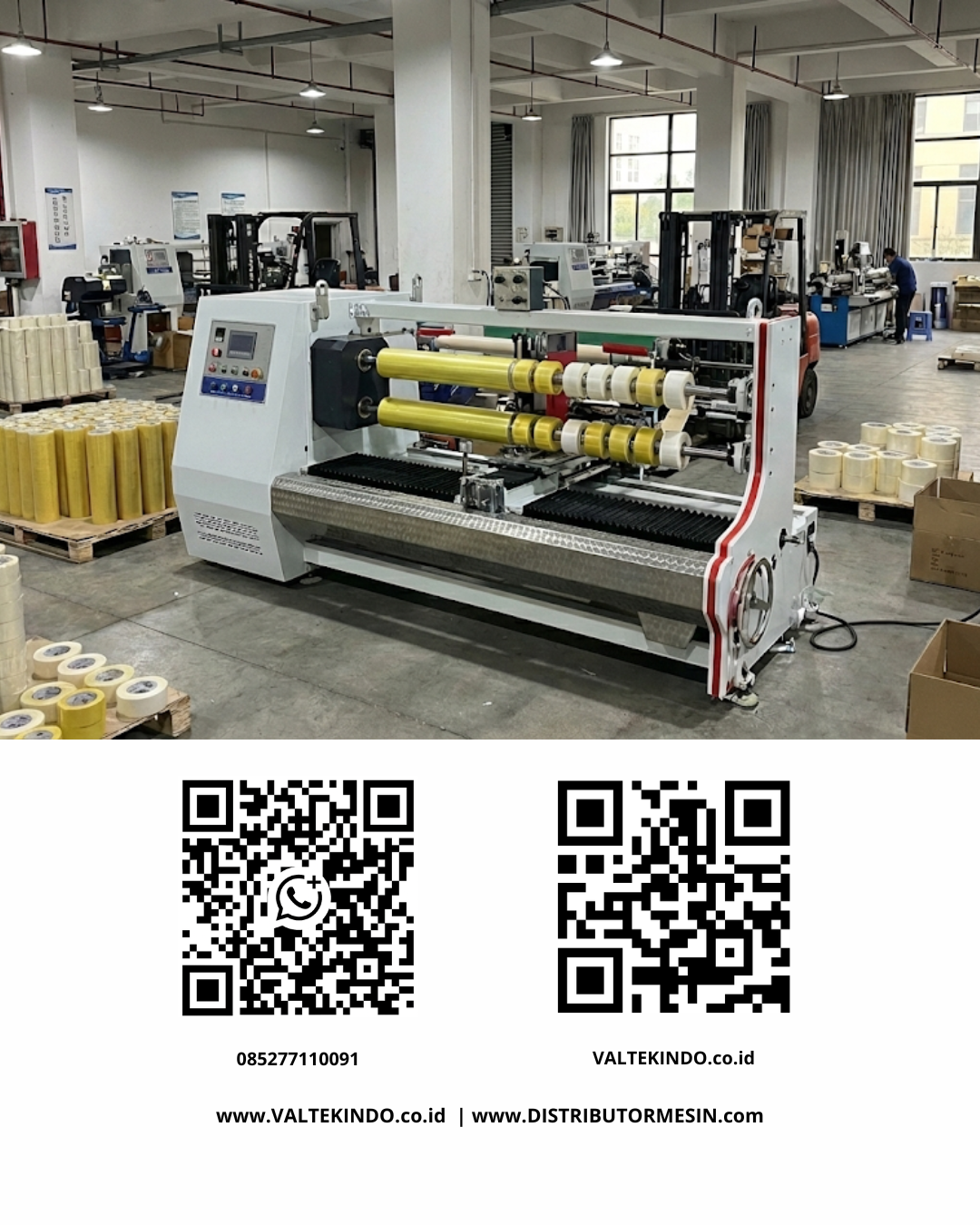
Over the last decade, the packaging industry—both in Indonesia and globally—has become the backbone of the logistics and e-commerce sectors. The surge in shipping volumes has automatically boosted the demand for supporting materials, one of the most critical being adhesive tape. As a consumable good, the tape production business offers very high potential for repeat orders.
For manufacturers, investing in tape production machinery seems like a strategically profitable move. However, reality demands caution. Buying a production machine is not just about finding the cheapest price; it is about long-term operational sustainability. To ensure your investment does not become a burden later on, here are five technical and strategic factors that must be considered in depth.
1. Slitting Technology Accuracy
The heart of a tape roll's quality lies in the cutting or "slitting" process. End consumers demand neat rolls, flat edges, and consistent winding tension so the tape does not break easily when pulled. Machines with poor slitting technology will generate significant material waste, which ultimately erodes your profit margins.
Industrial technology continues to advance, particularly regarding production accuracy. Various industry studies show that the application of automation and precision cutting systems significantly impacts efficiency and product quality. Although applications may differ between material types, the principle of cutting precision remains a crucial benchmark when selecting modern tape production machines.
2. Material Flexibility and Compatibility
The adhesive tape market is highly dynamic. Demand may be high for clear tape (BOPP) today, but tomorrow it could shift to masking tape, kraft tape, or double tape. A common mistake made by beginner entrepreneurs is purchasing machines that are rigidly capable of processing only one specific material.
It is advisable to choose a machine with a high level of flexibility, both in terms of blade settings and the ability to process various types of adhesive materials. Before purchasing, it is important to review the technical specifications of the Tape Making Machine offered by the manufacturer or supplier. By studying the available configurations and technical features, you can ensure that a single production system can be used to produce various industrial tape and film variants.
3. Energy Consumption Efficiency
In calculating the Cost of Goods Sold (COGS), electricity costs occupy a significant portion after raw materials. Tape production machines involve high-speed drive motors and often heating systems for drying glue. Older generation machines tend to be power-hungry, which will make your products difficult to compete with in terms of market price. Ensure you choose a machine that has adopted inverter technology or servo motors, which are more energy-efficient yet remain powerful.
4. Operational Ease (User-Friendly)
Advanced technology is useless if it is too complicated for local technicians to operate. The Human Machine Interface (HMI) factor, or an intuitive touchscreen control panel, is essential. Ease of setting parameters—such as speed, roll length, and tension—will speed up the production batch changeover process and minimize human error. Additionally, ensure the machine supplier provides adequate operator training so your team can maximize the machine's features from the first day of installation.
5. Construction Stability and Durability
The process of rewinding and slitting tape is performed at very high rotation speeds. If the machine frame (chassis) is not sturdy or is too light, the resulting vibration will be severe. This vibration is the main enemy of quality; it causes the rolls to become uneven (telescoping) and shortens the lifespan of machine components such as bearings and shafts. Invest in machines with solid, heavy steel construction to dampen vibration, ensuring product quality remains stable even when the machine is pushed to maximum speed.
Conclusion
Starting a tape production business is a long journey that requires a strong foundation. By researching the five factors above—ranging from technological precision and product flexibility to structural sturdiness—you can mitigate the risk of loss at the start of the venture. Remember that the production machine is your primary asset; choosing the right one means securing the efficiency and profitability of your business in the future.
Optimize Your Industry Today!
Achieve production efficiency and the highest quality standards with a trusted industrial machinery provider. Explore our wide selection of premium processing and testing equipment at:
Website : valtekindo.co.id
Wesbite : distributormesin.com
Consult your technical needs with our expert sales team:
WhatsApp 1: +62 852-2211-0091
WhatsApp 2: +62 852-7711-0091

Admin
AuthorAdmin is a writer on the Valtekindo website, providing informative content about High Quality Industrial Machinery and Testing Machines.
Related post:
- Pharmaceutical Factory Production Escalation Strategy: Why Investing in an Automatic Capsule Filling Machine is the Most Crucial Business Decision
- High-Precision Wire Cut EDM Technology in 2026: The Ultimate Solution for Mold Making, Stamping Dies, and Automotive Component Fabrication Without Thermal Distortion
- 2026 Automated Carton Sealer & Erector Investment Guide: End-of-Line Automation Strategies for Industrial Plant Efficiency