Material Strength Testing Equipment for Industry & Laboratories
 Click on the image to enlarge
FEATURE
DESCRIPTION / TECHNICAL SPECIFICATIONS
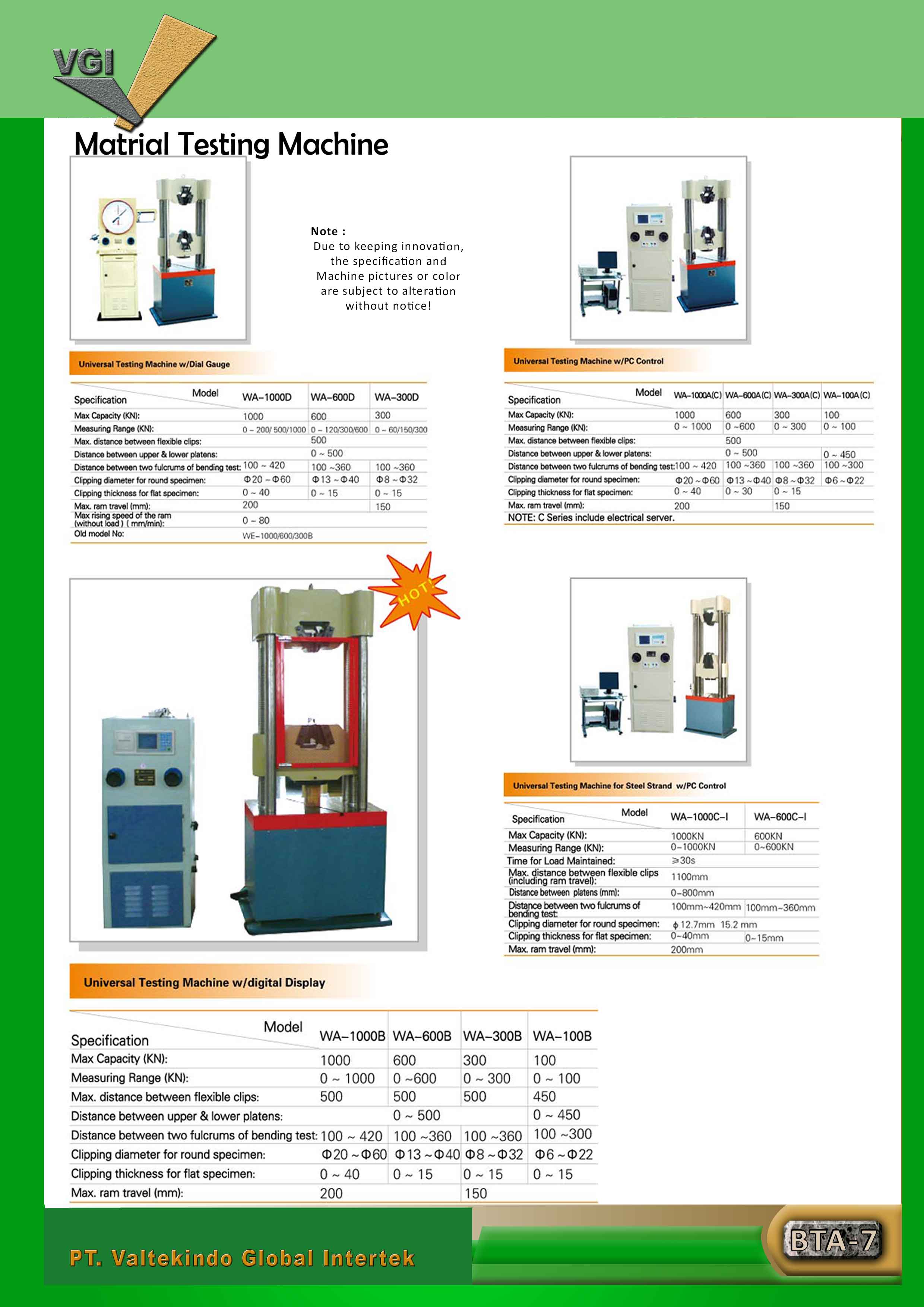
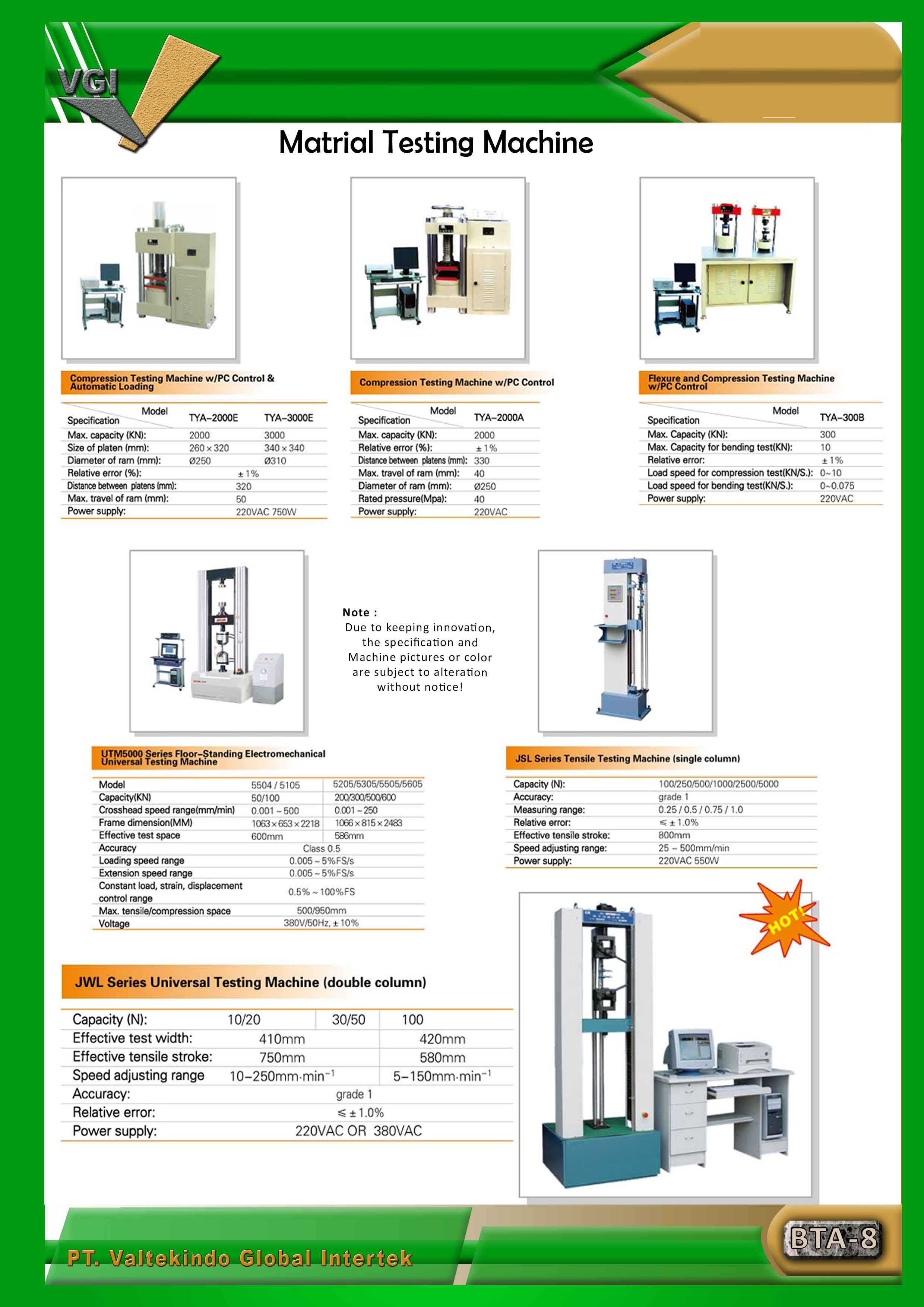
We provide a complete range of Material Testing Machines and Universal Testing Machines (UTM) to meet all your mechanical strength testing needs. Our extensive portfolio includes electromechanical and hydraulic systems for tensile, compression, and flexure tests that comply with various international standards. The following are the detailed configurations and specification ranges available in our portfolio.
Our portfolio offers an extremely wide range of force capacities and machine configurations to suit every application. Load capacities are available from 10KN up to 3000KN (300 Tons), ideal for testing lightweight materials like plastics and textiles, all the way to heavy-duty testing of steel and concrete. Machine configurations include compact single-column electromechanical systems, versatile double-column models, and heavy-duty hydraulic systems for ultra-high-strength testing. This selection ensures you get the right machine for the material type and strength you need to test.
Our systems are designed to perform the most fundamental mechanical testing modes. Core capabilities include tensile tests, compression tests, and flexure/bending tests. Depending on your laboratory's requirements, we offer several control and display system options. These range from units with a dial gauge display for basic readings, a digital display for higher accuracy and ease of reading, to systems with full PC control featuring advanced software for data acquisition, stress-strain curve plotting, in-depth analysis, and automated reporting.
The applications for our range of material testing machines are nearly limitless, covering a multitude of industrial and research sectors. These machines are routinely used to test a diverse array of materials such as metals, steel (including steel strand), concrete, plastics, rubber, composites, textiles, and many more. Every machine in our portfolio is designed to deliver accurate, reliable, and repeatable results, making them vital assets for quality control (QC), research and development (R&D), and product certification in both academic and industrial environments.
 Download
 Video
Video
 Kontak Sales 1