Latest Wood Pulp Process Technology: How to Improve Fiber Quality with High Precision
 Click on the image to enlarge
FEATURE
DESCRIPTION / TECHNICAL SPECIFICATIONS
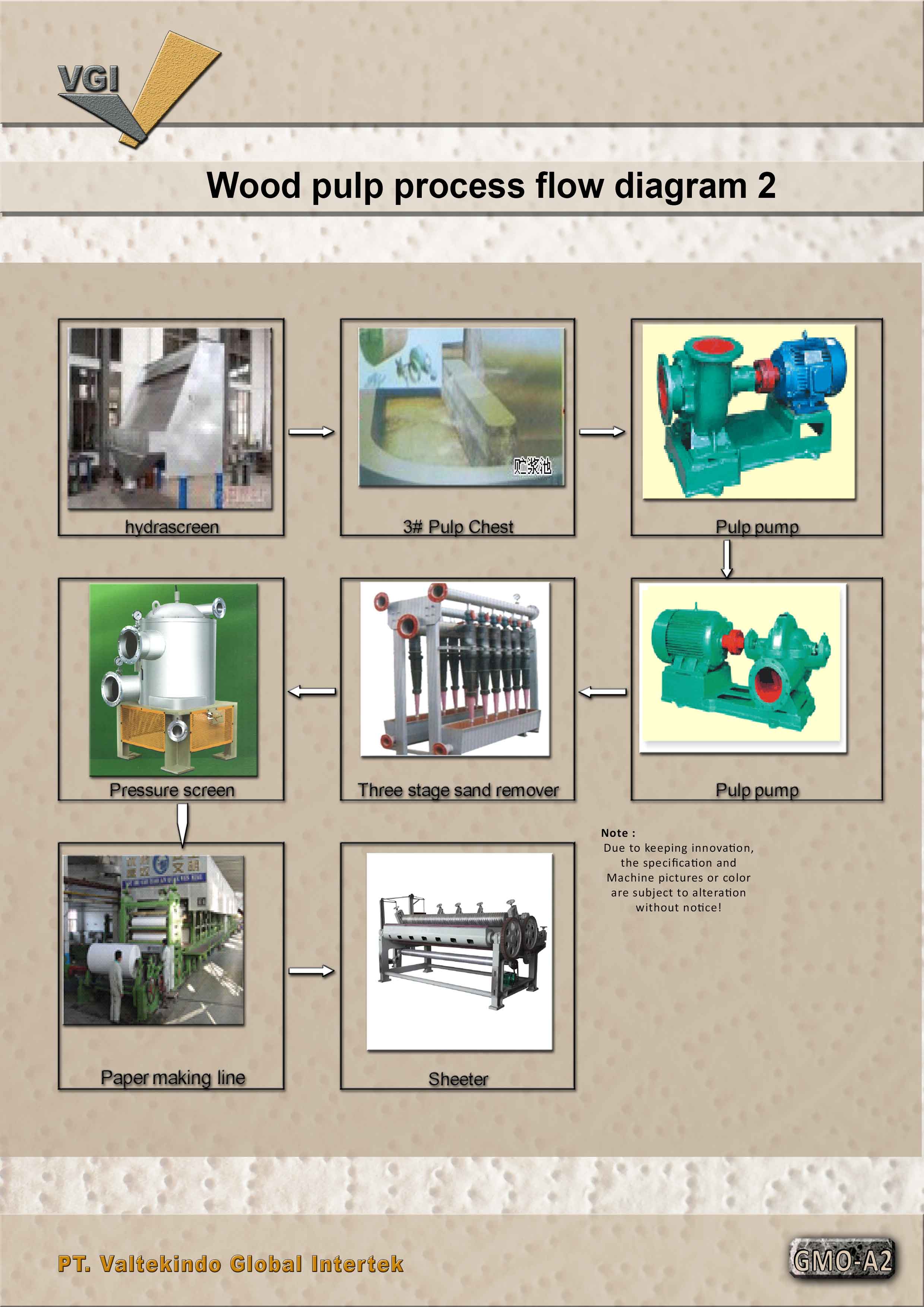
In modern manufacturing, the final stages of pulp refining determine a product's viability in the global market. Implementing a precise flow process is not just about efficiency; it is about producing clean, homogenous fibers free from contaminants. Below is a technological breakdown of the advanced pulp processing flow designed to achieve the highest fiber quality.
High-Precision Refining and Paper Formation Stages
-
Initial Filtration with Hydrascreen: The process begins with Hydrascreen filtration to separate coarse fibers, ensuring only high-quality material proceeds to the refining stage.
-
Stabilization in 3# Pulp Chest: The pulp is then stored in the 3# Pulp Chest to maintain pressure and mixture consistency before being pumped to the cleaning units.
-
Fluid Distribution System: Utilizing high-performance Pulp Pumps, the flow is kept steady without fluctuations that could damage the fiber structure.
-
Multi-Stage Cleaning (Three Stage Sand Remover): The Three Stage Sand Remover uses centrifugal technology to eliminate heavy particles like sand and other micro-impurities through three rigorous stages.
-
Advanced Pressure Screening: Before entering the paper machine, the pulp passes through a Pressure Screen for final filtration to ensure no fiber clumps or fine contaminants remain.
-
Sheet Formation in Paper Making Line: The purified fiber enters the Paper Making Line, where advanced mechanical technology converts the pulp into continuous paper sheets with consistent thickness.
-
Final Finishing with Sheeter: The final stage involves a high-precision Sheeter machine that cuts paper rolls into specified sheet sizes with maximum cutting accuracy.
 Download
 Video
Video
 Kontak Sales 1