Laboratory Equipment Current-Illumination Characteristics Photo Sensor
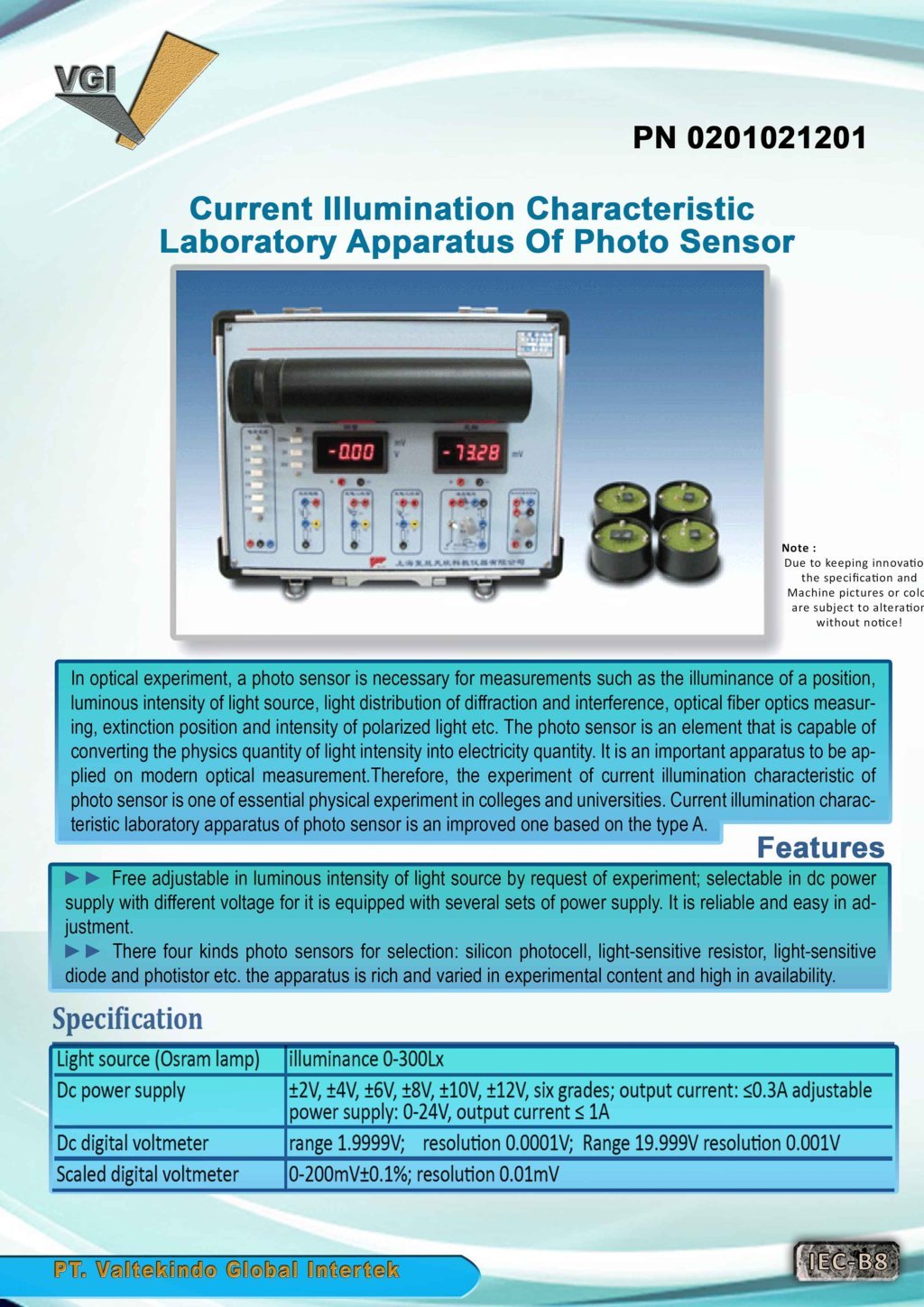 Click on the image to enlarge
FEATURE
DESCRIPTION / TECHNICAL SPECIFICATIONS
Introducing an essential and comprehensive experimental workstation designed for the in-depth study of photo sensors the fundamental components that convert light intensity into an electrical quantity This all-in-one platform allows students to experimentally characterize and compare the properties of the four most common types of photo sensors used in modern technology
The primary strength of this apparatus is its comparative study approach The kit comes equipped with four different sensor types a silicon photocell a light-sensitive resistor (LDR) a light-sensitive diode (photodiode) and a phototransistor This unique opportunity to directly test and compare these four different photoelectric conversion technologies on a single platform provides an exceptionally rich and in-depth learning experience
The experimental process is made simple yet effective Students will use the freely adjustable Osram lamp light source to illuminate each sensor at varying levels of brightness Then using the integrated high-precision digital voltmeters they will measure the resulting electrical response generated by each sensor whether it be a change in voltage current or resistance
Through this data collection students can plot the characteristic current-illumination curve for each sensor type From these graphs they can analyze and compare key performance parameters such as sensitivity dynamic range and linearity This comparative analysis helps them understand why certain sensors are better suited for specific applications for example why an LDR is used for a light switch while a photodiode is used for high-speed optical communication
Designed as a complete self-contained unit this apparatus includes everything needed for comprehensive experimentation Multiple sets of DC power supplies with various selectable voltages ensure the proper power is available for any type of sensor under test The clear digital readouts and easy adjustments make this a reliable and user-friendly platform for the laboratory environment
Overall with its rich and varied experimental content this apparatus is an indispensable instrument for any physics or optoelectronics laboratory in colleges and universities It provides a complete hands-on education in the principles and practical characteristics of the most important types of photo sensors in science and technology
 Download
 Video
Video
 Kontak Sales 1