Automatic Gasoline Oxidation Stability Tester (Induction Period Method)
 Click on the image to enlarge
FEATURE
DESCRIPTION / TECHNICAL SPECIFICATIONS
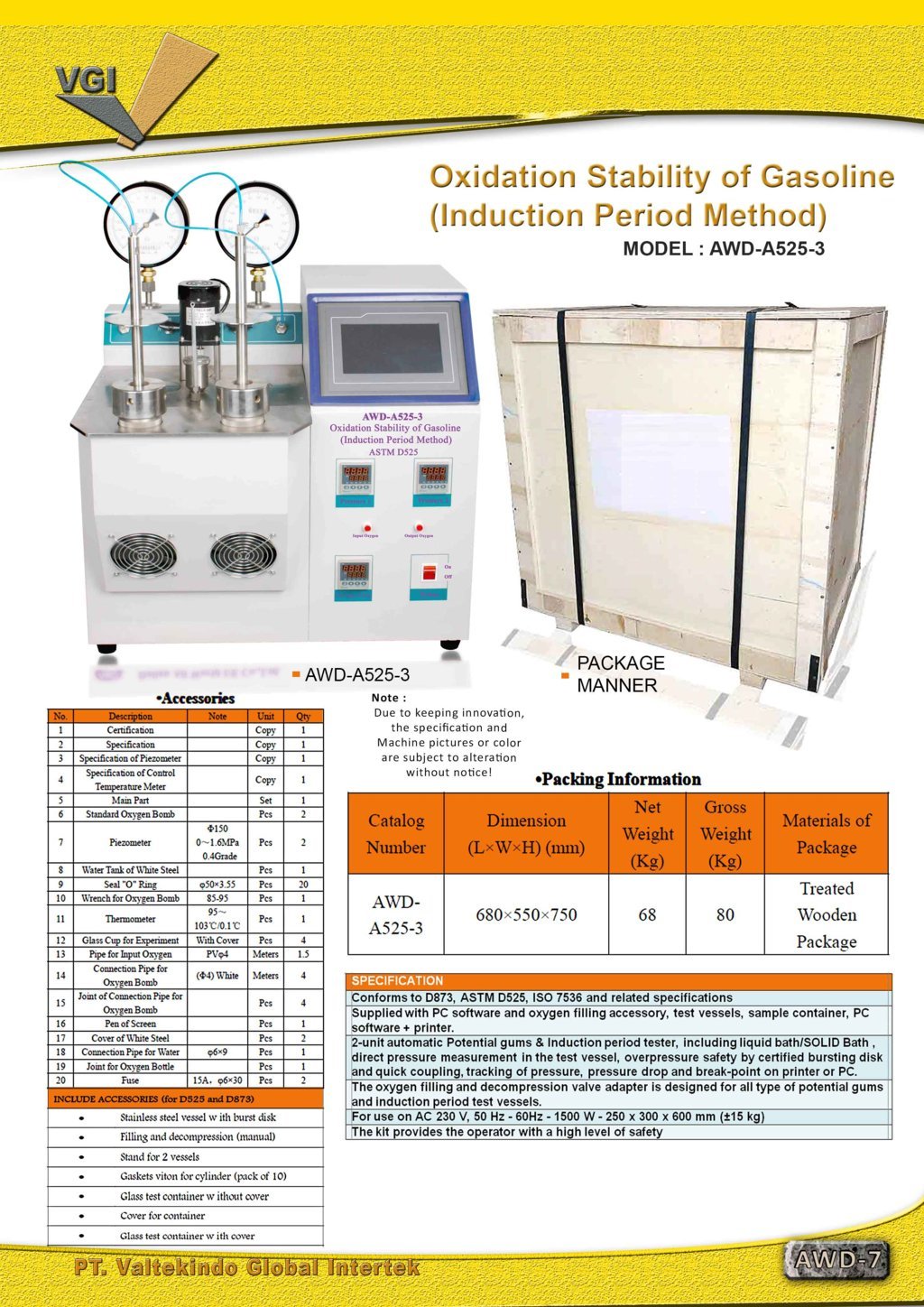
Guarantee the quality and extend the shelf life of your gasoline products with our automatic oxidation stability tester. This advanced instrument is specifically designed to determine the resistance of gasoline to oxidation via the induction period method, conforming to crucial international standards like ASTM D525, D873, and ISO 7536. Oxidation stability is a vital parameter that predicts the tendency of gasoline to form gum and deposits during storage, which can clog fuel systems and damage engines.
The instrument operates by accelerating the oxidation process under controlled conditions. A gasoline sample is placed in a pressure vessel (oxygen bomb), filled with pure oxygen, and heated in a precision solid/metal dry bath. Integrated PC software continuously monitors the pressure. The induction period is determined as the time elapsed until a significant pressure drop occurs, which signals the end of the gasoline's resistance to oxidation.
Featuring the capability to test two samples simultaneously, this instrument offers outstanding efficiency for high-volume laboratories. The entire process—from oxygen filling and decompression, and temperature control, to break-point detection—is fully automated. This not only ensures high accuracy and repeatability of results but also significantly simplifies the workflow and reduces the operator's workload.
Operator safety is a top priority. The instrument is equipped with a suite of advanced safety features, including a safety bucket, a bursting disk for emergency pressure release, and a secure quick-coupling system. The solid metal bath design also eliminates the risks associated with liquid heating mediums. These features combine to create an exceptionally safe working environment for lab analysts when handling volatile and high-pressure materials.
Investing in this oxidation stability tester is a strategic move to ensure product quality from the refinery to the consumer. With accurate data on gasoline shelf life, producers and distributors can better manage inventory, ensure compliance with specifications, and protect brand reputation. It is an essential tool for refineries, fuel storage terminals, and automotive research laboratories.
 Video
Video
 Kontak Sales 1