Apparatus For Water Separability Of Petroleum And Synthetic Fluid
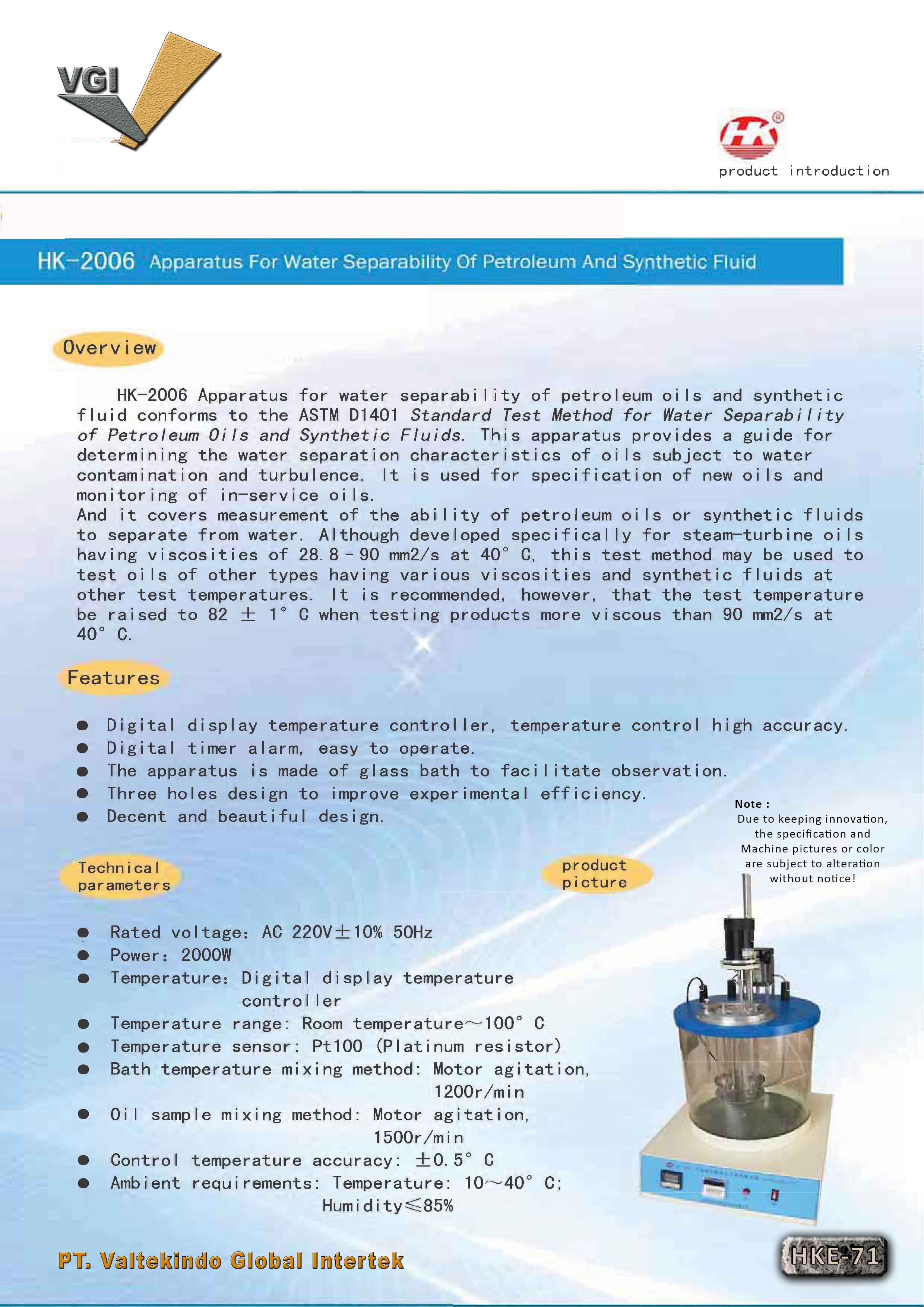 Click on the image to enlarge
FEATURE
DESCRIPTION / TECHNICAL SPECIFICATIONS
Evaluate the crucial performance of your petroleum oils and synthetic fluids with our Apparatus for Water Separability. This instrument is specifically designed to measure the ability of oil to separate from water (known as demulsibility), a vital characteristic especially for steam-turbine oils and other industrial lubricants prone to water contamination and turbulence. This apparatus is the definitive solution for the specification of new products and the monitoring of in-service oils, fully conforming to the ASTM D1401 international standard test method.
Precision in testing is key, and this apparatus is engineered for it. Equipped with a high-precision digital temperature controller, the instrument is capable of maintaining the bath temperature from room temperature up to 100°C with a strict control accuracy of ±0.5°C. To create standardized and repeatable test conditions, the device utilizes two separate motor agitation systems: one for temperature circulation within the bath (1200r/min) and another for stirring the oil sample at a specific speed (1500r/min), supported by a reliable Pt100 temperature sensor.
Designed for efficiency and ease of observation in the laboratory, this apparatus features a three-hole design, allowing the operator to conduct multiple tests simultaneously, thereby significantly increasing productivity and throughput. The use of a transparent glass bath is a standout feature that facilitates direct visual observation of the phase separation process between oil and water. Its operation is further simplified by a digital timer equipped with an alarm.
For lubricant manufacturers, power plants, and industrial maintenance laboratories, this water separability test apparatus is a critical investment. The ability of an oil to shed water quickly is crucial for preventing corrosion, premature wear, and sludge formation within machinery. This instrument provides the reliable, standardized data you need to guarantee lubricant quality, predict its service life, and prevent costly machinery failures.
 Download
 Video
Video
 Kontak Sales 1