Comprehensive Guide to Plastic Recycling Machine Investment: Strategies to Maximize ROI and Production Efficiency for Factory Scale
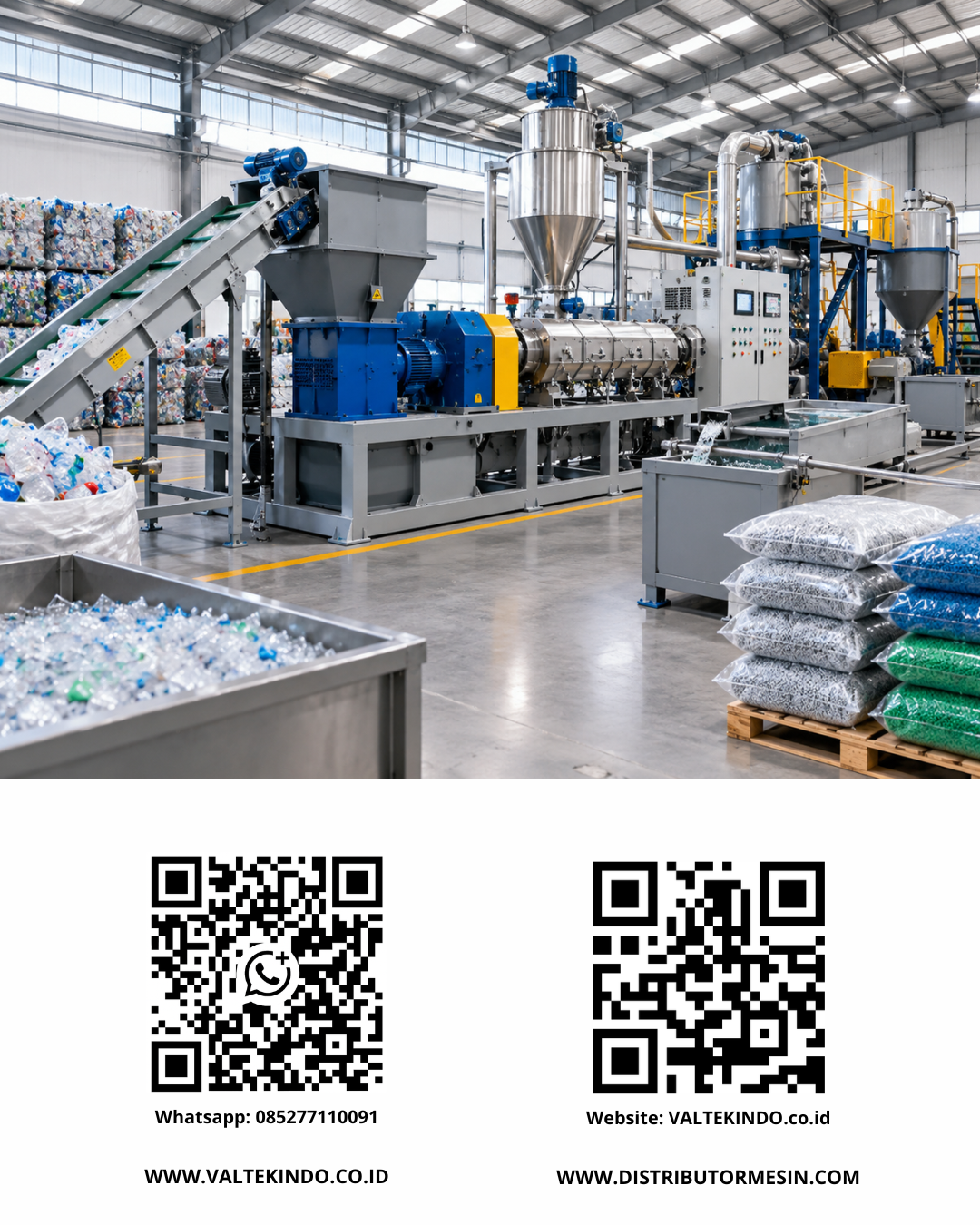
The plastic recycling industry in Indonesia is experiencing exponential growth. Driven by environmental sustainability awareness (ESG), increasingly stringent government regulations, and high demand for recycled plastic resin from the manufacturing sector, investing in plastic waste processing facilities has become one of the most promising B2B business opportunities today. For investors and factory owners, choosing the right technology is no longer just about fulfilling operational needs; it is a crucial strategy for ensuring rapid Return on Investment (ROI) and long-term profitability.
At the industrial scale, the primary challenge is not securing plastic waste raw materials, but rather processing them with the highest level of efficiency, low energy consumption, and minimal downtime. Many plastic processing plants suffer hidden losses due to utilizing machinery with specifications that do not match the type of waste being processed, ultimately leading to bloated maintenance costs and inconsistent output quality.
Key Components in an Industrial-Scale Plastic Recycling System
To build a robust production line, a deep understanding of each processing stage is essential. Modern recycling systems typically consist of several automatically integrated modules:
- Sorting & Pre-washing System: This module is responsible for removing coarse contaminants such as rocks, metals, or paper. The use of magnetic separators and trommel screens is highly recommended to prevent damage to the cutting blades in subsequent stages.
- Shredding & Crushing Stage: This is the heart of the recycling process. The crusher must feature high torque and a rotor design tailored to the specific plastic type, whether it is film, PET bottles, or hard plastics (HDPE/PP). High-quality alloy steel blades are critical for machine durability.
- Intensive Washing (Friction Washing & Sink-Float Separation): The crushed plastics (flakes) must be washed to remove residual oils, glues, and organic materials. The sink-float separation tank utilizes specific gravity differences to separate various polymer types.
- Drying & Pelletizing: This final stage transforms clean flakes into uniform plastic pellets ready to be sold to molding or extrusion plants. Efficient centrifugal drying systems ensure moisture content is below the tolerance threshold before the plastic is melted.
Strategies for Choosing the Right Vendor and Technology
Machine reliability depends heavily on the manufacturer and the entity guaranteeing the after-sales service. Establishing a partnership with a credible industrial machinery provider is the first step toward operational success. For instance, PT Valtekindo Global Intertek has long been recognized as a strategic partner for numerous factories in Indonesia, providing industrial machinery solutions that meet global quality standards backed by reliable technical support.
More than just standalone machines, modern factories require integrated lines. For challenging industrial waste such as thick plastic lumps or purging scraps from injection machines, investing in a specialized lump plastic recycling line with efficient crushing and washing machinery is an absolute necessity. This line is specifically engineered with a multi-stage cutting system capable of crushing large plastic lumps without overloading the motor, paired with a washing module that effectively removes industrial contaminants.
Profitability Potential (ROI) Analysis in the Indonesian Market
Assuming a production capacity of 1 ton per hour, a factory operating 20 hours a day can produce 20 tons of clean flakes or pellets daily. Given that the price difference between dirty plastic waste and high-quality recycled plastic pellets (such as rPET or rHDPE) can yield a 40-60% margin, factories can achieve a break-even point within 12 to 18 months, depending on operational efficiency and raw material supply chain management.
Key factors for accelerating ROI include:
- Production Line Automation: Reducing reliance on manual labor for sorting and feeding, thereby significantly cutting overhead costs.
- Energy Efficiency: Selecting machines with inverter technology motors that adjust electricity consumption based on real-time material loads.
- Spare Parts Support: Fast availability of blades, screens, and bearings to minimize production downtime.
B2B Recycling Machine Consultation and Procurement Is your factory ready to scale up its plastic recycling efficiency and production capacity? Do not let your investment go to waste by choosing the wrong machine specifications. Our team of engineers and technical consultants is ready to help you design a production line perfectly tailored to your material requirements and output targets. Get the best Request for Quotation (RFQ) and a free consultation today.
Contact Our Sales Team Today
Looking for high-quality industrial machinery, factory automation solutions, or customized equipment for your business? Our experienced sales team is ready to help you find the right solution, provide technical consultation, and offer the best pricing.
Contact Our Official WhatsApp Sales Team:
- WhatsApp Sales 1: 085222110091
- WhatsApp Sales 2: 085277110091
Visit our official websites to explore our complete product catalog, machine operation videos, technical information, and exclusive offers:
PT. Valtekindo Global Intertek is your trusted partner for industrial machinery, processing equipment, recycling systems, laboratory instruments, and factory automation solutions. Contact us today for a free consultation and receive the best solution tailored to your business needs.

Admin
AuthorAdmin is a writer on the Valtekindo website, providing informative content about High Quality Industrial Machinery and Testing Machines.
Related post:
- Guide to Choosing a High-Capacity Plastic Crusher Machine for Maximum Factory Efficiency
- B2B Procurement Guide: Strategic Investment in X-Ray, Eddy Current, and Magnetic Flaw Detectors for Plant Reliability
- The Ultimate Guide to Choosing CNC Milling Machines to Boost Manufacturing Factory Efficiency in 2026