Packaging & Product Drop Tester for the Electronics & Logistics Industry
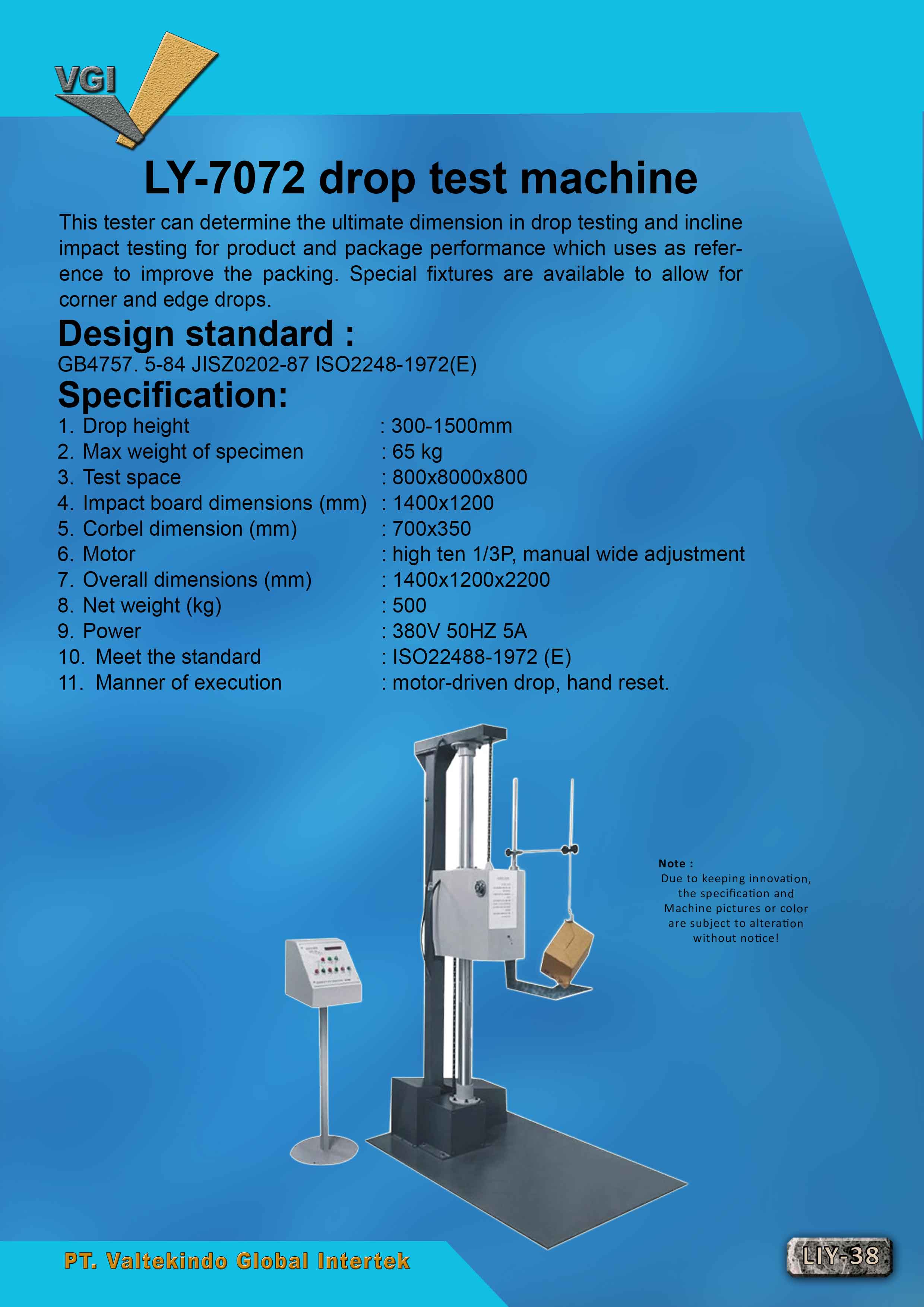 Click on the image to enlarge
FEATURE
DESCRIPTION / TECHNICAL SPECIFICATIONS
In every stage of the supply chain, from the warehouse to the customer's hands, the risk of a product or package being dropped is an inevitability. A single impact can cause costly damage and diminish brand image. To design truly effective packaging, you need to understand how your product behaves when dropped. We present the Drop Test Machine, a precision-engineered instrument that allows you to simulate and analyze the effects of a fall in a controlled, repeatable, and industry-standard manner.
This machine is designed to perform a comprehensive range of drop tests. Using special fixtures, you can conduct not only flat surface drops, but also tests on the most vulnerable parts of a package: its edges and corners. This capability is critical, as a majority of shipping damage occurs from impacts on these very points. The tests are performed in accordance with key global standards such as ISO 2248, JIS Z0202, and GB 4757, ensuring that the data you collect is valid and globally comparable for certification and evaluation purposes.
Built for performance and safety, this machine can lift and drop specimens weighing up to 65 kg from a precisely adjustable height of 300 to 1500 mm. A motor-driven release mechanism ensures every drop is consistent and clean, eliminating variables that could skew the results. Its incredibly massive and heavy structure, at approximately 500 kg, provides a solid and stable impact platform, guaranteeing that all impact energy is absorbed by the test package, not the machine itself, for the most accurate data.
This is an indispensable tool for research & development and quality assurance departments in nearly every industry that ships physical goods, especially electronics, home appliances, medical devices, furniture, and glassware. By understanding the failure points of your product and packaging through systematic drop testing, you can optimize designs, select the right materials, and ultimately, significantly reduce the rate of damage during transit. Protect your products, satisfy your customers, and cut the costs of loss with accurate data from this essential testing instrument.
 Download
 Video
Video
 Kontak Sales 1