Master the Evolution of Ignition Systems from Conventional to Modern
 Click on the image to enlarge
FEATURE
DESCRIPTION / TECHNICAL SPECIFICATIONS
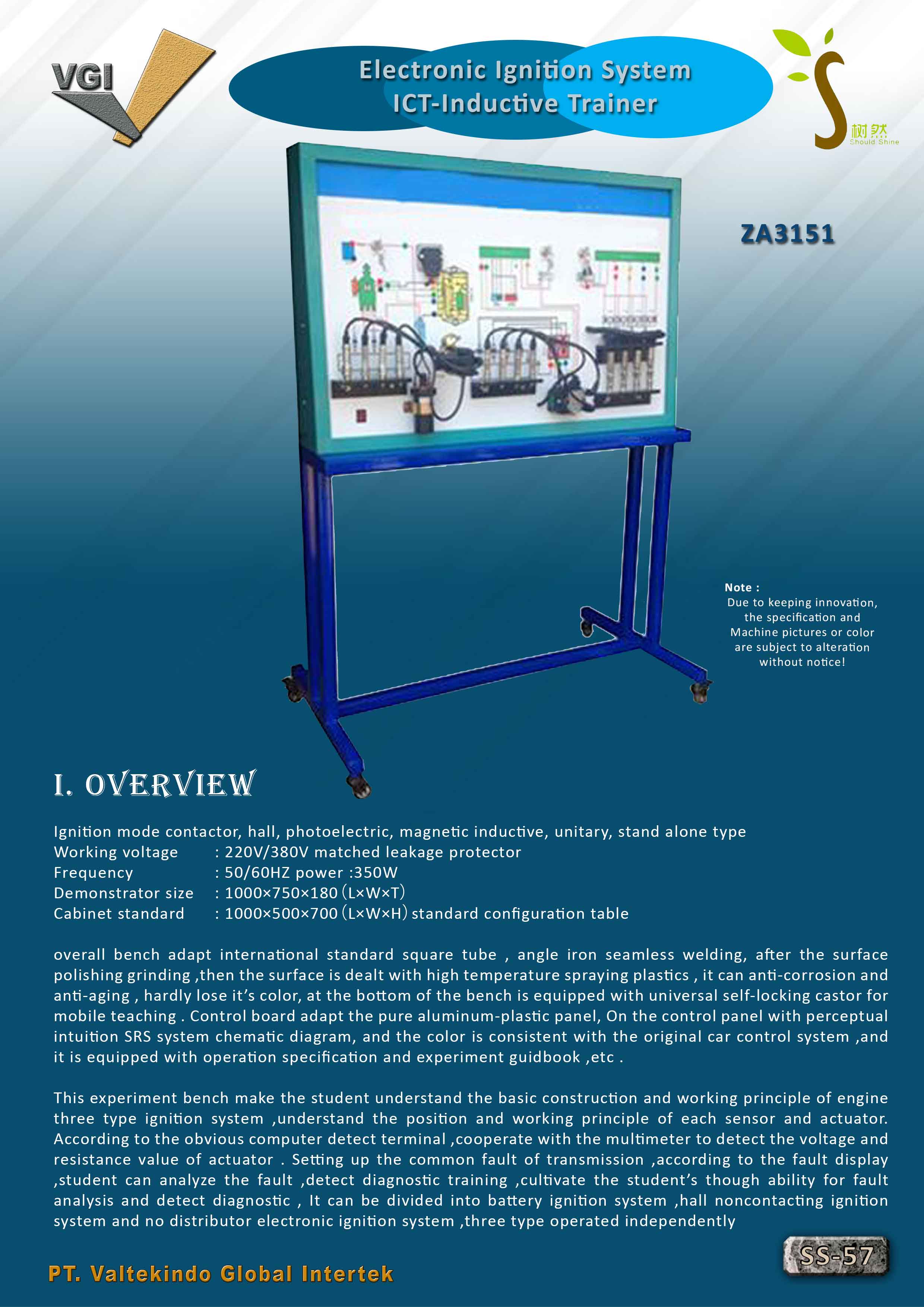
The ignition system is the very heartbeat of every internal combustion engine. Without a precise, powerful spark, an engine is merely a lifeless assembly of metal. We present a comprehensive ignition system training center, designed to take students on a journey through the evolution of ignition technology. This trainer completely showcases three of the most fundamental ignition systems, each operating independently: the conventional contact-breaker (platina) system, the non-contact electronic system (Hall Effect/CDI), and the modern Distributorless Ignition System (DIS). It's an all-in-one solution for understanding how the engine's spark of life is created, from the classic era to the digital age.
Built on a clear, aluminum-plastic panel with a full-color schematic diagram, every component - from the battery and coil to the distributor and spark plugs - is laid out according to its real-world vehicle configuration. Strategically placed detection terminals empower students to use multimeters and other diagnostic tools, training them to measure voltage, resistance, and signals just as a professional mechanic would. Students don't just observe ; they actively interact, analyze, and comprehend the role of each sensor and actuator in delivering the perfect spark at the perfect time.
The ultimate advantage of this trainer lies in its fault simulation capability. Instructors can easily introduce various common fault scenarios within the ignition system, challenging students to perform systematic diagnostics. This feature transforms passive learning into an active problem-solving workshop, honing the analytical and troubleshooting abilities that are the most vital skills in the automotive service world. This is an invaluable investment for vocational schools, polytechnics, and automotive training institutes aiming to produce technicians who not only know the theory but are also confident and competent in tackling real-world ignition problems.
 Video
Video
 Kontak Sales 1