Why is the ASTM D95 Standard Important in Testing the Water Content of Petroleum Products?
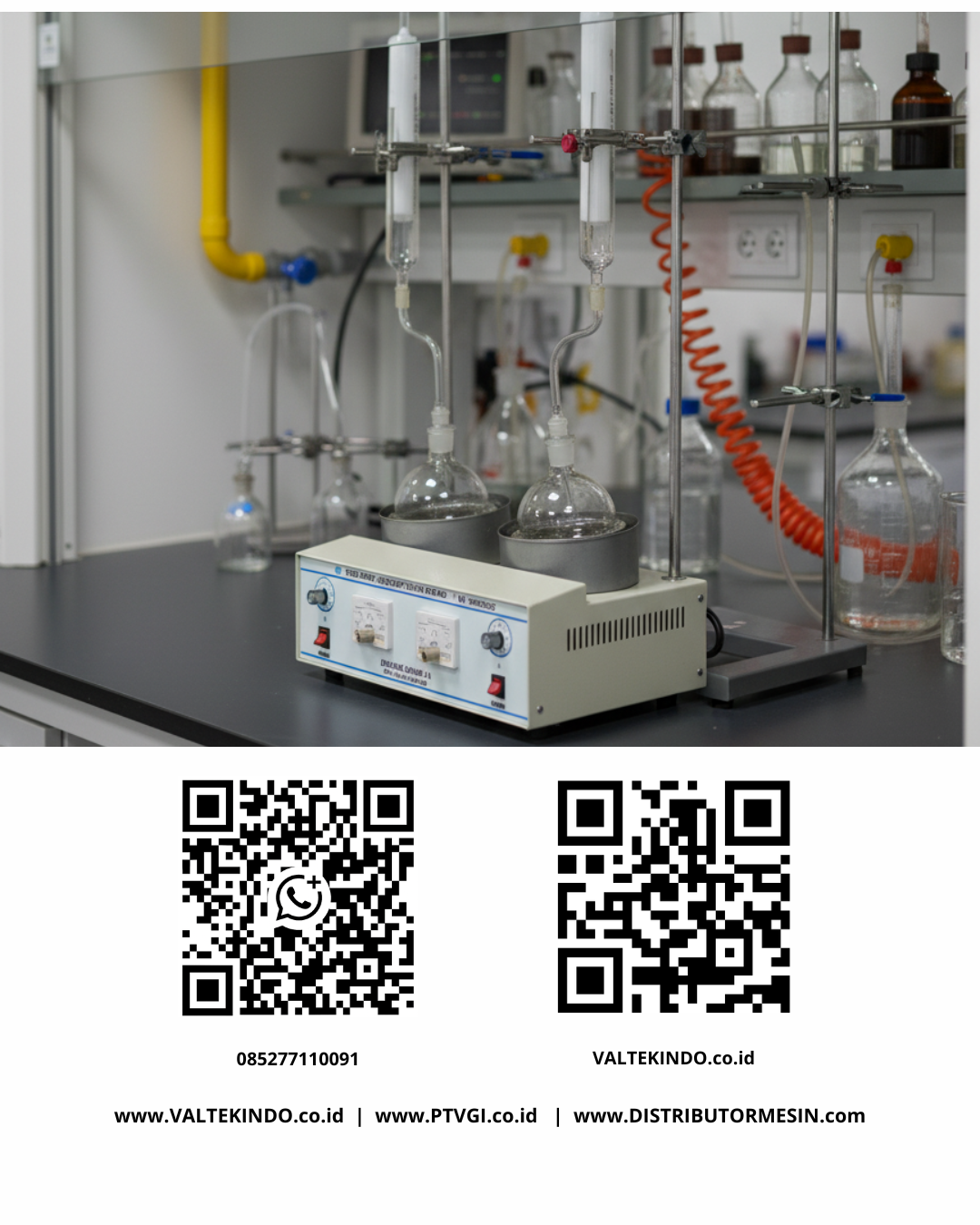
In the complex ecosystem of the oil and gas industry, quality is a variable that cannot be compromised. Among the many quality parameters, water content in petroleum products, tars, and bituminous materials is one of the most critical. The presence of water, even in trace amounts, can trigger a damaging chain reaction, ranging from infrastructure corrosion to catastrophic engine failure at the end-user level.
To address this challenge, international standard testing methods serve as the absolute reference. ASTM D95 is the globally recognized standard for determining water content via distillation. This article delves into why this standard is vital and how the latest technology from PT Valtekindo Global Intertek can help your laboratory meet these standards with double the efficiency.
Why is Water the Arch-Enemy of Petroleum Products?
Before discussing technical solutions, we must understand the "why." Water in petroleum products is not just a simple impurity; it is a catalyst for destruction.
- Corrosion and Oxidation Threats: Water that separates from oil can settle at the bottom of storage tanks or pipelines, creating the perfect environment for rust and structural degradation.
- Microbial Growth: In fuels like diesel or jet fuel, the water-oil interface is a breeding ground for bacteria and fungi. This biomass can clog fuel filters and damage engine injectors.
- Process Safety: In refining processes, water entrained into high-temperature heating units can vaporize instantly (steam flashing), causing dangerous pressure spikes and potential explosions.
Therefore, accurate detection using equipment compliant with ASTM D95 is not just about regulatory compliance, but a smart business risk mitigation strategy.
ASTM D95: The Gold Standard of Water Content Testing
The ASTM D95 method utilizes the principle of azeotropic distillation. The sample is heated with a solvent that is immiscible with water but shares a relevant boiling point. As it boils, the solvent carries water vapor upwards, which is then condensed back into a liquid. The water separates from the solvent in a calibrated trap, allowing for precise volume measurement.
To execute this method correctly, laboratories require equipment that is stable, precise, and durable. This is where the role of a trusted laboratory equipment provider like PT Valtekindo Global Intertek becomes crucial in supplying reliable testing infrastructure.
The Efficiency Revolution: Double Unit Water Content Tester
The main challenge in routine testing laboratories is throughput—the number of samples that can be tested per hour. Conventional distillation methods are time-consuming. However, recent innovation has arrived in the form of the Double Unit Water Content Tester.
According to the technical specifications which you can study in our Product Brochure Link, this device is designed to run two distillation analyses simultaneously. This is a game-changer for commercial laboratories and oil refineries alike.
- 100% Time Efficiency: You can complete two samples in the time usually required for one.
- Operational Flexibility: Technicians can test duplicate samples (for precision verification) or two different sample types (e.g., asphalt and crude oil) simultaneously without cross-interference.
High-Precision Heating Technology
One of the key requirements for successful ASTM D95 distillation is a controlled heating rate. If too slow, the process becomes inefficient; if too fast, the risk of boiling over or inaccurate readings increases. This instrument from PT Valtekindo Global Intertek is equipped with two independent electric furnaces, each with 1000 Watts of power.
Its main advantage lies in its control system. The device uses a bi-directional Silicon-Controlled Rectifier (SCR) circuit. This technology allows for extremely smooth and stable temperature regulation, far superior to old mechanical thermostats. For details regarding power specifications and device dimensions, you can view the complete data in our Specification Brochure Link.
Ergonomic Design and Durability
Oil and gas laboratories are harsh working environments. Equipment must withstand exposure to chemicals and constant heat. This double unit tester is built with high-quality, corrosion-resistant materials. Its compact desktop structure makes it easy to place on crowded laboratory benches, while its intuitive operation reduces the learning curve for new technicians.
Conclusion
Investing in the right testing equipment is investing in your product's reputation. By using the Double Unit Water Content Tester, you not only comply with ASTM D95 standards but also significantly boost laboratory productivity. Ensure you get the genuine unit and the best after-sales service by downloading the complete information via the Catalog Brochure Link.
Optimize Your Industry Today!
Achieve production efficiency and the highest quality standards with a trusted industrial machinery provider. Explore our wide selection of premium processing and testing equipment at:
Website : valtekindo.co.id
Wesbite : distributormesin.com
Consult your technical needs with our expert sales team:
WhatsApp 1: +62 852-2211-0091
WhatsApp 2: +62 852-7711-0091

Admin
AuthorAdmin is a writer on the Valtekindo website, providing informative content about High Quality Industrial Machinery and Testing Machines.
Related post:
- Pharmaceutical Factory Production Escalation Strategy: Why Investing in an Automatic Capsule Filling Machine is the Most Crucial Business Decision
- High-Precision Wire Cut EDM Technology in 2026: The Ultimate Solution for Mold Making, Stamping Dies, and Automotive Component Fabrication Without Thermal Distortion
- 2026 Automated Carton Sealer & Erector Investment Guide: End-of-Line Automation Strategies for Industrial Plant Efficiency