Understanding Various Types of Quilting Machines for the Modern Textile Industry
The textile industry has undergone a massive transformation thanks to the integration of automation technology. One of the most crucial aspects of producing home furnishings and fashion is the quilting process. Traditionally, quilting is the technique of sewing two or more layers of fabric together with a layer of padding or batting in the middle to provide thickness and warmth. However, in modern industrial scales, this technique has evolved far beyond simple hand-stitching.
Understanding the different types of quilting machines is essential for manufacturers to determine production efficiency and the final quality of products such as mattresses, bedcovers, jackets, and even automotive interiors.
1. Multi-Needle Quilting Machines
Multi-needle machines are the backbone of mass production, particularly in the mattress and bedding industries. As the name suggests, these machines utilize rows of needles working simultaneously to create consistent decorative patterns across wide fabric surfaces.
The primary advantage of this machine is its incredible speed. It is capable of processing very long fabric rolls in a short amount of time. The resulting patterns are usually repetitive geometric motifs. In their modern development, multi-needle machines are now equipped with Computer Numerical Control (CNC) systems, allowing for pattern changes at the touch of a button without having to manually reposition the needles.
2. Single-Needle Quilting Machines
Unlike the previous type, single-needle machines focus on precision and intricate detail. These machines typically use a single sewing head that moves according to a pattern programmed via computer.
This machine is ideal for high-end or custom products. Because it uses only one needle, it can stitch much more complex patterns, including detailed floral motifs or corporate logos. Although its speed does not match that of a multi-needle machine, the stitching result is much neater and more exclusive.
3. Threadless Quilting Machines (Ultrasonic Quilting)
The most fascinating innovation in the modern textile industry is ultrasonic quilting technology. This machine uses neither needles nor thread. Instead, it utilizes high-frequency sound vibrations to generate heat, which then melts synthetic fibers at specific points to fuse the fabric layers together.
This method is highly popular for producing polyester bedcovers or medical supplies because it leaves no needle holes, making it more water-resistant and sterile. Additionally, production costs are lower due to the absence of thread consumption.
The Importance of Material Preparation Before Quilting
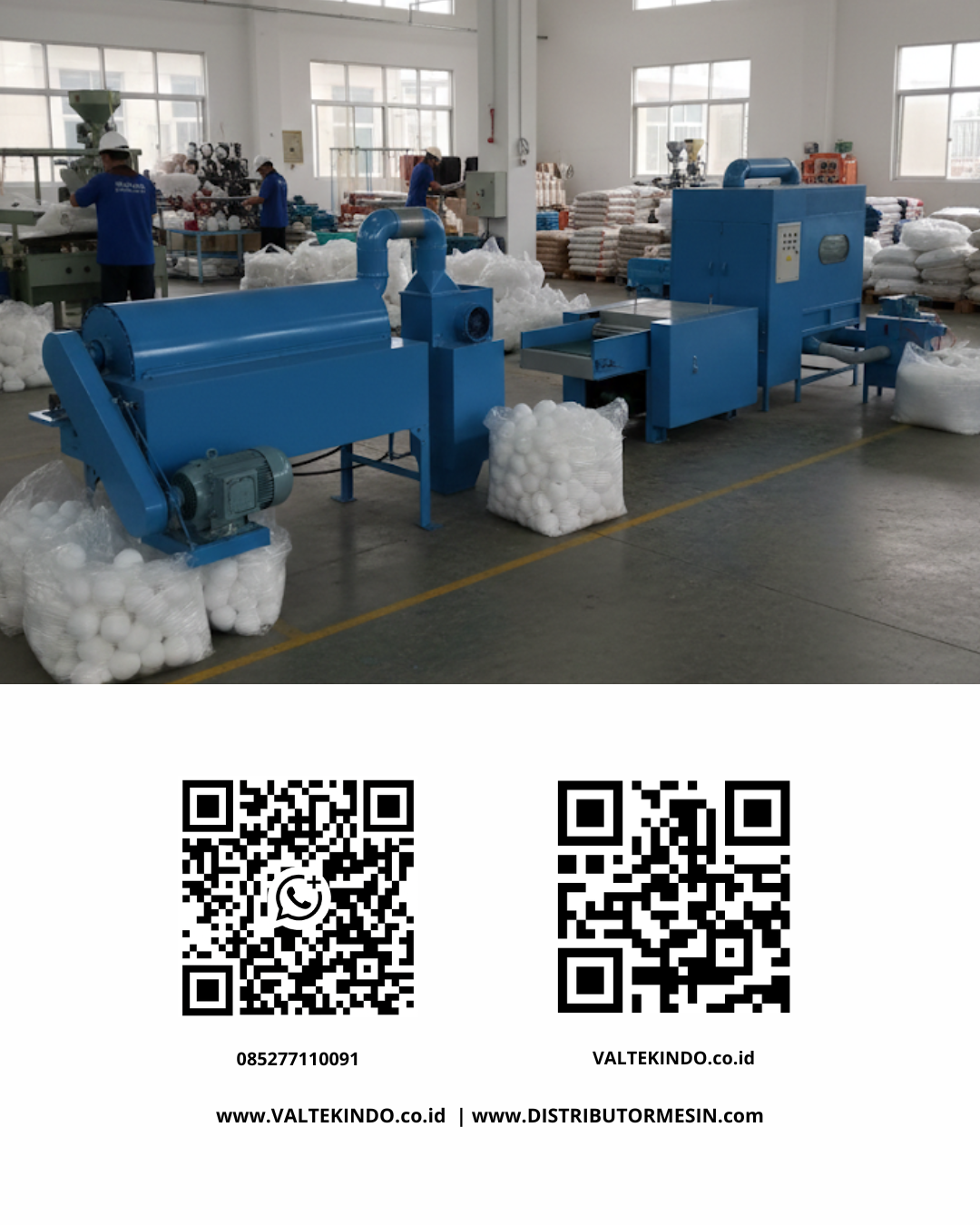
Perfect quilting results depend not only on the sewing machine itself but also on the quality of the filling material. Before entering the stitching stage, the filling fibers must be properly processed to ensure uniform density. Utilizing specialized technology for ball fiber and fiber filling processes ensures that the inner layers do not clump during sewing.
This fiber preparation process is crucial, especially if you are producing premium pillows or mattresses. Fibers that have undergone optimal opening and filling stages provide consistent volume, allowing the quilting machine to move smoothly without the hindrance of uneven thickness.
Production Efficiency Through Automation
Integrating modern quilting machines into a production line provides a significant competitive edge. Automation reduces reliance on manual labor, which is prone to human error. Furthermore, modern machines are designed with energy-saving features and automatic thread-break detection systems, which significantly reduce production waste.
For industrial players, choosing a machine that aligns with the target market is a strategic move. If you focus on high volume, a multi-needle machine is the answer. However, for designer and custom markets, investing in a single-needle machine is far more profitable. You can find more in-depth information regarding textile industrial equipment specifications through this trusted industrial machinery portal to ensure your investment is on target.
Conclusion
Quilting technology continues to advance alongside market demands for products that are both aesthetic and functional. From the high speed of multi-needle systems to the sophistication of ultrasonic waves, each machine plays a specific role in the global textile supply chain. With the right equipment selection and maximum raw material preparation, the quality of the final product will increase significantly.
Optimize Your Industry Today!
Achieve production efficiency and the highest quality standards with a trusted industrial machinery provider. Explore our wide selection of premium processing and testing equipment at:
Website : valtekindo.co.id
Website : distributormesin.com
Consult your technical needs with our expert sales team:
WhatsApp 1: +62 852-2211-0091
WhatsApp 2: +62 852-7711-0091

Admin
AuthorAdmin is a writer on the Valtekindo website, providing informative content about High Quality Industrial Machinery and Testing Machines.
Related post:
- Pharmaceutical Factory Production Escalation Strategy: Why Investing in an Automatic Capsule Filling Machine is the Most Crucial Business Decision
- High-Precision Wire Cut EDM Technology in 2026: The Ultimate Solution for Mold Making, Stamping Dies, and Automotive Component Fabrication Without Thermal Distortion
- 2026 Automated Carton Sealer & Erector Investment Guide: End-of-Line Automation Strategies for Industrial Plant Efficiency