Understanding Tissue Preparation Stages in Modern Histopathology Laboratories
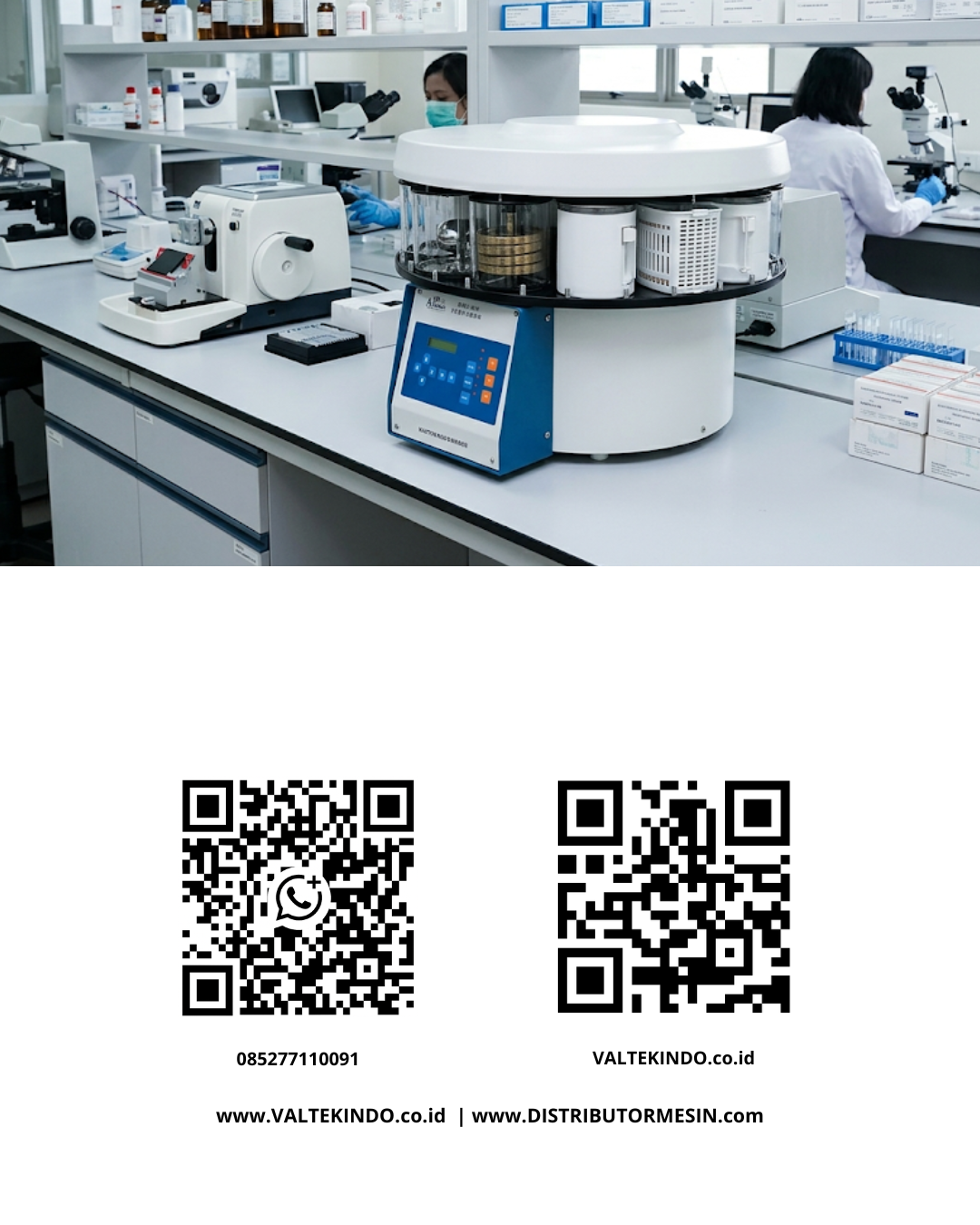
The histopathology laboratory plays a critical role in the medical world, particularly in establishing disease diagnoses through the examination of body tissues. The quality of a diagnosis depends heavily on the precision of the prepared samples. The process of transforming raw tissue from a biopsy into a microscopic slide suitable for analysis is known as tissue processing.
In the era of modern laboratories, this procedure must be carried out with high accuracy standards to avoid artifacts or cellular structure damage that could obscure the pathologist's observations.
1. Fixation: The Foundation of Tissue Processing
The first and most critical step is fixation. Its purpose is to stop the process of autolysis (the destruction of cells by their own enzymes) and prevent bacterial decay. The most commonly used solution is 10% Neutral Buffered Formalin (NBF).
Perfect fixation ensures that the morphological structure of the tissue remains identical to its state when it was still inside the patient's body. Without proper fixation, subsequent stages will not yield optimal results.
2. Dehydration and Clearing
After fixation, the tissue contains a significant amount of water. However, the supporting medium used for sectioning (such as paraffin) is hydrophobic—meaning it does not mix with water. Therefore, the water in the tissue must be removed through dehydration using increasing concentrations of alcohol (70% to 100%).
Following dehydration, the tissue enters the clearing stage. A clearing agent, such as xylene, is used to replace the alcohol within the tissue, making the specimen transparent and ready to be infiltrated by paraffin wax.
3. Infiltration and Embedding
Infiltration is the process where small cavities in the tissue, previously filled with clearing agent, are now occupied by liquid paraffin. This provides structural strength to the tissue so it can be sliced thinly.
The next step is embedding, where the tissue is placed into molds filled with liquid paraffin, which is then cooled until it hardens into a solid block. The orientation of the tissue at this stage is crucial, as it determines which surface will be sliced and observed under the microscope.
4. Microtomy: Ultra-Thin Sectioning
The paraffin blocks containing the tissue are then sliced using a tool called a microtome. To achieve clear cellular detail, the tissue must be cut to a thickness of approximately 3 to 5 microns. These thin ribbons are then floated on a warm water bath before being mounted onto a glass slide.
The Importance of Automation in Modern Labs
In the past, all the steps mentioned above were performed manually, which was time-consuming and carried a high risk of human error. However, modern laboratories have now transitioned to cutting-edge technology. The use of an automatic tissue processor allows for the consistent automation of timing, temperature, and reagent rotation.
Automation not only speeds up the turnaround time for results but also ensures the safety of laboratory staff from exposure to hazardous chemical vapors. With advanced closed systems, the quality of the sample remains stable from the beginning to the end of the process.
5. Staining
The final stage before observation is staining. Naturally, most tissues are colorless. Hematoxylin and Eosin (H&E) staining is the gold standard used to provide contrast to cell nuclei (blue) and cytoplasm (red/pink). Once stained, the slide is covered with a coverslip and is ready for microscopic examination.
Conclusion
Tissue preparation in a histopathology laboratory is a blend of art and science. Every minor detail in the process, from fixation to staining, determines the quality of the final diagnosis. Ensuring the availability of reliable instruments and quality materials is vital for every healthcare facility. Further information regarding technical standards and laboratory support references can be found through a trusted laboratory infrastructure service portal.
Optimize Your Industry Today!
Achieve production efficiency and the highest quality standards with a trusted industrial machinery provider. Explore our wide selection of premium processing and testing equipment at:
Website : valtekindo.co.id
Wesbite : distributormesin.com
Consult your technical needs with our expert sales team:
WhatsApp 1: +62 852-2211-0091
WhatsApp 2: +62 852-7711-0091

Admin
AuthorAdmin is a writer on the Valtekindo website, providing informative content about High Quality Industrial Machinery and Testing Machines.
Related post:
- Pharmaceutical Factory Production Escalation Strategy: Why Investing in an Automatic Capsule Filling Machine is the Most Crucial Business Decision
- High-Precision Wire Cut EDM Technology in 2026: The Ultimate Solution for Mold Making, Stamping Dies, and Automotive Component Fabrication Without Thermal Distortion
- 2026 Automated Carton Sealer & Erector Investment Guide: End-of-Line Automation Strategies for Industrial Plant Efficiency