Understanding the Stages of Leather Tanning Through Various Processing Machinery
Understanding the Stages of Leather Tanning Through Various Processing Machinery
The leather industry is one of the world's oldest manufacturing sectors, continuously transforming through technology. The tanning process is a crucial procedure used to convert raw hides or skins—which are naturally biodegradable—into durable, flexible, and stable leather materials ready for use in various products, from high-end fashion to automotive upholstery. The success of this process relies heavily on the synergy between chemical reactions and the precision of industrial processing machinery.
The Preparation Stage (Beamhouse Operations)
Before entering the core tanning phase, raw hides must undergo a series of preparatory steps to remove unwanted proteins, fats, and hair. The initial stage begins with soaking to restore the hide's moisture content. Subsequently, the hides undergo unhairing and liming.
During this phase, massive rotating drums are used to agitate the hides in a chemical solution. The use of efficient drum machinery ensures that chemicals penetrate evenly across the entire cross-section of the hide. Following this, the hides pass through a fleshing process, where specialized leather processing machines equipped with sharp bladed cylinders remove residual meat and fat still attached to the inner side of the skin.
The Tanning Stage
This is the heart of the entire process. Tanning aims to alter the structure of the collagen fibers in the hide so they do not rot and become resistant to heat and microorganisms. There are two primary methods commonly used in the industry:
- Chrome Tanning: Utilizes chromium salts to produce leather that is highly soft and flexible (often referred to as wet blue).
- Vegetable Tanning: Uses natural tannins from plants, resulting in a firmer leather with a distinct aroma.
In large-scale industrial operations, temperature stability and drum rotation during the tanning process must be strictly maintained to ensure consistent leather quality in every batch.
Post-Tanning Stage (Wet-End & Drying)
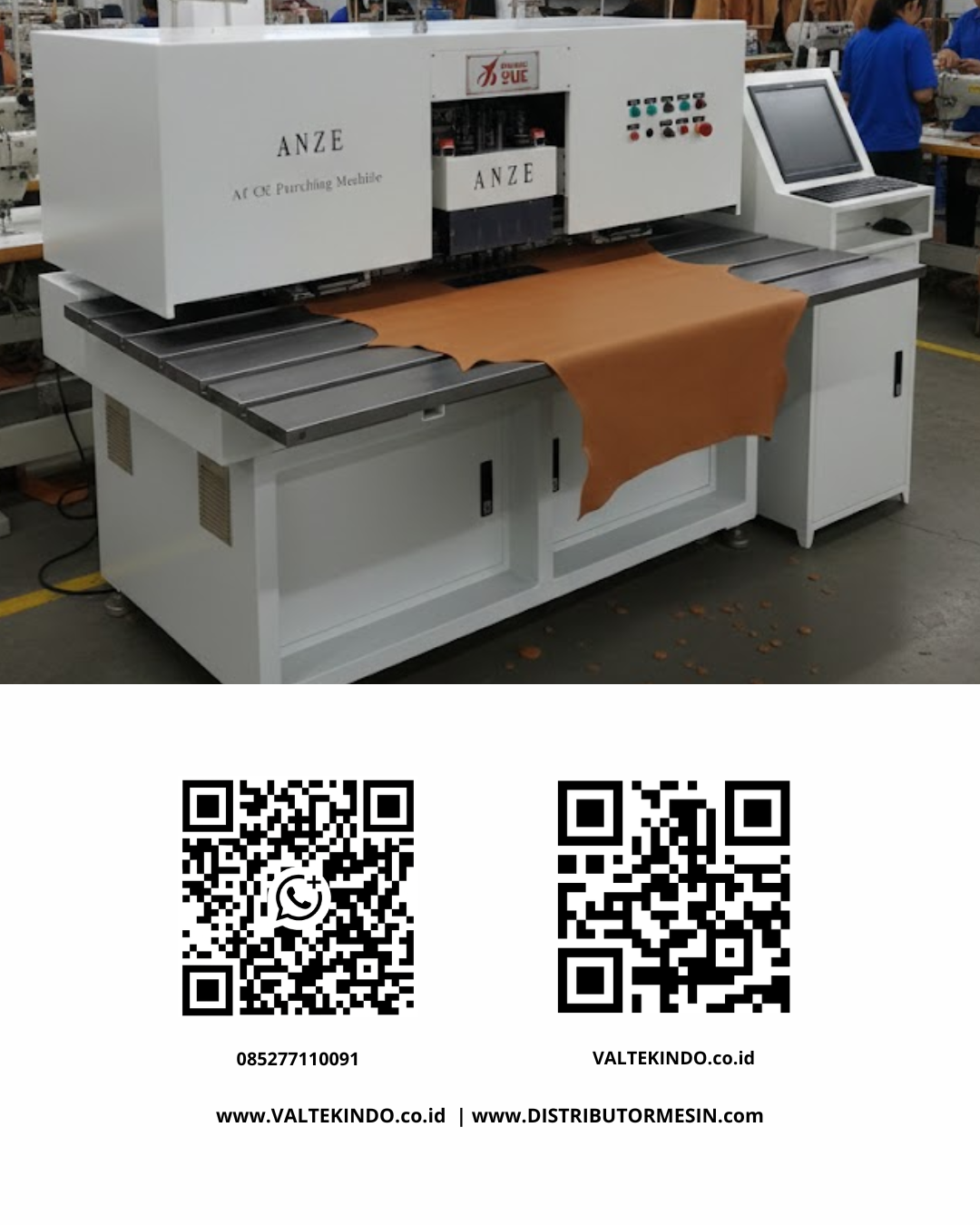
Once the hide becomes wet blue, the next stage is refining its physical characteristics. The leather undergoes splitting to divide the thickness according to production needs. This is where the role of cutting and perforation technology becomes vital. In industries producing specific leather components, the use of a punching machine is often required to provide precise textures or hole patterns on the leather surface before it moves to the dyeing and fatliquoring (oiling) stages.
After all chemicals have been absorbed, the leather must be dried. Drying equipment such as vacuum dryers or toggle dryers are used to extract moisture without damaging the texture of the formed leather fibers. Incorrect drying processes can cause the leather to become overly brittle or cracked.
The Finishing Stage
The final stage is finishing, where the leather is given a protective coating, color pigments, or specific visual effects such as glossy or matte finishes. Buffing machines are used to smooth the leather surface, while embossing machines apply artificial textures.
The use of automated machinery throughout this sequence is not merely to speed up production but to ensure workplace safety and resource efficiency. With the support of the right equipment, chemical waste can be minimized, and the quality of the leather produced meets international standards.
Optimize Your Industry Today!
Achieve production efficiency and the highest quality standards with a trusted industrial machinery provider. Explore our wide selection of premium processing and testing equipment at:
Website : valtekindo.co.id
Website : distributormesin.com
Consult your technical needs with our expert sales team:
WhatsApp 1: +62 852-2211-0091
WhatsApp 2: +62 852-7711-0091

Admin
AuthorAdmin is a writer on the Valtekindo website, providing informative content about High Quality Industrial Machinery and Testing Machines.
Related post:
- Pharmaceutical Factory Production Escalation Strategy: Why Investing in an Automatic Capsule Filling Machine is the Most Crucial Business Decision
- High-Precision Wire Cut EDM Technology in 2026: The Ultimate Solution for Mold Making, Stamping Dies, and Automotive Component Fabrication Without Thermal Distortion
- 2026 Automated Carton Sealer & Erector Investment Guide: End-of-Line Automation Strategies for Industrial Plant Efficiency