Understanding the Grinding Mechanism in Industrial Cocoa Refiner Machines
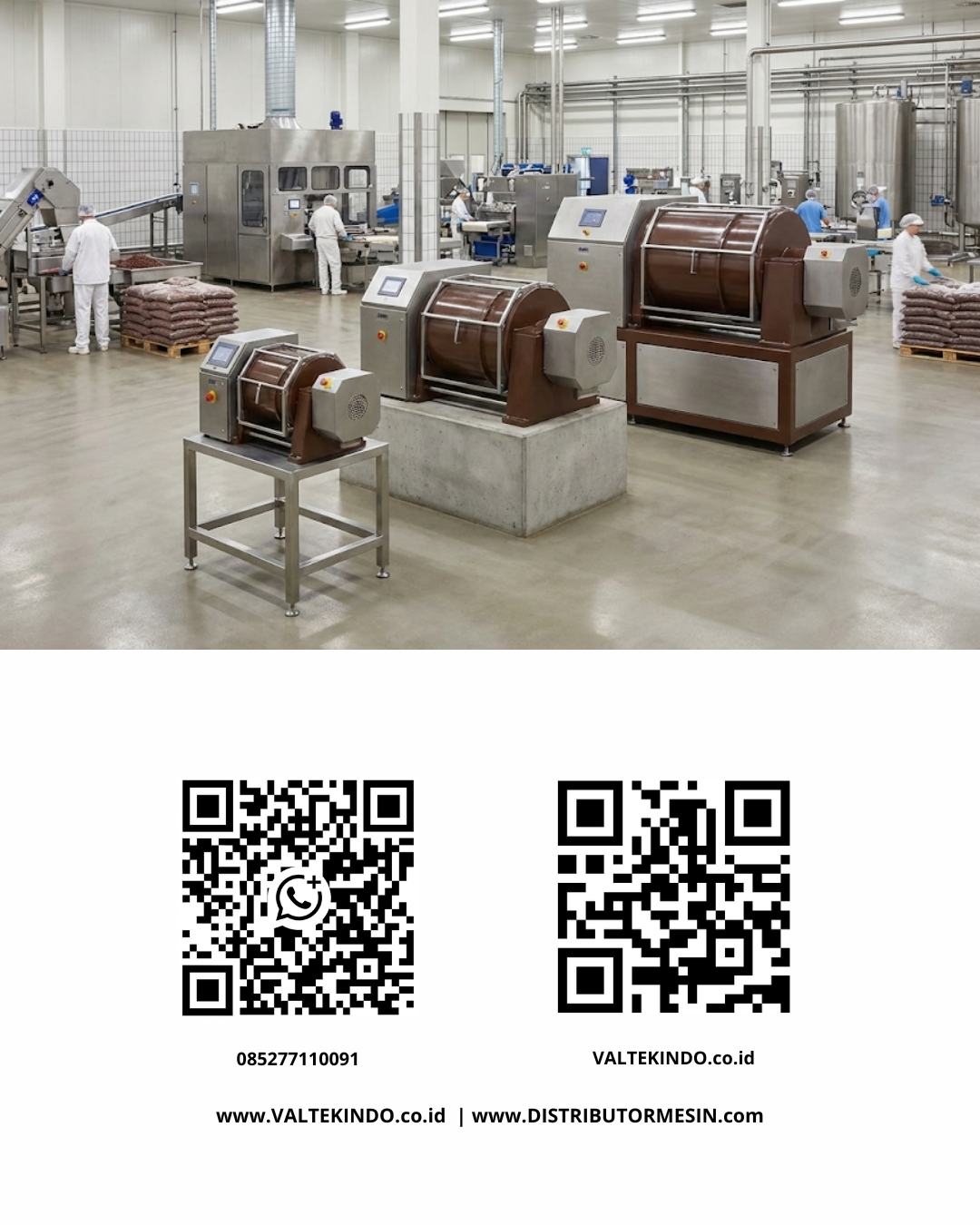
In the world of chocolate manufacturing, texture is perhaps the most significant indicator of quality. A premium chocolate bar is defined by its silkiness—a melt-in-the-mouth sensation that is entirely free from grittiness. To achieve this level of refinement, the industrial cocoa refiner plays a pivotal role. This article explores the intricate grinding systems within these machines and how they transform coarse raw materials into ultra-fine chocolate paste.
The Core Principle of the Refining Process
Refining is a mechanical process designed to reduce the particle size of solid ingredients, such as cocoa solids, sugar crystals, and milk powder, within a fat-based matrix. From a sensory perspective, the human tongue can detect particles larger than 30 microns as "sandy" or "rough." Therefore, the primary objective of an industrial cocoa refiner is to reduce all particles to a size consistently below 20 microns.
This process is not merely about crushing; it is about achieving a narrow particle size distribution. If the particles are uneven, the chocolate may feel "thick" or "chalky," and its viscosity will be difficult to manage during the subsequent tempering and molding stages.
Mechanical Forces: Pressure and Shear
Industrial refining systems typically utilize either a series of heavy rollers or a specialized drum with internal grinding elements. The transformation of the ingredients relies on two fundamental physical forces: compression (pressure) and shear force.
As the chocolate mass is forced through narrow gaps between rotating elements, the solid crystals are subjected to intense pressure. This pressure causes the brittle sugar crystals to shatter into microscopic fragments. The implementation of advanced food processing technology ensures that these forces are applied evenly across the entire batch, preventing the "bypass" of larger particles that could ruin the final texture.
The Stages of Industrial Grinding
A sophisticated grinding system does not reach the target fineness in a single, abrupt step. Instead, it follows a controlled, progressive sequence:
- Homogenization: Initially, the raw ingredients are mixed into a thick, paste-like consistency. At this stage, cocoa butter acts as a lubricant, ensuring the mass can flow through the grinding zones without causing excessive mechanical wear.
- Gradual Particle Reduction: The paste moves through the grinding chamber where the clearance between the grinding media (such as steel balls or rollers) is meticulously calibrated. As the mass progresses, these clearances become tighter, forcing the particles to become smaller and smaller.
- Thermal Management: Mechanical grinding generates a significant amount of friction-induced heat. If left unchecked, this heat can scorch the cocoa solids or alter the chemical structure of the fats. Modern refiners utilize internal cooling jackets to maintain a stable temperature, preserving the delicate aromatic profile of the cocoa.
The Synergy of Refining and Conching
In many modern industrial setups, the refining process is integrated with "conching." This is often referred to as a universal refiner conche system. While the grinding elements reduce particle size, the simultaneous agitation allows for the evaporation of unwanted volatile acids and moisture.
For a deeper understanding of how these mechanical components interact, one might examine the technical specifications for chocolate refiners, which detail the internal metallurgy and the ratio of grinding media to product volume. Integrating these two functions—refining and conching—dramatically increases production efficiency and ensures a more cohesive flavor development.
Precision Control and Viscosity
Consistency is the hallmark of industrial production. A high-quality grinding system must maintain the same performance over long operational hours. Operators monitor hydraulic pressures and motor loads to ensure the "grind" remains within the specified micron range.
Furthermore, the refining process directly impacts the viscosity of the chocolate. As particles become smaller, their total surface area increases significantly. This increased surface area requires more cocoa butter to coat the particles and maintain flowability. Precise control over the grinding system allows manufacturers to optimize their use of expensive raw materials while still achieving the desired rheological properties.
Conclusion
The industrial cocoa refiner is the heart of any chocolate production line. By mastering the balance of pressure, shear, and temperature, these machines convert raw, gritty ingredients into a luxurious liquid. Understanding the mechanics behind the grinding system—from progressive reduction to the integration of conching—is essential for any producer aiming to compete in the global premium confectionery market. Investing in the right technology is not just about output volume; it is about the consistency of the sensory experience delivered to the consumer.
Optimize Your Industry Today!
Achieve production efficiency and the highest quality standards with a trusted industrial machinery provider. Explore our wide selection of premium processing and testing equipment at:
Website : valtekindo.co.id
Website : distributormesin.com
Consult your technical needs with our expert sales team:
WhatsApp 1: +62 852-2211-0091
WhatsApp 2: +62 852-7711-0091

Admin
AuthorAdmin is a writer on the Valtekindo website, providing informative content about High Quality Industrial Machinery and Testing Machines.
Related post:
- Pharmaceutical Factory Production Escalation Strategy: Why Investing in an Automatic Capsule Filling Machine is the Most Crucial Business Decision
- High-Precision Wire Cut EDM Technology in 2026: The Ultimate Solution for Mold Making, Stamping Dies, and Automotive Component Fabrication Without Thermal Distortion
- 2026 Automated Carton Sealer & Erector Investment Guide: End-of-Line Automation Strategies for Industrial Plant Efficiency