Understanding the Characteristics and Quality Standards of Aluminum Ingot for Industry
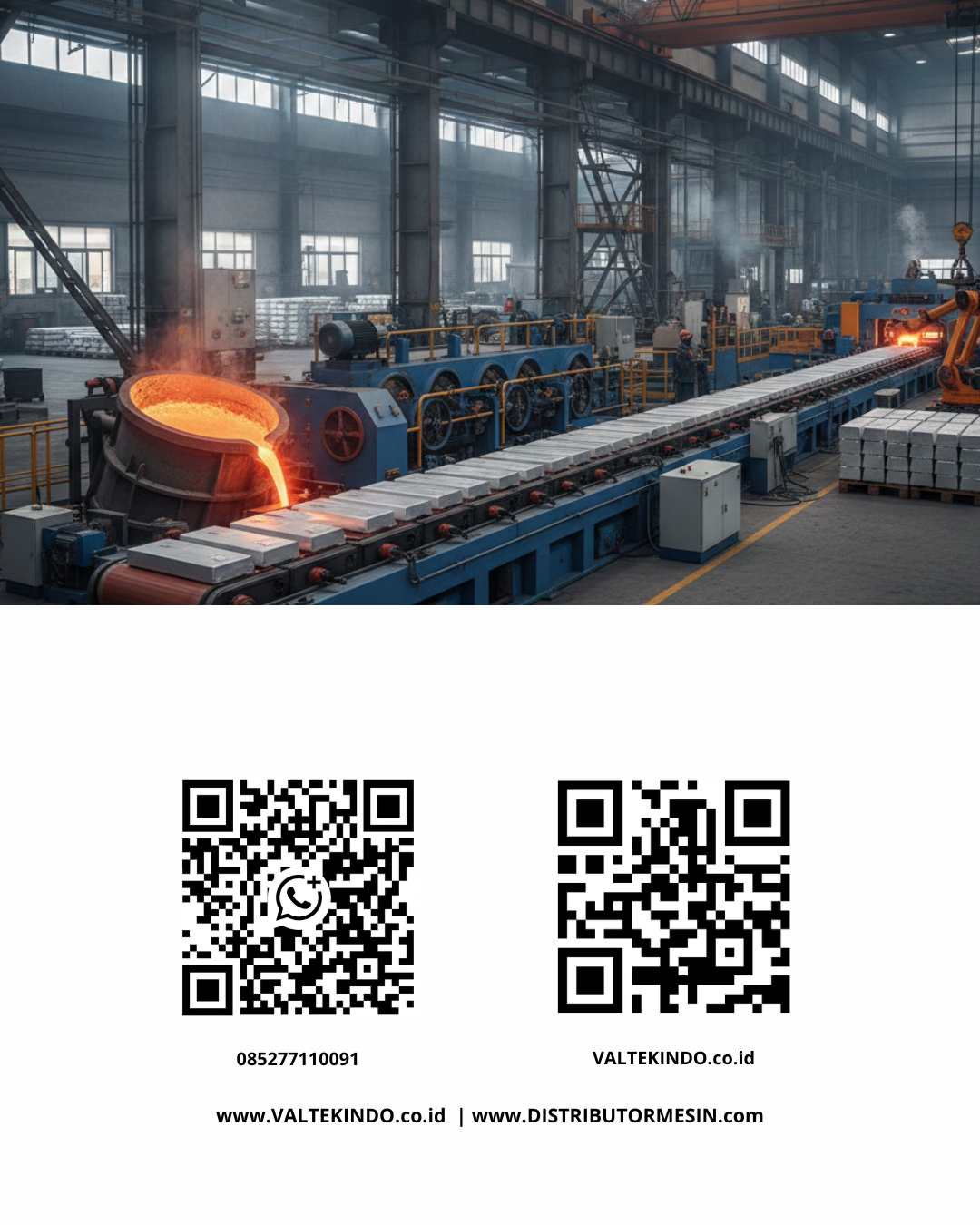
In the global manufacturing ecosystem, aluminum holds a critical position as the most widely used non-ferrous metal after steel. The most fundamental form serving as the primary raw material for various industrial sectors is the aluminum ingot. Ingots are blocks of pure metal or alloys cast into specific shapes to facilitate transport and further processing through remelting, extrusion, or die casting.
Understanding the technical specifications and quality standards of this material is vital for industrial players to ensure that the final products possess high durability and optimal cost efficiency.
Core Characteristics of Aluminum Ingot
Aluminum ingots are renowned for their unique combination of physical and chemical properties. Several characteristics that make them highly sought after in the global market include:
- Excellent Strength-to-Weight Ratio: Aluminum has a density approximately one-third that of steel, yet it still offers significant structural integrity.
- Corrosion Resistance: A natural oxide layer forms on its surface, protecting the metal from environmental oxidation, making it ideal for outdoor and maritime applications.
- Thermal and Electrical Conductivity: These properties make aluminum ingots a primary material for electronic components and cooling systems.
- Ductility and Malleability: This material is easily shaped without cracking, allowing for the design of complex components.
International Quality Standards in Industry
The quality of an aluminum ingot is not determined solely by visual inspection but through rigorous laboratory testing referring to international standards. Utilizing materials that meet technical qualifications is crucial, especially for companies involved in trading high-quality aluminum ingots to supply sectors ranging from automotive to construction.
Several commonly used standard parameters include:
- Purity Levels: Commercial standards usually require a minimum purity of 99.7% (known as P1020). The fewer the residues of iron (Fe) and silicon (Si), the higher the quality of the ingot.
- Chemical Composition: For alloy variants, the addition of elements such as copper, magnesium, or zinc must be precise according to ASTM (American Society for Testing and Materials) or ISO standards.
- Microstructure and Physical Integrity: A good ingot must be free from gas porosity, internal cracks, and non-metallic inclusions that could weaken the structure of future castings.
Crucial Role in the Manufacturing Supply Chain
Modern industry is currently shifting toward the use of more sustainable raw materials. Aluminum is 100% recyclable without losing its original quality. Therefore, selecting a reliable industrial material provider with a consistent supply track record determines the smoothness of the production line.
In the automotive sector, the use of high-quality ingots helps reduce vehicle weight, directly contributing to fuel efficiency. In the construction sector, aesthetics and resistance to extreme weather are the primary reasons why ingot quality standards cannot be compromised.
Inspection Process Before Distribution
Before reaching the hands of manufacturers, aluminum ingots must pass a series of Quality Control (QC) tests:
- Spectrometric Analysis: Used to accurately verify chemical composition down to the ppm (parts per million) level.
- Visual and Dimensional Testing: Ensures that the weight and shape of the ingots are uniform to facilitate the stacking process in warehouses.
- Certificate of Analysis (CoA): Every shipping batch must be accompanied by official documentation guaranteeing that the material specifications match the customer's order.
By understanding the above standards, industrial players can avoid the risk of losses due to production defects or structural failures in the final product. Choosing materials that have gone through a strict curation process is the first step toward sustainable manufacturing efficiency.
Optimize Your Industry Today!
Achieve production efficiency and the highest quality standards with a trusted industrial machinery provider. Explore our wide selection of premium processing and testing equipment at:
Website : valtekindo.co.id
Website : distributormesin.com
Consult your technical needs with our expert sales team:
WhatsApp 1: +62 852-2211-0091
WhatsApp 2: +62 852-7711-0091

Admin
AuthorAdmin is a writer on the Valtekindo website, providing informative content about High Quality Industrial Machinery and Testing Machines.
Related post:
- Pharmaceutical Factory Production Escalation Strategy: Why Investing in an Automatic Capsule Filling Machine is the Most Crucial Business Decision
- High-Precision Wire Cut EDM Technology in 2026: The Ultimate Solution for Mold Making, Stamping Dies, and Automotive Component Fabrication Without Thermal Distortion
- 2026 Automated Carton Sealer & Erector Investment Guide: End-of-Line Automation Strategies for Industrial Plant Efficiency