Understanding Modern Printing Machines for Industrial Scales
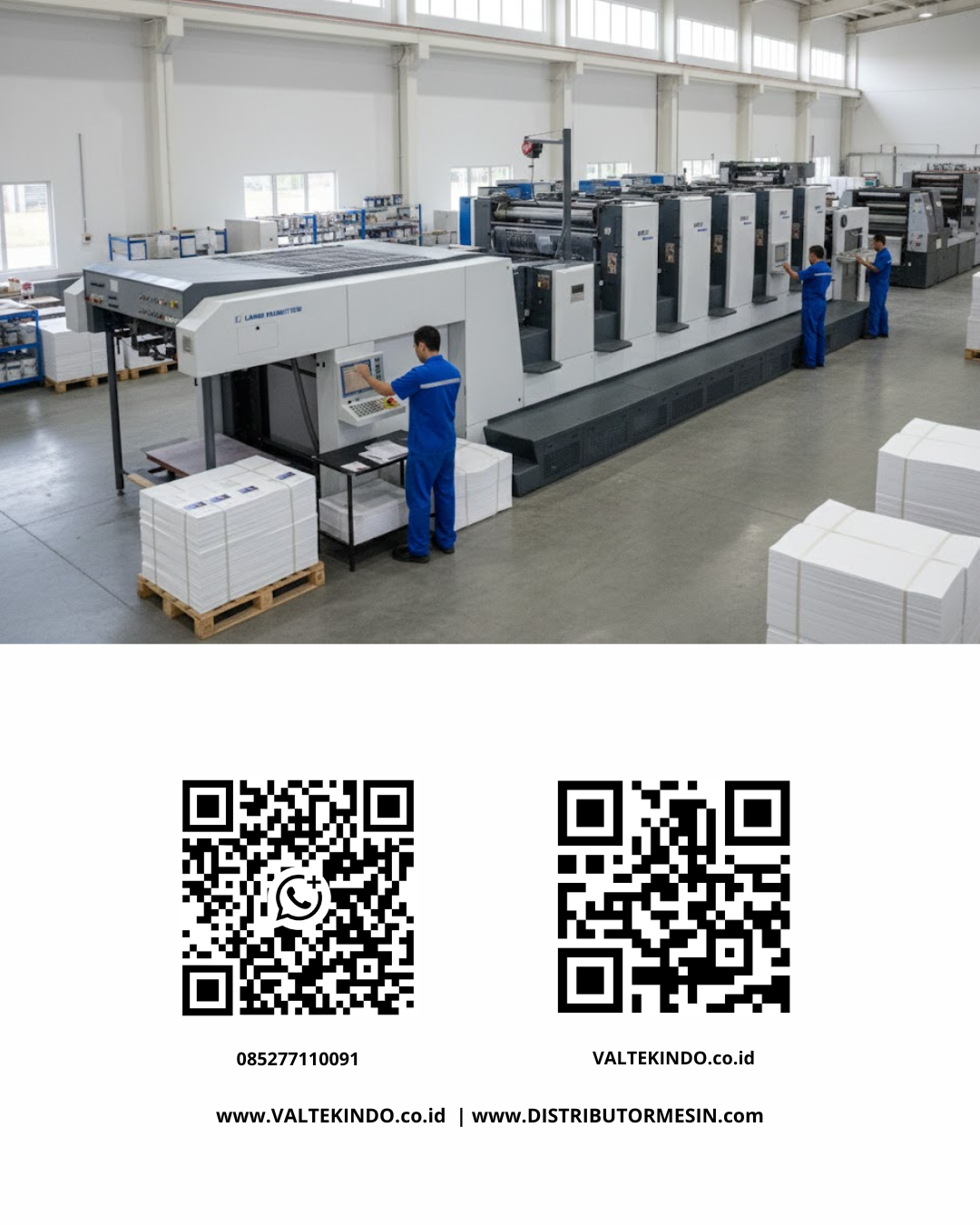
The printing world has undergone a remarkable transformation since the invention of the first printing press. In today’s fast-paced manufacturing era, the demand for efficiency, color precision, and production speed has become a top priority for industrial players. To meet massive volume requirements, utilizing modern industrial printing technology is no longer just an option but a fundamental necessity to maintain product quality standards in the global market.
Generally, industrial printing machines are classified based on the image transfer method and the media used. Here are several printing technologies that dominate the industrial sector today:
1. Offset Printing Machines (Lithography)
To this day, offset techniques remain the backbone for large-scale production such as magazines, catalogs, and cardboard packaging. The working principle involves using metal plates that transfer ink to a rubber cylinder before it finally adheres to the paper media. Its main advantage lies in its extreme cost-efficiency when producing thousands of copies. Furthermore, the color accuracy produced is highly stable, especially for needs involving a printing paper offset machine 7 color, which is capable of producing complex and sharp color gradations for premium printed materials.
2. Industrial Scale Digital Printing
Unlike offset, digital technology does not require printing plates. This makes it ideal for on-demand jobs or prints with variable data (such as different serial numbers or names on each sheet). Modern digital machines now have speeds approaching conventional offset machines, with the added benefit of much shorter setup times. This technology is highly effective for printing banners, stickers, and packaging prototypes with high detail.
3. Flexography
If you see snack packaging or beverage bottle labels in a supermarket, chances are they are the result of a flexography machine. This machine uses flexible rubber or polymer plates, making it very reliable for printing on uneven surfaces or plastic materials (films). In the industrial sector, flexo is highly sought after for its ability to operate at high speeds in a continuous process (roll-to-roll).
4. Rotogravure
For the flexible packaging industry with volumes in the millions of meters, rotogravure is king. Using engraved metal cylinders, this machine can transfer large amounts of ink with extraordinary color consistency from the beginning to the end of the production run. Although the initial cost of cylinder fabrication is quite high, the durability and print quality on plastic or foil materials are difficult to match by other technologies.
Choosing the Right Technology
Machine selection depends heavily on the target output and material type. For industries focused on paper print quality with rich detail, exploring the equipment catalog at www.valtekindo.co.id can provide a broader perspective on the technical specifications required to support modern factory operations. Understanding the technical specs of the equipment in depth will help companies avoid production inefficiencies in the future.
Investing in the right printing machine is not just about speed, but also about how that technology can minimize ink and energy waste. With modern machinery, color calibration can be performed automatically through computerized systems, ensuring every sheet that comes off the press meets an identical standard.
Optimize Your Industry Today!
Achieve production efficiency and the highest quality standards with a trusted industrial machinery provider. Explore our wide selection of premium processing and testing equipment at:
Website : valtekindo.co.id
Website : distributormesin.com
Consult your technical needs with our expert sales team:
WhatsApp 1: +62 852-2211-0091
WhatsApp 2: +62 852-7711-0091

Admin
AuthorAdmin is a writer on the Valtekindo website, providing informative content about High Quality Industrial Machinery and Testing Machines.
Related post:
- Pharmaceutical Factory Production Escalation Strategy: Why Investing in an Automatic Capsule Filling Machine is the Most Crucial Business Decision
- High-Precision Wire Cut EDM Technology in 2026: The Ultimate Solution for Mold Making, Stamping Dies, and Automotive Component Fabrication Without Thermal Distortion
- 2026 Automated Carton Sealer & Erector Investment Guide: End-of-Line Automation Strategies for Industrial Plant Efficiency