Understanding Industrial Screen Printing Technology and the Types of Machines Used in Manufacturing
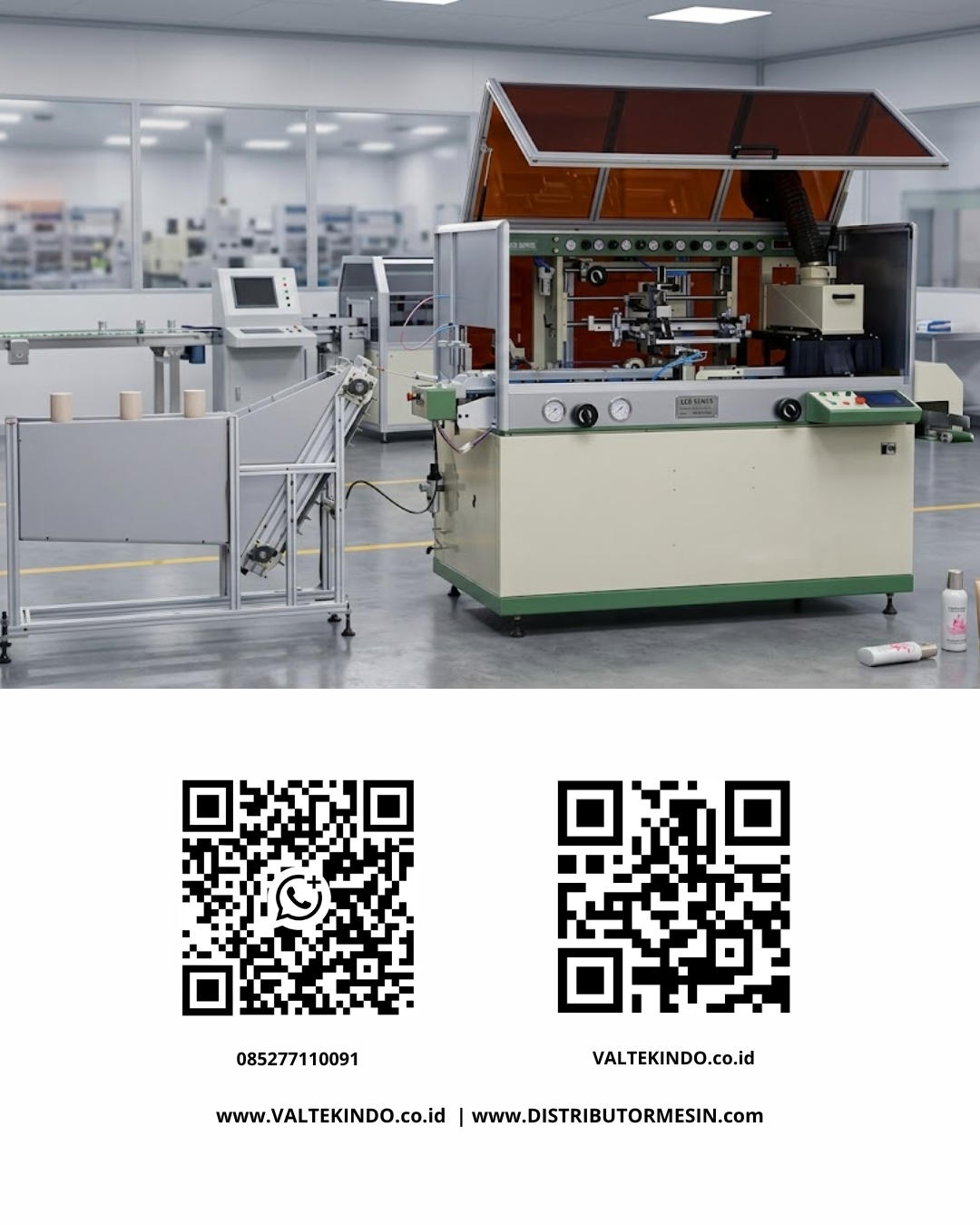
The landscape of printing technology continues to undergo a significant transformation as the demand for precision and speed in the manufacturing sector rises. One method that remains both relevant and increasingly crucial is screen printing. While the basic technique has been known for centuries, modern industrial implementation now involves high-level automation and UV technology integration capable of producing prints on various substrates with extraordinary durability.
Core Principles of Screen Printing in Industrial Scales
At its simplest, screen printing is a technique for transferring ink to the surface of an object through a mesh screen that has a specific stencil or pattern. In the manufacturing world, this technique is not merely about aesthetics; it is a functional necessity. From labels on electronic components and automotive control panels to high-end cosmetic packaging, many products rely on the sharpness and thickness of the ink layer that can only be achieved optimally through this method.
The primary advantage of this technology compared to digital printing is its ink deposit capability. The resulting ink layer is much thicker, allowing colors to appear more solid and providing superior resistance to abrasion and weather. In an industrial context, time efficiency is key, which is why manual systems have long been replaced by mechanical systems that offer much higher precision.
Types of Screen Printing Machines in the Manufacturing World
Choosing the right machine depends heavily on the shape of the object to be printed and the required production volume. Here are several types of machines commonly used:
- Flatbed Screen Printer: Used for printing on flat media such as plastic panels, glass, or metal sheets. These machines are highly stable in maintaining accurate color registration.
- Rotary Screen Printer: Generally used in the textile or roll-to-roll label industry. The process is continuous, making it extremely efficient for mass production.
- Cylinder Screen Printing Machine: This type of machine is often the star of the packaging industry. Utilizing a cylinder system, it can print on materials with a certain degree of flexibility at high speeds while maintaining sharp detail.
One innovation currently sought after by industrial players is the automatic single cylinder UV screen printer. This technology combines the mechanical speed of a cylinder system with an ultraviolet (UV) curing system. As a result, the ink dries instantly after being printed, allowing the production process to proceed to the finishing stage without long waiting times.
The Advantages of UV Technology in the Screen Printing Process
The integration of UV lamps into screen printing machines has brought about a major shift in manufacturing quality standards. UV inks do not contain volatile solvents, making them more environmentally friendly and preventing the ink from clogging the screen mesh. Furthermore, the printed results have glossy or matte characteristics that are very sharp, chemical-resistant, and fade-resistant.
For companies prioritizing long-term cost efficiency, investing in technology that minimizes "reject" or failed products is a strategic move. To learn more about the technical specifications of manufacturing support equipment, you can refer to technical information through a trusted industrial machinery solution website.
Challenges and the Future of Screen Printing
Despite the rapid development of digital technology, screen printing remains irreplaceable, especially for prints requiring special effects such as metallic, fluorescent, or conductive layers for electronic circuits. The future challenge for manufacturers is how to integrate these machines into the Industry 4.0 workflow, which is highly automated and digitally monitored.
Positioning accuracy (registration) and color consistency between production batches are the primary parameters of success. Therefore, selecting machines with advanced sensor systems and robust mechanical structures is a must for companies aiming to compete in the global market.
Optimize Your Industry Today!
Achieve production efficiency and the highest quality standards with a trusted industrial machinery provider. Explore our wide selection of premium processing and testing equipment at:
Website : valtekindo.co.id
Website : distributormesin.com
Consult your technical needs with our expert sales team:
WhatsApp 1: +62 852-2211-0091
WhatsApp 2: +62 852-7711-0091

Admin
AuthorAdmin is a writer on the Valtekindo website, providing informative content about High Quality Industrial Machinery and Testing Machines.
Related post:
- Pharmaceutical Factory Production Escalation Strategy: Why Investing in an Automatic Capsule Filling Machine is the Most Crucial Business Decision
- High-Precision Wire Cut EDM Technology in 2026: The Ultimate Solution for Mold Making, Stamping Dies, and Automotive Component Fabrication Without Thermal Distortion
- 2026 Automated Carton Sealer & Erector Investment Guide: End-of-Line Automation Strategies for Industrial Plant Efficiency