Understanding Hologram Printing Technology: Definition, Types, and How It Works
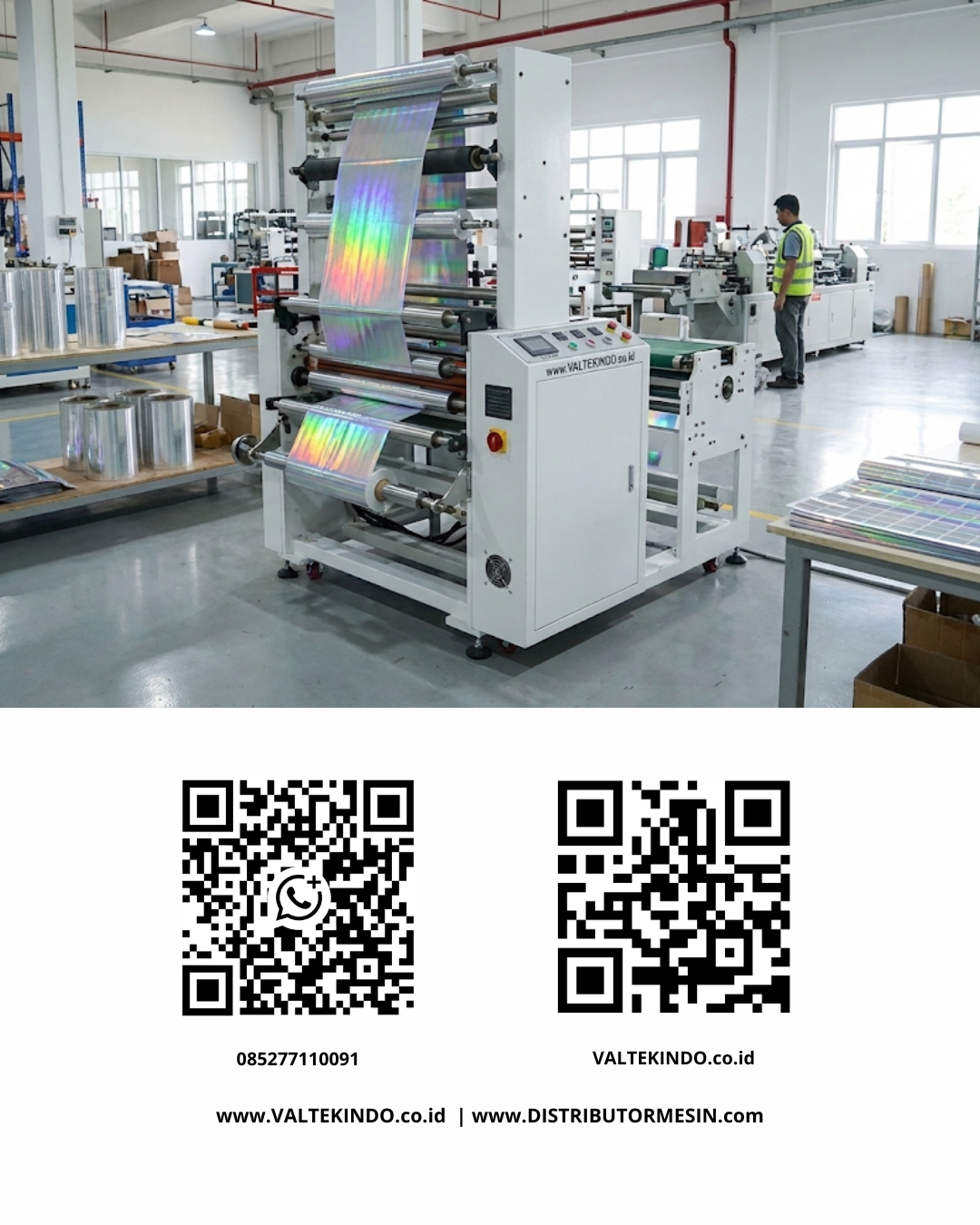
In today's modern visual era, we often encounter shimmering three-dimensional images on product labels, credit cards, and even banknotes. This technology is known as hologram printing. Unlike conventional ink printing which is flat, holograms offer depth and unique visual effects that are difficult to duplicate. This article will review in depth what a hologram is, its types, and the technical mechanisms behind it.
What Is Hologram Printing?
Etymologically, "hologram" comes from the Greek words holos, meaning "whole," and gramma, meaning "message" or "writing." In the printing world, hologram printing is a technique of recording light interference patterns to produce three-dimensional (3D) images on a two-dimensional surface.
This technology does not use ink like conventional printing systems; instead, it utilizes laser beams to record light patterns onto a specific medium. These patterns produce visual effects that can change color or appearance when viewed from different angles. Besides providing visual value, holograms are widely utilized as security features because their creation process involves complex optical techniques that are difficult to replicate.
Types of Hologram Technology
In its development, several variations of holograms are used according to industrial needs:
- 2D/3D Hologram: This is the most common type found. It consists of two or more layers of images stacked to create a depth effect. Although the medium is flat, the human eye captures a spatial perspective within it.
- Dot Matrix: Uses computer technology to create millions of microscopic dots that refract light specifically. This type is very popular for security labels as it is capable of producing very complex color gradients.
- Flip-Flop: This hologram displays two different images that appear alternately depending on the viewing angle.
- True Color Hologram: Displays objects with highly realistic original colors, often used for artistic purposes or the documentation of historical artifacts.
Read Also: Smart Investment 2026: Banner Digital Printing Machines That Increase Your Business Profit
How Does Hologram Printing Work?
The process of creating a hologram is far more complex than offset or digital printing. Here are the main technical steps:
1. Mastering Process (Recording) The initial step involves using a laser beam split into two parts: the object beam and the reference beam. The first beam illuminates the object to be recorded, while the second goes directly to the recording medium (film). The meeting of these two beams creates a highly detailed interference pattern.
2. Shim Making (Electroforming) The laser recording results are then transferred onto a thin metal plate called a nickel shim. This plate serves as a "master mold" containing the microscopic texture of the previously recorded light patterns.
3. Embossing (Pressing) The pattern on the shim is then pressed onto the material (usually polyester film or aluminum foil) under high temperature and pressure. This process gives the material's surface the ability to refract light, causing the hologram image to appear.
4. Finishing Once the pattern is formed, the material is generally given a protective layer and adhesive to increase durability against friction and environmental influences. On an industrial production scale, this process requires systems and equipment with a high level of accuracy to maintain consistent hologram quality.
Benefits of Holograms in Various Sectors
Why is this technology so crucial? There are three main reasons:
- Product Security: Holograms are difficult to forge without sophisticated laboratory equipment. This helps consumers distinguish between genuine and counterfeit products, especially in pharmaceuticals, cosmetics, and automotive spare parts.
- Official Identity: Passports, ID cards, and diplomas use holograms to guarantee document authentication so they are not easily manipulated.
- Visual Appeal: In the marketing sector, hologram labels provide a luxurious and exclusive impression on product packaging, thereby attracting consumer attention on store shelves.
The Future of Hologram Technology
As digital technology advances, holograms are beginning to transform towards Augmented Reality (AR) and aerial projection. However, in physical form (print), the need for stickers and security seals remains high due to their efficiency in protecting intellectual property rights.
This technology continues to evolve following global industrial standards to ensure that every label produced is not only beautiful to look at but also serves as a primary defense fortress against counterfeiting practices that harm many parties. By understanding how it works, we can better appreciate the complexity behind that small, shimmering sticker.
Optimize Your Industry Today!
Achieve production efficiency and the highest quality standards with a trusted industrial machinery provider. Explore our wide selection of premium processing and testing equipment at:
Website : valtekindo.co.id
Website : distributormesin.com
Consult your technical needs with our expert sales team:
WhatsApp 1: +62 852-2211-0091
WhatsApp 2: +62 852-7711-0091

Admin
AuthorAdmin is a writer on the Valtekindo website, providing informative content about High Quality Industrial Machinery and Testing Machines.
Related post:
- Pharmaceutical Factory Production Escalation Strategy: Why Investing in an Automatic Capsule Filling Machine is the Most Crucial Business Decision
- High-Precision Wire Cut EDM Technology in 2026: The Ultimate Solution for Mold Making, Stamping Dies, and Automotive Component Fabrication Without Thermal Distortion
- 2026 Automated Carton Sealer & Erector Investment Guide: End-of-Line Automation Strategies for Industrial Plant Efficiency