The Working Mechanism of 4-Side Moulders in Achieving Precision on Four Wood Surfaces
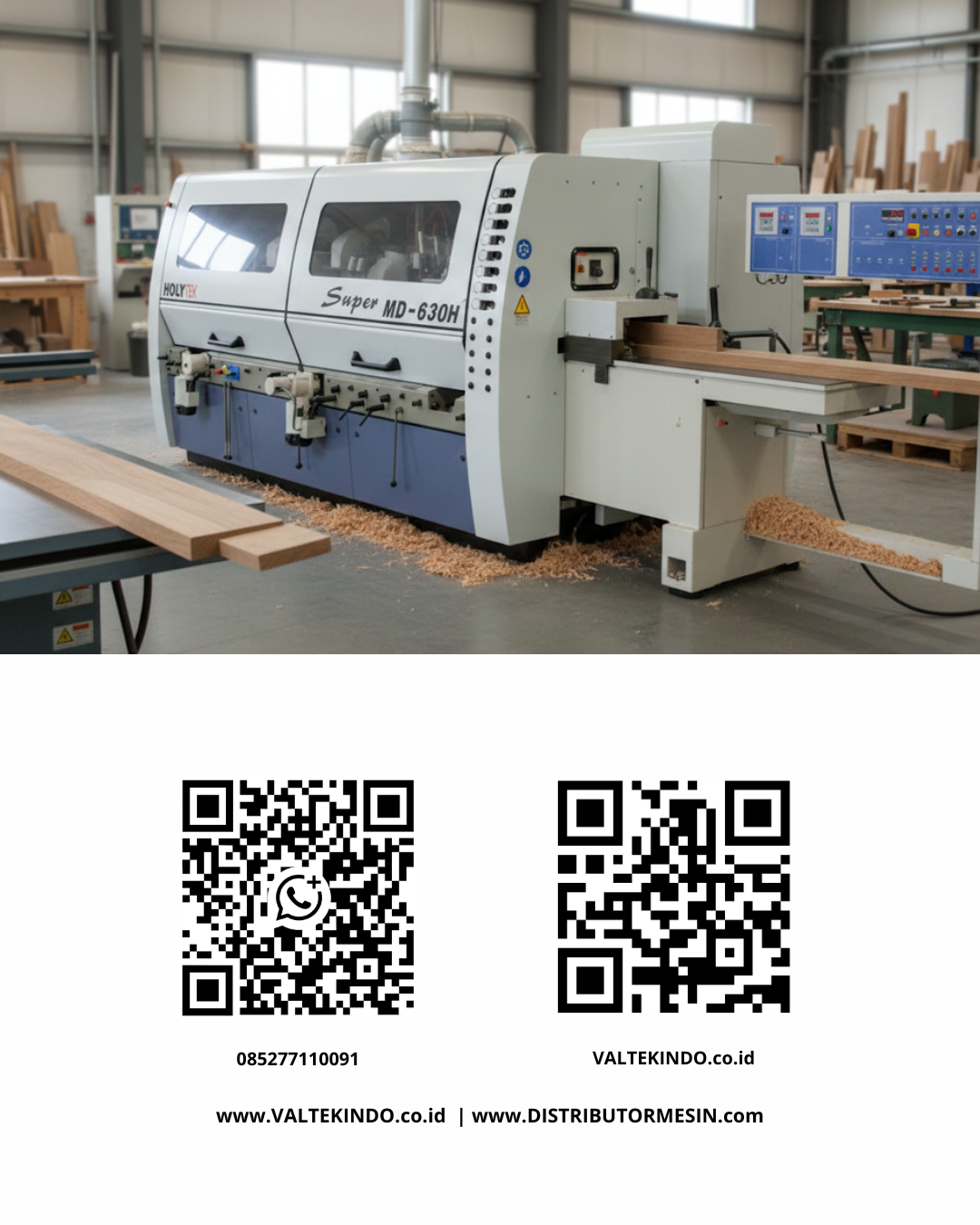
In the modern woodworking industry, efficiency and accuracy are the two main pillars of mass production. One of the technological innovations that serves as the backbone of industrial-scale woodworking shops is the 4-side moulder. This machine is specifically designed to shape and smooth four sides of timber simultaneously in a single pass. This article will dissect the technical mechanisms that allow this machine to produce consistent precision on every side of the wood material.
Core Construction and Workflow
Fundamentally, a 4-side moulder consists of a series of cutterheads strategically arranged along the material path. Unlike manual planers or standard jointers that only process one or two sides at a time, a moulder integrates multiple working units into one synchronized, high-performance system.
The process begins when the raw timber is fed through the feeding system. Powerful feed rollers ensure the wood moves steadily across the sequence of cutterheads. This stability is crucial; even the slightest vibration during the initial stages can ruin the wood profile and reduce the desired level of precision.
The Cutting Sequence for Maximum Accuracy
The high precision produced by this machine is achieved through a systematic cutting sequence. Each cutterhead has a specific role to ensure the final dimensions meet exact specifications:
- Bottom Spindle (Bottom Side): The bottom side of the wood is the first to be processed. The goal is to create a perfectly flat reference surface. This surface acts as the foundation as the wood slides across the machine bed toward the subsequent cutting units.
- Side Spindles (Right and Left Sides): Once the bottom is flat, vertical cutterheads on the right and left sides work simultaneously. These units determine the width of the timber and ensure both sides are parallel or formed into specific profiles according to the installed knives.
- Top Spindle (Top Side): The final stage involves processing the top side. At this point, the final thickness of the wood is determined. Since the wood already has a strong reference from the three previous sides, the top cut results in a highly accurate and smooth finish.
Advanced machines may even feature an additional spindle (a fifth or universal spindle) that can be adjusted at various angles to handle complex profiles or provide a superior final finish.
The Role of Feeding Speed and Spindle Stability
Precision mechanisms also rely heavily on the synchronization between the knife rotation speed and the timber movement (feed rate). High-quality machines are typically designed with features for high speed feeding and maximum planning, allowing mass production to run rapidly without sacrificing the surface quality.
Spindles in modern moulders are engineered to operate at high RPMs with very low vibration tolerances. The use of high-grade bearings and precise knife-locking systems ensures that every millimeter of wood passing through is cut to identical dimensions. This is vital in the furniture or prefabricated construction industries, where imprecise timber can complicate the assembly process.
Digital Adjustment Technology
Today, manual mechanisms are being replaced by numerical or digital control systems. Operators can adjust the position of each cutterhead via a control panel with accuracy down to the micron level. Automatic sensors position the spindles instantly, minimizing human error common in conventional machinery. This ease of setup allows for quick transitions between different wood profiles, significantly increasing productivity.
Conclusion
The 4-side moulder is an integrative solution for industries that prioritize quality. By combining flattening, width sizing, and thickness profiling into one solid mechanical sequence, this machine significantly reduces production time while maintaining precision standards that are difficult to achieve through manual labor. For those in the woodworking industry, understanding this mechanism is key to producing competitive, export-quality products.
Optimize Your Industry Today!
Achieve production efficiency and the highest quality standards with a trusted industrial machinery provider. Explore our wide selection of premium processing and testing equipment at:
Website : valtekindo.co.id
Website : distributormesin.com
Consult your technical needs with our expert sales team:
WhatsApp 1: +62 852-2211-0091
WhatsApp 2: +62 852-7711-0091

Admin
AuthorAdmin is a writer on the Valtekindo website, providing informative content about High Quality Industrial Machinery and Testing Machines.
Related post:
- Pharmaceutical Factory Production Escalation Strategy: Why Investing in an Automatic Capsule Filling Machine is the Most Crucial Business Decision
- High-Precision Wire Cut EDM Technology in 2026: The Ultimate Solution for Mold Making, Stamping Dies, and Automotive Component Fabrication Without Thermal Distortion
- 2026 Automated Carton Sealer & Erector Investment Guide: End-of-Line Automation Strategies for Industrial Plant Efficiency