The Critical Role of Precision Temperature Control on Hotplate Stirrers in Sensitive Chemical Reactions
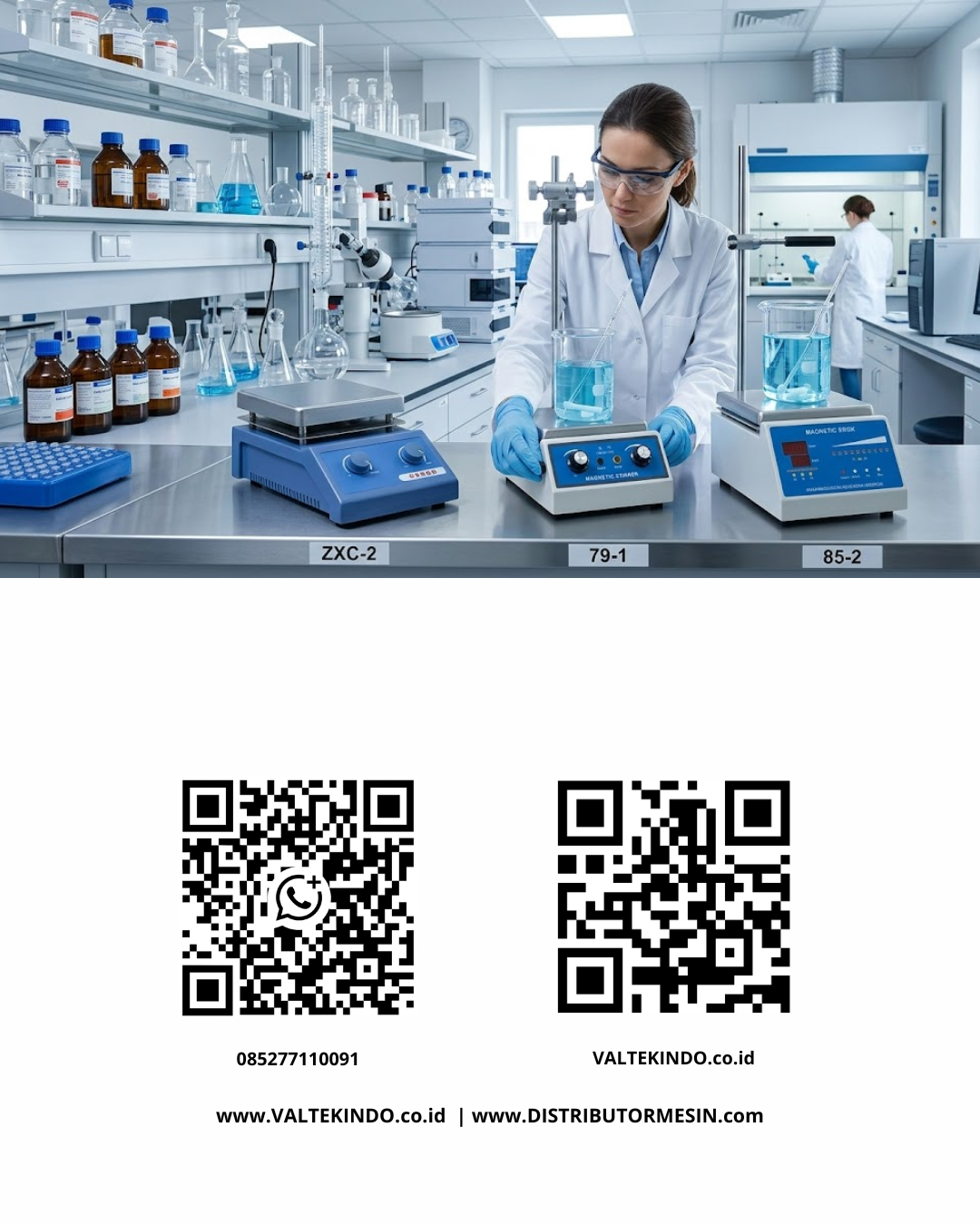
In the landscape of modern laboratory operations, accuracy is far more than a goal; it is a mandatory standard that dictates the success of any experiment. One of the most crucial, yet often overlooked, instruments is the hotplate stirrer. This device serves a dual purpose: providing consistent thermal energy while simultaneously ensuring a uniform mixture through magnetic stirring. However, when dealing with sensitive chemical reactions, basic functionality is simply not enough. In these contexts, precision temperature control becomes the deciding factor between a successful synthesis and a costly, potentially hazardous failure.
Why Does Precision Matter?
Sensitive chemical reactions—such as complex organic synthesis, controlled polymerization, or pharmaceutical assays—often operate within a very narrow thermal window. Even a slight fluctuation in temperature, as minor as 1°C or 2°C, can drastically alter reaction kinetics. This can lead to the formation of unwanted by-products, a significant reduction in yield, or in worst-case scenarios, trigger dangerous thermal decomposition.
Stable temperature control ensures that the activation energy provided remains constant throughout the entire volume of the solution. Without this stability, the risk of "hotspots"—areas of excessive heat at the base of the vessel—increases significantly. These hotspots often degrade sensitive molecular structures before the intended reaction can reach completion.
The Role of Magnetic Stirring in Thermal Homogeneity
Beyond the heating element itself, the magnetic stirring mechanism is vital for heat distribution. Consistent stirring facilitates uniform heat transfer through forced convection. Without robust and stable agitation, the bottom of the solution in direct contact with the heating plate would remain significantly hotter than the surface.
High-quality reliable magnetic stirrer series for essential laboratory needs utilize motor technology designed to minimize speed fluctuations. Synchronizing the rotational speed with temperature settings allows researchers to achieve isothermal conditions, where the solution's temperature is uniform at every coordinate within the vessel. This is particularly critical for scientists prioritizing data reproducibility and peer-validated results.
Safety Features and External Sensors
Modern hotplate stirrers are now equipped with microprocessor-based control systems. One highly recommended feature for sensitive reactions is the use of an external temperature sensor (such as a PT1000 probe). This sensor is immersed directly into the solution, allowing the device to read the actual temperature of the liquid rather than just the surface temperature of the plate.
Furthermore, safety cut-off features act as a vital secondary layer of protection. If the temperature exceeds a pre-set maximum—perhaps due to a power surge or rapid solvent evaporation—the device will automatically disconnect the heating circuit to prevent laboratory fires or chemical explosions.
Optimizing Laboratory Productivity
Selecting the right equipment is not just about immediate functionality; it is about long-term efficiency. The material of the heating plate, whether ceramic or coated aluminum, offers different thermal characteristics. Ceramic plates excel in chemical resistance and high-temperature endurance, while aluminum offers faster and more even heat distribution.
Understanding these technical specifications is essential for tailoring your setup to specific research requirements. Detailed information regarding various research support options can be further explored through a comprehensive laboratory instrumentation solution catalog. By utilizing accurately calibrated tools, the time lost to experimental failure can be kept to an absolute minimum.
Conclusion
Precision temperature control on a hotplate stirrer is the backbone of any chemical reaction requiring high levels of scrutiny. By integrating advanced sensor technology, motor stability, and high-quality plate materials, researchers can ensure both workplace safety and the validity of their scientific outcomes. Investing in reliable hardware is a fundamental step in advancing innovation across the scientific and industrial sectors.
Optimize Your Industry Today!
Achieve production efficiency and the highest quality standards with a trusted industrial machinery provider. Explore our wide selection of premium processing and testing equipment at:
Website : valtekindo.co.id
Website : distributormesin.com
Consult your technical needs with our expert sales team:
WhatsApp 1: +62 852-2211-0091
WhatsApp 2: +62 852-7711-0091

Admin
AuthorAdmin is a writer on the Valtekindo website, providing informative content about High Quality Industrial Machinery and Testing Machines.
Related post:
- Pharmaceutical Factory Production Escalation Strategy: Why Investing in an Automatic Capsule Filling Machine is the Most Crucial Business Decision
- High-Precision Wire Cut EDM Technology in 2026: The Ultimate Solution for Mold Making, Stamping Dies, and Automotive Component Fabrication Without Thermal Distortion
- 2026 Automated Carton Sealer & Erector Investment Guide: End-of-Line Automation Strategies for Industrial Plant Efficiency