Synergy Between Technology and Education: Preparing Human Resources for the Industry 4.0 Era
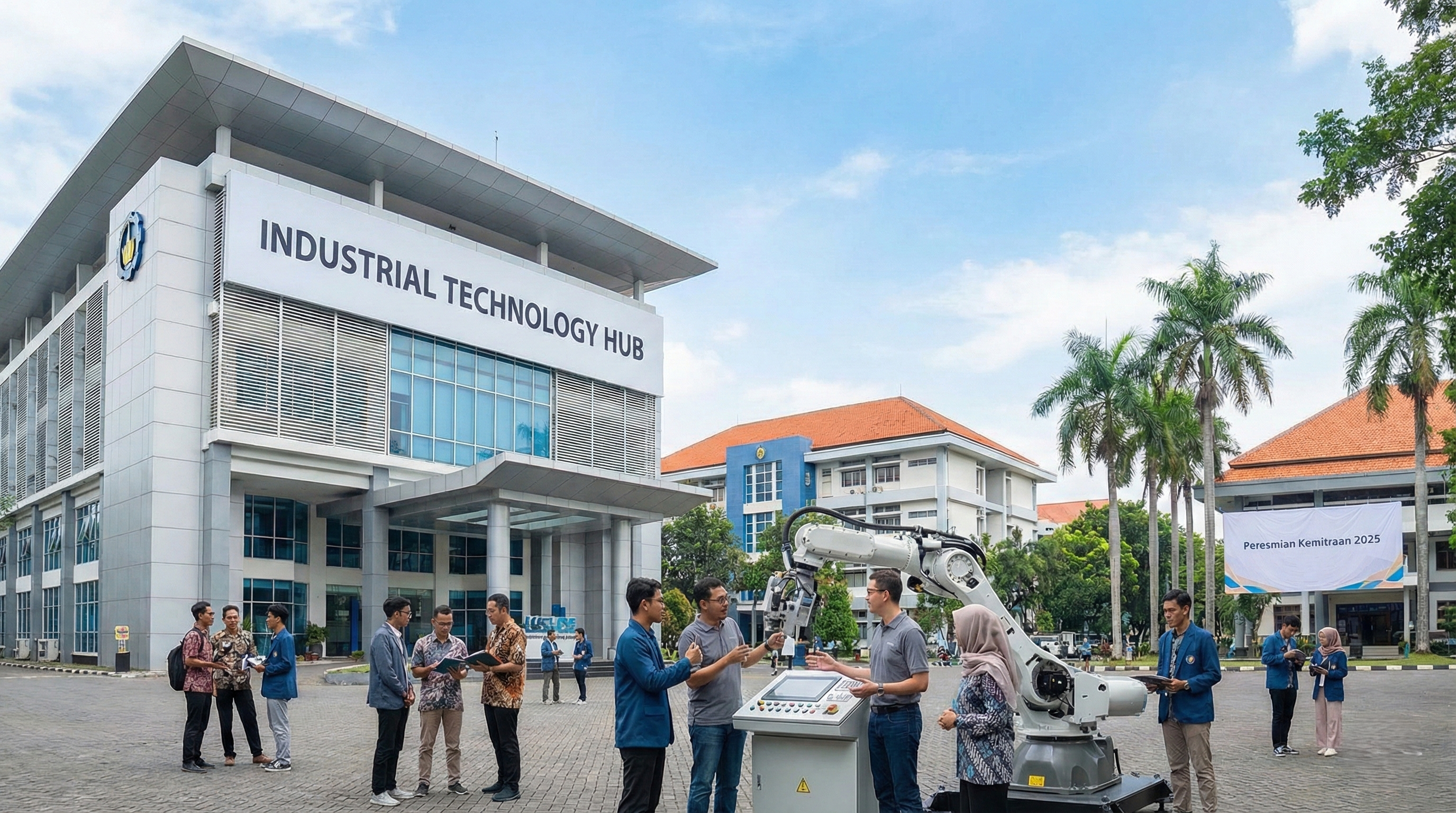
The advent of the Fourth Industrial Revolution, or Industry 4.0, has fundamentally altered the global economic landscape. It is an era defined by the fusion of technologies that blur the lines between the physical, digital, and biological spheres. With the rise of Artificial Intelligence (AI), the Internet of Things (IoT), and autonomous systems, the primary challenge for nations today is no longer just the acquisition of technology, but the readiness of their Human Resources (HR). To thrive in this environment, a strategic collaboration between the technology sector and educational institutions is essential to build a workforce that is not only digitally literate but also innovatively capable.
Bridging the Global Skills Gap
One of the most significant hurdles in modern development is the "skills gap"—the disconnect between the theoretical knowledge provided by traditional academic curricula and the practical demands of the high-tech industry. As technology evolves at an exponential rate, educational frameworks often struggle to keep pace. Without direct input from industrial practitioners, graduates may find themselves equipped with outdated skills that do not translate to the needs of a modern smart factory or a digital laboratory.
Collaborative efforts between technology providers and vocational or higher education institutions aim to synchronize these two worlds. By integrating industry insights into the classroom, curriculum developers can prioritize future-ready competencies such as data analytics, cloud computing, and advanced mechatronics. This ensures that the next generation of engineers and technicians is ready to hit the ground running upon graduation.
The Vital Role of Advanced Laboratory Infrastructure
In technical education, theory only serves as a foundation; the true mastery of a subject is forged through hands-on experimentation. To effectively prepare students, educational facilities must mirror the environments they will encounter in the professional world. This is where the technology sector plays a pivotal role by providing access to sophisticated simulation tools and hardware.
For instance, in the field of electrical and electronics engineering, understanding the behavior of complex circuits is fundamental. Students need to move beyond simple linear equations and observe how components behave under real-world conditions. Utilizing specialized nonlinear element current-voltage characteristic laboratory equipment allows learners to conduct precise measurements on components like semiconductors and non-ohmic devices. This practical exposure transforms abstract concepts into tangible skills, fostering a deeper level of technical intuition that is highly valued in industrial R&D.
Knowledge Transfer and Professional Certification
Beyond physical infrastructure, the synergy between education and technology involves the continuous exchange of expertise. Many forward-thinking institutions now engage in "knowledge transfer" programs, where industry experts serve as guest lecturers or mentors. This interaction exposes students to real-world problem-solving methodologies, project management, and the rigorous quality standards expected in the global market.
Furthermore, professional certification has become a critical benchmark for employability. Many universities now partner with a reliable industrial technology partner to offer certified training programs. These certifications serve as a "global passport" for graduates, validating their expertise in specific technical domains and making them highly competitive candidates for multinational corporations.
Driving National Economic Growth through Innovation
Investing in the collaboration between technology and education is, at its core, an investment in a nation's economic future. Countries that successfully align their educational output with technological advancements tend to see higher rates of industrial productivity and innovation. When the workforce is proficient in handling advanced machinery and digital systems, the transition to automated and optimized manufacturing processes becomes seamless.
Ultimately, the goal of this collaboration is to shift the workforce from being mere technology consumers to becoming technology creators. By fostering an environment where students can experiment with professional-grade tools and learn from industry leaders, we are not just preparing them for jobs—we are empowering them to lead the next wave of industrial evolution.
Conclusion
The transition to Industry 4.0 is an inevitable journey. To navigate it successfully, the bridge between the halls of academia and the floors of modern industry must be reinforced. Through curriculum alignment, modern laboratory facilities, and expert-led training, we can ensure that our human resources are ready to face the challenges of tomorrow with confidence and competence.
Optimize Your Industry Today!
Achieve production efficiency and the highest quality standards with a trusted industrial machinery provider. Explore our wide selection of premium processing and testing equipment at:
Website : valtekindo.co.id
Website : distributormesin.com
Consult your technical needs with our expert sales team:
WhatsApp 1: +62 852-2211-0091
WhatsApp 2: +62 852-7711-0091

Admin
AuthorAdmin is a writer on the Valtekindo website, providing informative content about High Quality Industrial Machinery and Testing Machines.
Related post:
- Pharmaceutical Factory Production Escalation Strategy: Why Investing in an Automatic Capsule Filling Machine is the Most Crucial Business Decision
- High-Precision Wire Cut EDM Technology in 2026: The Ultimate Solution for Mold Making, Stamping Dies, and Automotive Component Fabrication Without Thermal Distortion
- 2026 Automated Carton Sealer & Erector Investment Guide: End-of-Line Automation Strategies for Industrial Plant Efficiency