Plastic Thermoforming Machine: The Secret to Production Scalability and Modern Packaging Factory Efficiency
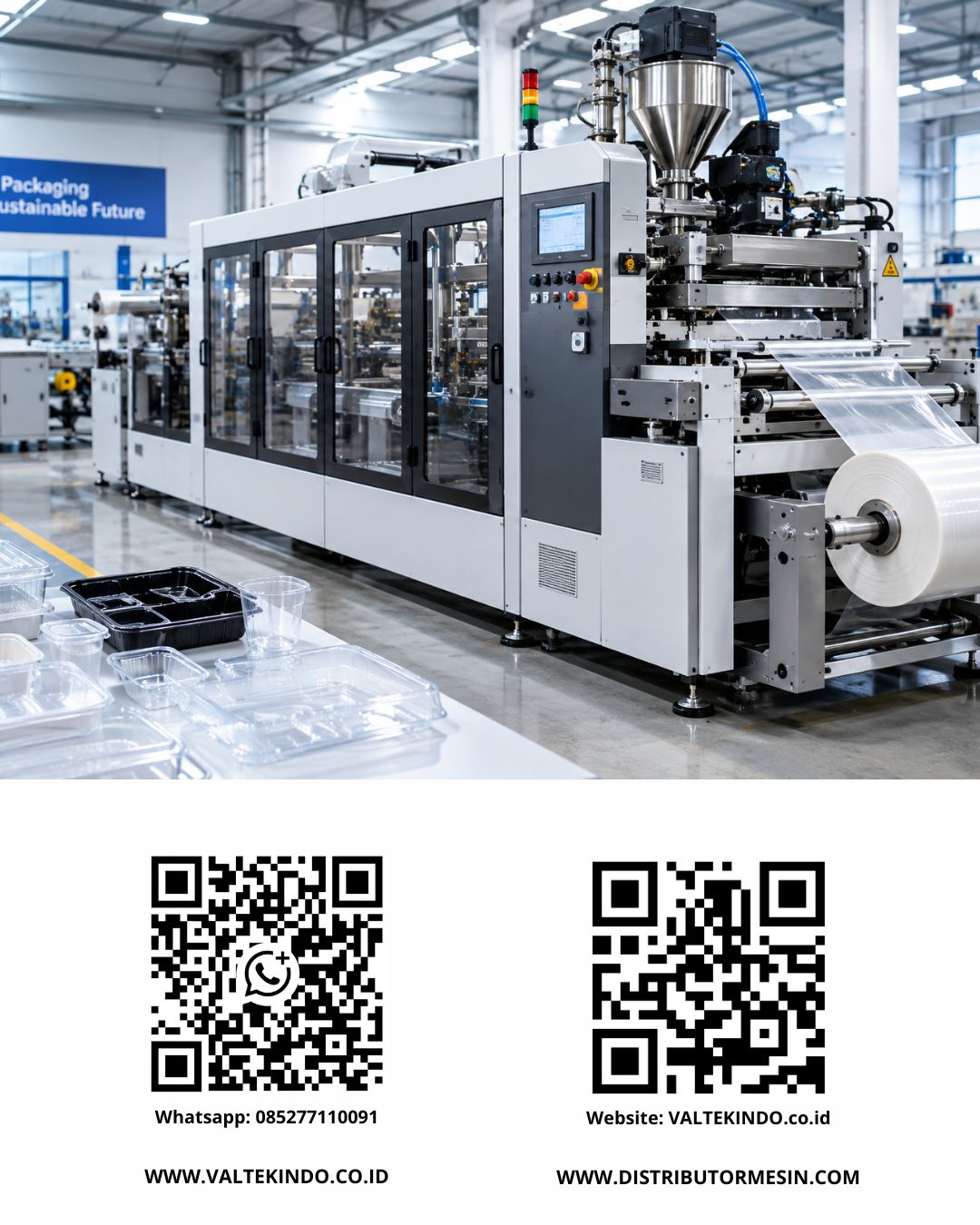
The rapid growth of the Fast-Moving Consumer Goods (FMCG), food and beverage (F&B), and pharmaceutical sectors in Indonesia has triggered a massive surge in demand for high-quality packaging. For manufacturing plants and industrial investors, the main challenge is not merely producing packaging, but rather how to produce it on a massive scale, rapidly, with high precision, while simultaneously suppressing operational costs (Cost of Goods Sold). The technical and strategic solution to this challenge lies in the adoption of cutting-edge plastic thermoforming machines. This technology has become the backbone for companies aiming to dominate both domestic and export packaging market shares.
The thermoforming process works by heating a plastic sheet until it reaches an ideal forming temperature, then molding it into a specific shape using air pressure or vacuum. Compared to injection molding methods, thermoforming offers significantly faster production cycles and far more economical tooling or mold-making costs. This flexibility allows factories to easily switch between producing various types of packaging, ranging from food trays and plastic cups to medical blister packs and electronic clamshell packaging, without experiencing prolonged machine downtime.
The success of production facility investments relies heavily on selecting a machinery provider with a proven industrial track record. Choosing the right vendor is not merely a purchasing transaction, but a long-term partnership to secure your supply chain. For instance, collaborating with PT Valtekindo Global Intertek ensures your factory receives comprehensive after-sales support, encompassing installation, operator training, and guaranteed availability of genuine spare parts. Such partnership schemes are crucial to prevent production line halts that could cost companies billions of rupiah due to delayed deliveries to your B2B clients.
From a financial perspective, the Return on Investment (ROI) calculations for a thermoforming line are highly attractive. Modern machines are equipped with Programmable Logic Controller (PLC) systems and precision servo motors that drastically reduce material waste (plastic scrap) and electrical energy consumption. This efficiency directly impacts the reduction of cost per packaging unit. If your factory is planning capacity expansion, integrating a precision and cost-effective plastic packaging thermoforming machine solution is a tactical move to enhance the competitiveness of your price offerings in the B2B market, while maintaining high-level quality standards (food-grade compliance).
Contact Our Sales Team Today
Looking for high-quality industrial machinery, factory automation solutions, or customized equipment for your business? Our experienced sales team is ready to help you find the right solution, provide technical consultation, and offer the best pricing.
Contact Our Official WhatsApp Sales Team:
- WhatsApp Sales 1: 085222110091
- WhatsApp Sales 2: 085277110091
Visit our official websites to explore our complete product catalog, machine operation videos, technical information, and exclusive offers:
PT. Valtekindo Global Intertek is your trusted partner for industrial machinery, processing equipment, recycling systems, laboratory instruments, and factory automation solutions. Contact us today for a free consultation and receive the best solution tailored to your business needs.

Admin
AuthorAdmin is a writer on the Valtekindo website, providing informative content about High Quality Industrial Machinery and Testing Machines.
Related post:
- Pharmaceutical Factory Production Escalation Strategy: Why Investing in an Automatic Capsule Filling Machine is the Most Crucial Business Decision
- High-Precision Wire Cut EDM Technology in 2026: The Ultimate Solution for Mold Making, Stamping Dies, and Automotive Component Fabrication Without Thermal Distortion
- 2026 Automated Carton Sealer & Erector Investment Guide: End-of-Line Automation Strategies for Industrial Plant Efficiency