Manual vs. Automatic Wax Injection: Which is More Efficient?
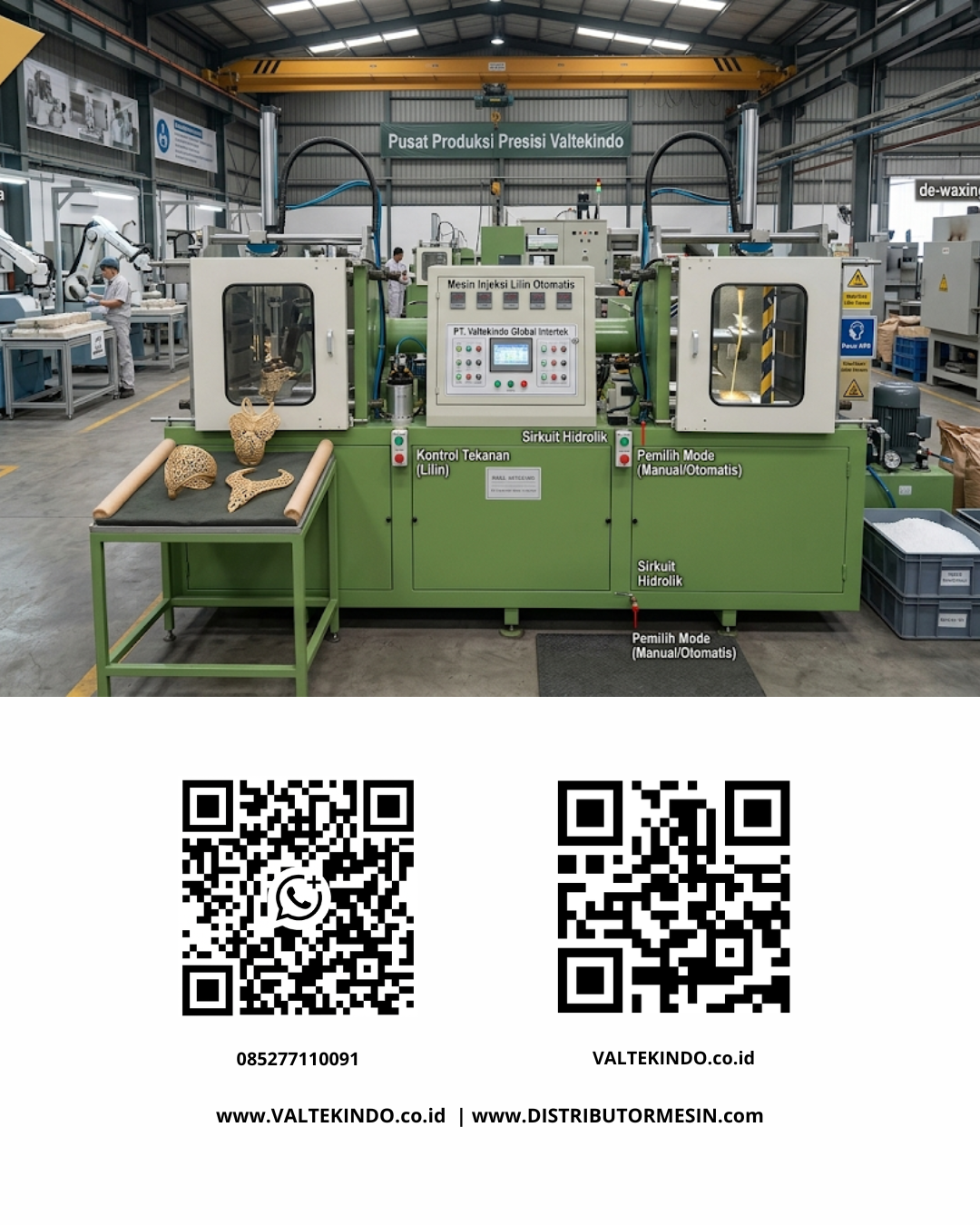
In the world of precision investment casting, the wax pattern serves as the fundamental blueprint for the final metal component. The quality, surface finish, and dimensional accuracy of the cast part are directly dictated by the integrity of the wax model. Currently, many foundries face the strategic crossroad of choosing between manual and automatic injection methods. While manual processes have historical roots, the modern manufacturing landscape increasingly demands the precision that only automation can provide.
Dimensional Accuracy and Production Consistency
The most significant divergence between manual and automatic systems lies in consistency. In a manual setup, the operator is responsible for timing the injection and maintaining hold pressure. This reliance on human intuition introduces a high degree of variability, as fatigue and subtle differences in technique can lead to fluctuations in pattern quality.
Automatic systems, however, utilize Programmable Logic Controllers (PLC) to govern every micro-second of the cycle. The primary advantage of this technology is the ability to produce thousands of identical wax patterns with negligible dimensional deviation. To understand how these systems maintain such high-fidelity output, one might explore the technical parameters of a wax pattern molding solution for investment casting, which is engineered to sustain industrial-grade stability.
Temperature and Pressure Management
Wax is a thermoplastic material that is extremely sensitive to thermal shifts. In manual methods, keeping the wax at a precise melting point in an open or semi-closed tank is challenging. If the wax is too hot, extreme shrinkage occurs during cooling; if it is too cool, it fails to flow into the intricate crevices of the mold.
Modern automatic machines are equipped with advanced thermal sensors and hydraulic or pneumatic pressure regulators. This ensures that every injection occurs at the optimal viscosity. Integrating high-performance industrial equipment into the production line has been proven to slash reject rates to a minimum, directly impacting the bottom line by reducing material waste and rework.
Production Speed and Economies of Scale
While manual methods may appear cost-effective due to lower initial capital expenditure, they often fall short when analyzing output per hour. Automatic systems significantly outperform manual labor by integrating cooling cycles directly into the machine's workflow. This reduces the cycle time per part, allowing for a much higher throughput.
In a large-scale industrial environment, this time efficiency translates into lower labor costs and shorter lead times. An automatic machine can run continuously with minimal supervision, providing a level of production predictability that manual processes simply cannot guarantee.
Long-Term Efficiency Analysis
Choosing between manual and automatic is not just a matter of price—it is a long-term strategic decision. Manual methods may still hold relevance for rapid prototyping or very low-volume "one-off" projects. However, for industries aiming for export-quality standards and high-precision mechanical components, transitioning to automation is an essential evolution.
True efficiency is measured by how little material is wasted. Automatic systems optimize wax usage by preventing spills and ensuring "first-time-right" injections, meaning fewer patterns need to be melted down and recycled, which preserves the chemical properties of the wax over time.
Optimize Your Industry Today!
Achieve production efficiency and the highest quality standards with a trusted industrial machinery provider. Explore our wide selection of premium processing and testing equipment at:
Website : valtekindo.co.id
Website : distributormesin.com
Consult your technical needs with our expert sales team:
WhatsApp 1: +62 852-2211-0091
WhatsApp 2: +62 852-7711-0091

Admin
AuthorAdmin is a writer on the Valtekindo website, providing informative content about High Quality Industrial Machinery and Testing Machines.
Related post:
- Pharmaceutical Factory Production Escalation Strategy: Why Investing in an Automatic Capsule Filling Machine is the Most Crucial Business Decision
- High-Precision Wire Cut EDM Technology in 2026: The Ultimate Solution for Mold Making, Stamping Dies, and Automotive Component Fabrication Without Thermal Distortion
- 2026 Automated Carton Sealer & Erector Investment Guide: End-of-Line Automation Strategies for Industrial Plant Efficiency