Industry 4.0 Solutions: The Efficiency of CNC Fabric and Leather Cutting Machines
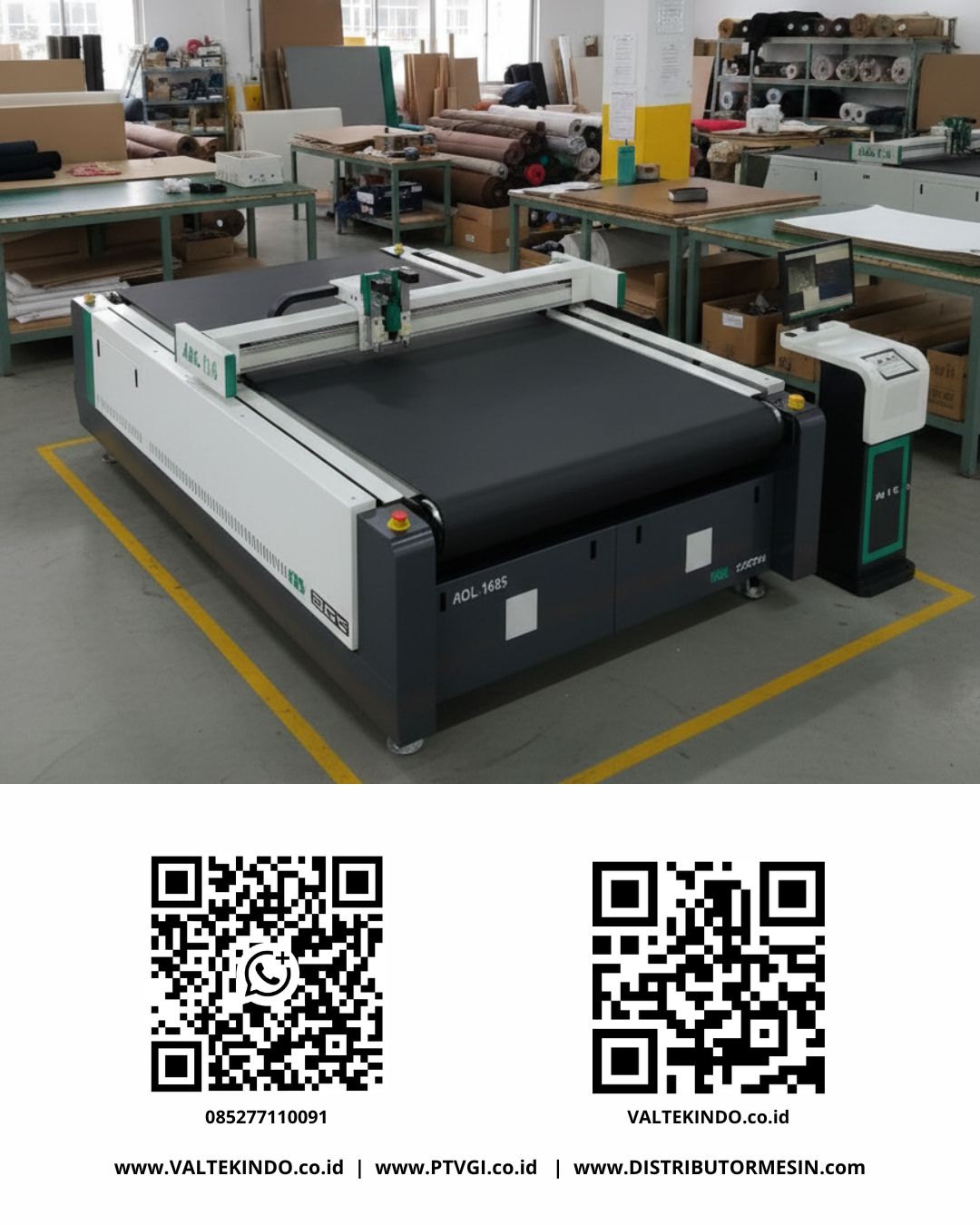
The Industry 4.0 revolution has fundamentally transformed the global manufacturing landscape. We are no longer talking about simple mechanical assembly lines; we are talking about smart factories where cyber-physical systems, the Internet of Things (IoT), and automation are seamlessly integrated. At the heart of this revolution is an unprecedented demand for efficiency, precision, and flexibility.
For industries heavily reliant on sheet materials—such as fabric, leather, PVC, and foam—the garment, furniture, automotive, and footwear sectors are prime examples. In these industries, the cutting process is one of the most crucial yet inefficient-prone areas. Traditional methods, which rely on manual cutting or die cutting, now face significant challenges in staying competitive.
Manual cutting is highly dependent on labor skill, is slow, inconsistent, and produces a significant amount of material waste (scrap). While die cutting is fast for mass production, it is completely inflexible. Every design change requires a new, expensive, and time-consuming die (mold) to be made. In the era of fast fashion and mass customization, both of these methods are major bottlenecks.
This is where CNC (Computer Numerical Control) cutting technology emerges as the definitive solution, bridging the gap between modern production needs and the principles of Industry 4.0.
The Hidden Inefficiencies in Conventional Cutting Processes
To understand the full impact of CNC automation, we must first identify the "hidden costs" of old cutting methods. Many companies, especially in the garment and furniture sectors, often underestimate how much they are losing on the production floor.
- Material Waste: Fabric and leather are expensive commodities. Leather, in particular, has irregular shapes and natural defects. A manual cutter, even the most skilled, cannot perfectly optimize pattern placement (nesting) to minimize scrap. Often, material waste levels can reach 15-20%.
- Skill Dependency: Expert cutters are valuable assets, but they are also hard to find and expensive. The quality of the cut is heavily dependent on the individual's fatigue, focus, and experience. If this key worker is absent, the entire production line can halt.
- Long Setup Time: In industries like sample making or high-mix, low-volume production, switching from one pattern to another using manual or die-cut methods is extremely slow. Valuable time is wasted on preparation, not production.
- Inconsistency and Rework: Manual cutting is prone to errors—slightly skewed lines, improper angles, or inaccurate sizing. These small mistakes in the cutting room cascade into major problems in the sewing room, leading to rework or even rejection of the final product.
- Design Limitations: Highly complex patterns, with many small holes or sharp, intricate curves, are nearly impossible to cut manually with consistent precision and speed.
CNC Cutting Machines: The Heart of Efficiency in the Digital Age
CNC cutting machines, like those designed for fabric and leather, are a true embodiment of Industry 4.0. They are not just tools, but intelligent systems that transform digital data (CAD files) into physical products with perfect precision.
Unlike laser cutting, which can burn or leave scorch marks on sensitive materials (like leather or synthetic fabrics), or waterjet cutting, which is a wet process, modern CNC cutters for soft materials use oscillating knife technology.
This high-speed, vertically vibrating blade can cut through thick and multi-layer materials cleanly and accurately. Because the process is mechanical (a "cold cut"), it does not alter the material's properties, leaves no odor, and is extremely safe.
The integration of these machines into a factory's workflow demonstrates several key pillars of Industry 4.0:
- Digital Integration (CAD/CAM): Designs are created on a computer (CAD) and sent directly to the machine (CAM). There is no longer a need to create physical patterns or dies. Design changes can be made in seconds.
- Full Automation: These machines are often equipped with a conveyor system and auto-feeding, which automatically pulls material from the roll, holds it with a powerful vacuum system during cutting, and advances the cut pieces. This process can run 24/7 with minimal supervision.
- Data-Driven Optimization (Nesting): The nesting software accompanying the machine is its brain. This software automatically analyzes all the patterns that need to be cut and arranges them on the material area (fabric or leather) in the most efficient way possible, like an advanced game of Tetris. This is the key to drastically reducing material waste.
The PT Valtekindo Global Intertek Solution: Maximum Efficiency with the Full Automatic Fabric Cutting Machine Understanding the urgent need for efficiency in the Indonesian market, companies like PT Valtekindo Global Intertek provide the technology to answer these challenges. Their Full Automatic Fabric Cutting Machine is specifically designed to bring your business to the Industry 4.0 level.
This machine, utilizing cutting-edge CNC technology, directly addresses the points of inefficiency previously discussed:
1. Improved Material Efficiency: With advanced automatic nesting software, this machine ensures maximum material utilization. For companies working with expensive leather or imported fabrics, saving just 5-10% on raw materials can mean a very fast ROI (Return on Investment).
2. Improved Time Efficiency (Productivity): The cutting speed of a CNC machine far exceeds manual cutting. Features like multi-layer cutting capabilities allow dozens of fabric layers to be cut simultaneously with the same precision from the top layer to the bottom. This exponentially increases daily production throughput.
3. Improved Labor Efficiency: This machine does not replace humans; it "augments" their capabilities. The dependency on "expert cutters" is reduced. Operators can be quickly trained to operate the software, while the machine does the precise, heavy, and repetitive physical work. A single operator can often oversee multiple machines.
4. Perfect Quality and Consistency: Every cut piece is 100% identical and true to the digital file. There are no more human errors, no more missed measurements. This means less rework in the sewing department and a much higher quality standard for the final product.
5. Unlimited Flexibility: Whether you are producing 10,000 units of a uniform or a single custom sofa prototype, this machine can handle it. Switching between jobs is as easy as opening a different file. This agility is essential for serving the modern market's demand for customization and rapid response times.
The applications for this machine are vast, covering the garment industry (apparel, uniforms), furniture (sofa upholstery, mattresses), automotive interiors (leather seats, car mats), technical materials (gaskets, filters, composites), and much more.
Your Step Towards a Smart Factory
Investing in a CNC fabric and leather cutting machine is not just a new tool purchase; it is a strategic move to transform your entire operation. It is about eliminating waste, increasing speed, and empowering your business to compete in the fast-paced Industry 4.0 era.
By automating the repetitive, labor-intensive, and error-prone tasks, you free up your human resources to focus on higher value-added tasks, such as design, quality control, and business development.
Optimize Your Industry Today!
Achieve production efficiency and the highest quality standards with a trusted industrial machinery provider. Explore our wide selection of premium processing and testing equipment at:
Website : valtekindo.co.id
Wesbite : distributormesin.com
Consult your technical needs with our expert sales team:
WhatsApp 1: +62 852-2211-0091
WhatsApp 2: +62 852-7711-0091

Admin
AuthorAdmin is a writer on the Valtekindo website, providing informative content about High Quality Industrial Machinery and Testing Machines.
Related post:
- Pharmaceutical Factory Production Escalation Strategy: Why Investing in an Automatic Capsule Filling Machine is the Most Crucial Business Decision
- High-Precision Wire Cut EDM Technology in 2026: The Ultimate Solution for Mold Making, Stamping Dies, and Automotive Component Fabrication Without Thermal Distortion
- 2026 Automated Carton Sealer & Erector Investment Guide: End-of-Line Automation Strategies for Industrial Plant Efficiency