How to Start a Plastic Recycling Business with a Reliable Pelletizer Machine
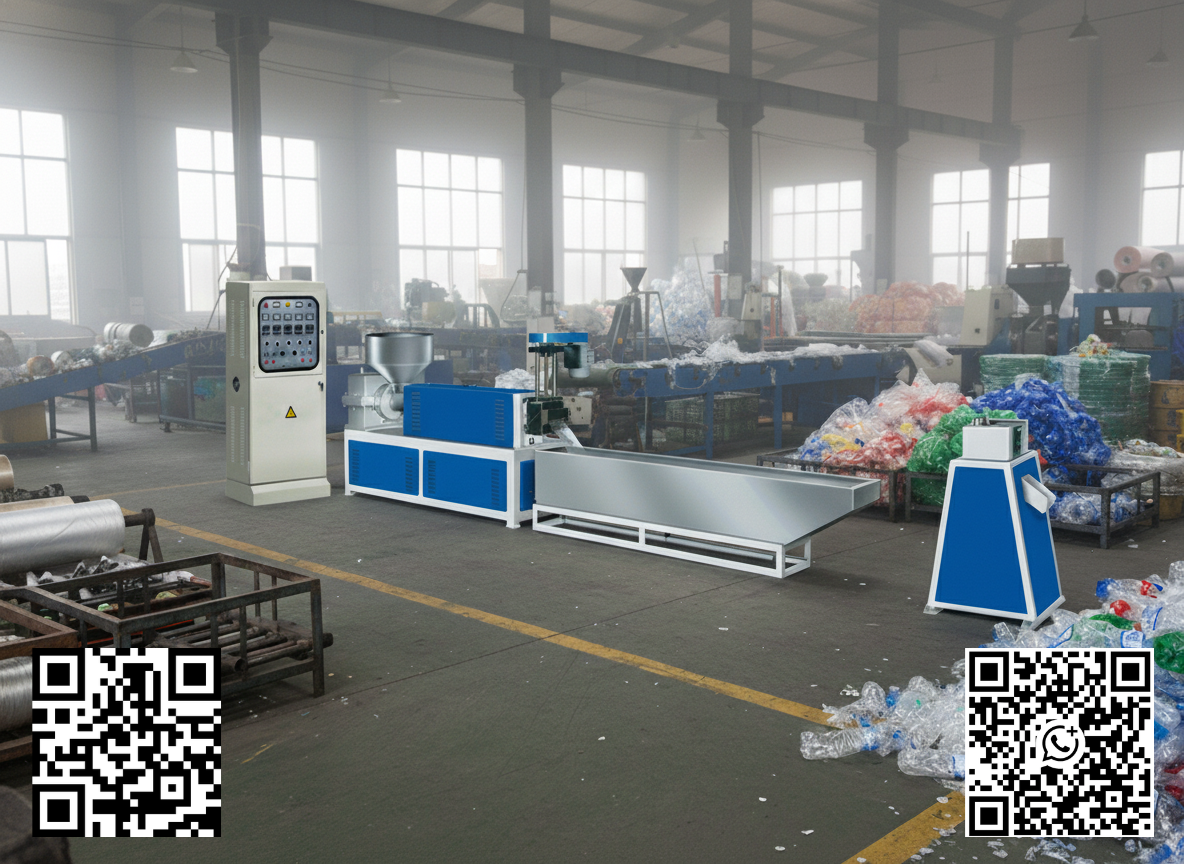
Plastic waste has become one of the most pressing environmental issues in Indonesia and the world. Data shows millions of tons of plastic waste pollute the oceans and land every year. However, behind this crisis, lies an extraordinary business opportunity: the circular economy—an arena where industrial players like
One of the most profitable forms of recycling is converting plastic waste into plastic pellets. These pellets are a primary raw material highly sought after by various manufacturing industries, from making new plastic bags, household furniture, and automotive components, to textiles.
Starting a plastic recycling business not only contributes positively to the environment but also offers significant profit potential. However, to succeed in this industry, you cannot be arbitrary. The key lies in process efficiency and final product quality. This is where the role of a reliable pelletizer machine becomes crucial. This article will guide you step-by-step on how to start a plastic recycling business, focusing on selecting the right machine technology for long-term success.
Why is the Plastic Recycling Business So Promising?
Before going further, it's important to understand why this business has bright prospects in Indonesia.
-
Consistent Market Demand: The plastic manufacturing industry in Indonesia continues to grow. Many of these factories prefer to use recycled raw materials (pellets) because their prices are more competitive compared to virgin resin. As long as there is plastic goods production, the demand for pellets will always exist.
-
Abundant Raw Material Availability: Unfortunately, Indonesia is still struggling with waste management. This means the availability of raw materials (plastic waste) is abundant. By building a good collection network, you will not have difficulty securing supplies.
-
Regulatory Support and Environmental Awareness: The government and the public are increasingly aware of the dangers of plastic waste. Regulations encouraging the use of Recycled Content and Extended Producer Responsibility (EPR) initiatives are strengthening the position of the recycling industry.
-
High Selling Value: The recycling process adds significant value. Plastic waste that was previously worthless, after being processed into clean, high-quality pellets, has a high and stable selling price in the industrial market.
Step-by-Step Guide to Starting the Business
Starting a plastic recycling business requires careful planning. It's not just about collecting waste, but about building a manufacturing facility. Here are the essential steps:
1. Market Research and Feasibility Study The first step is research. You must decide:
-
What Type of Plastic? Focus is key. Will you process HDPE (shampoo bottles, jerry cans), LDPE (plastic bags, wrapping), or PP (mineral water cups, bottle caps)? Each type has a different market and handling process.
-
Who Are Your Buyers? Identify your target market. Are they plastic bag factories, furniture factories, or plastic pellet exporters?
-
Competitor Analysis: Study existing players. What gap can you fill? Maybe in quality, a specific type of plastic, or location.
2. Develop a Business Plan and Legality A business plan is your roadmap. It must include:
-
Capital Analysis: Calculate initial investment costs (machine purchase, site rental, installation) and operational costs (electricity, labor, raw material purchase).
-
Profit Projection: What is your production target per day? What is the selling price of the pellets? When will you reach the Break-Even Point (BEP)?
-
Legality: This is crucial. You need to arrange for business permits (NIB, SIUP), Location Permits, and most importantly, Environmental Permits (SPPL, UKL-UPL, or AMDAL, depending on your business scale).
3. Build a Raw Material Supply Chain An advanced machine is useless without raw materials. You need to build a consistent network of plastic waste suppliers. Form partnerships with:
-
Waste Banks: A source that is already well-sorted.
-
Large Collectors (Lapak): They have extensive collector networks.
-
Industries: Many factories produce uniform and clean plastic waste (production waste).
4. Understand the Production Process Flow In general, the production flow for recycling plastic into pellets is as follows:
-
Sorting: Separating plastics by type (HDPE, PP, LDPE) and color. Contamination is the main enemy of quality.
-
Washing: Cleaning the plastic from dirt, labels, and residual contents using water and special soap.
-
Crushing: The clean plastic is then shredded into small flakes using a crusher machine.
-
Drying: The plastic flakes are dried to remove residual water.
-
Pelletizing (Process of Becoming Pellets): This is the heart of your business. The dry plastic flakes are fed into a pelletizer machine.
The Heart of Production: Choosing a Reliable Pelletizer Machine from Valtekindo
The most common failure in the plastic recycling business is investing in the wrong machine. Machines that break down often, produce non-uniform pellets, or have wasteful energy consumption will destroy your profitability.
The pelletizing process involves melting the plastic flakes at high temperatures inside an extruder, filtering impurities, and then cutting them into small, uniform granules (pellets). The quality of the pelletizer machine determines everything: the color, density, cleanliness, and uniformity of the pellet shape.
To meet this challenge, CV. Valtekindo presents modern technology solutions through its flagship product line: Plastic Recycling Machine | Turning Plastic Waste Into High-Value Pellets with Modern Recycling Machines.
This SJ-B90 series machine (and other series like SJ-110, SJ-120) is not just an ordinary machine; it is a waste plastic regeneration and granulation system designed for maximum efficiency and reliability.
Advantages of the Valtekindo Pelletizer Machine: Based on its technical specifications, this machine is specifically designed to overcome common problems in the recycling industry:
-
Premium and Uniform Pellet Quality: The machine is equipped with a precise automatic temperature control system. This is a crucial feature. Unstable temperatures during melting will result in burnt or undercooked pellets. With precision control, the Valtekindo machine ensures every pellet produced has uniform density and quality, increasing its selling value.
-
Operational Efficiency and Minimal Downtime: One of the biggest obstacles is replacing a dirty filter. Conventional machines require long downtime. The Valtekindo machine is equipped with a motor-operated screen changer unit. This feature allows for very fast and efficient filter changes, minimizing production downtime.
-
Raw Material Flexibility: This machine has an innovative granulation crusher system that uses a motor with adjustable speed. This allows it to optimally process various types of materials (HDPE, LDPE, PP) of various thicknesses.
-
High and Stable Output: The key to profitability is consistent output. This machine is designed so that the pelletizing process runs synchronously with the extrusion machine. This integrated workflow guarantees a stable material discharge speed, providing high and reliable output, ranging from 25 kg/hr to 135 kg/hr (depending on the SJ-90 to SJ-120 models).
-
Ease of Operation: With a user-friendly interface, this machine does not require operators with complex technical skills. This saves training costs and reduces the risk of human error.
-
Long-Term Investment: With powerful main motors (starting from 22kw to 37kw) and a sturdy body (machine weight 2600kg - 3200kg), this machine is designed for long-term heavy-duty work in an industrial environment.
Challenges and Keys to Success
The plastic recycling business is not without its challenges. You will face issues such as:
-
Raw Material Contamination: Waste mixed with other types, dirt, or even hazardous materials.
-
Price Fluctuations: Pellet prices can rise and fall following world oil prices and market demand.
-
Competition: This industry is increasingly in demand.
Your key to success is QUALITY. This is where investing in a reliable machine, like those offered by Valtekindo, becomes a determining factor. A good machine will produce clean, uniform pellets, which will always be sought after by large factories. Build a reputation as a supplier of high-quality pellets, and your business will be sustainable.
Conclusion: Take Your Step Now
The plastic recycling business is an ideal blend of economic profitability and environmental responsibility. With strong market demand, abundant raw materials, and the right technology, this is a golden opportunity waiting to be seized.
Don't let technical complexities hold you back. Choosing a reliable pelletizer machine is the first and most crucial step to ensure your plant runs efficiently and produces premium quality products.
Optimize Your Industry Today!
Achieve production efficiency and the highest quality standards with a trusted industrial machinery provider. Explore our wide selection of premium processing and testing equipment at:
Website : valtekindo.co.id
Wesbite : distributormesin.com
Consult your technical needs with our expert sales team:
WhatsApp 1: +62 852-2211-0091
WhatsApp 2: +62 852-7711-0091

Admin
AuthorAdmin is a writer on the Valtekindo website, providing informative content about High Quality Industrial Machinery and Testing Machines.
Related post:
- Pharmaceutical Factory Production Escalation Strategy: Why Investing in an Automatic Capsule Filling Machine is the Most Crucial Business Decision
- High-Precision Wire Cut EDM Technology in 2026: The Ultimate Solution for Mold Making, Stamping Dies, and Automotive Component Fabrication Without Thermal Distortion
- 2026 Automated Carton Sealer & Erector Investment Guide: End-of-Line Automation Strategies for Industrial Plant Efficiency