Guide to Choosing the Right Cable Crimping Machine for Industrial Needs
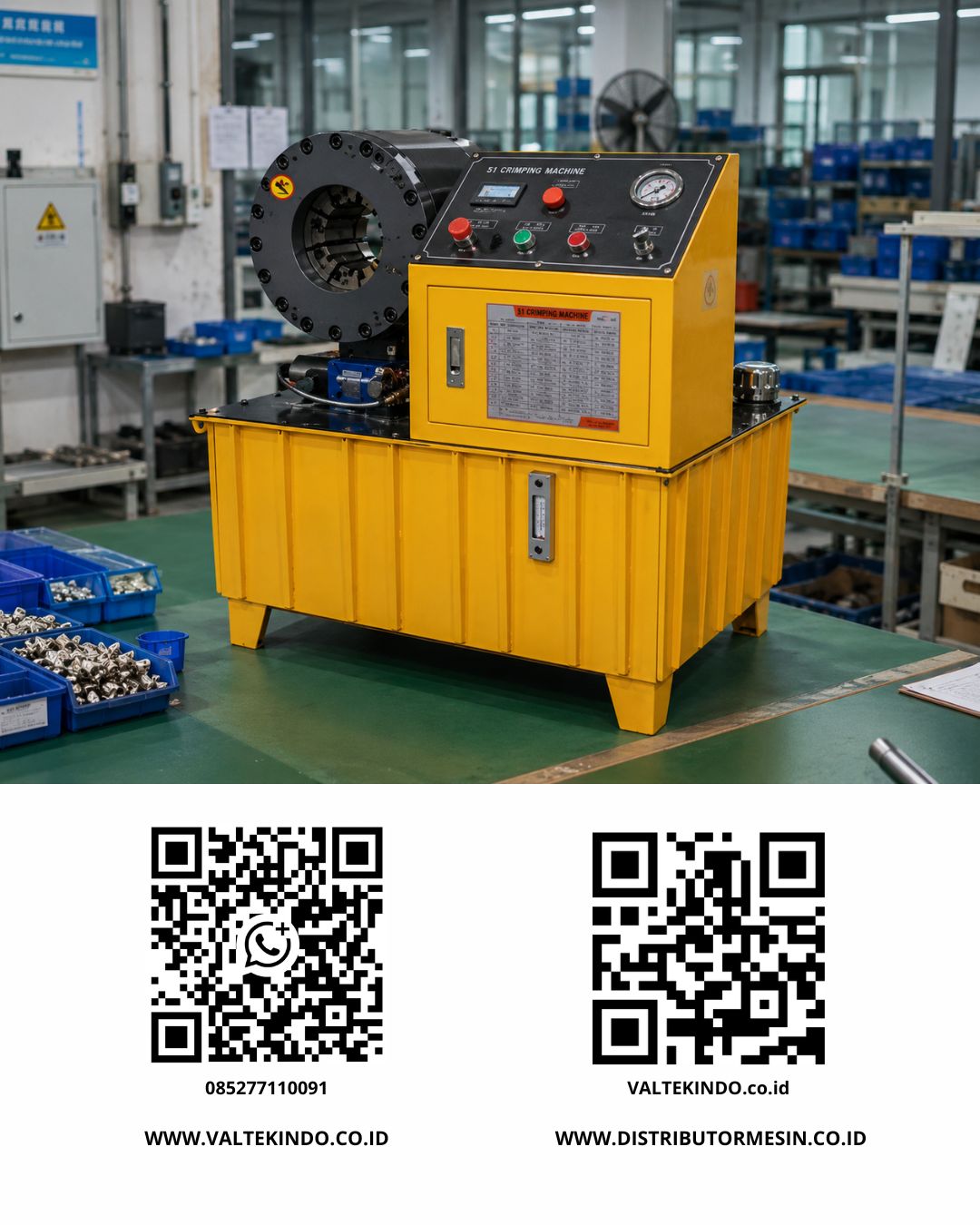
The Guide to Choosing the Right Terminal Crimping Machine for Industrial Needs represents an essential and fundamental foundation for manufacturing practitioners, mechanical engineers, and maintenance technicians dedicated to maintaining the seamless operation and safety of plant facilities. In the modern industrial landscape, hydraulic and pneumatic machineries act as the central nervous system that drives various heavy equipment and conveyor belts. One of the most crucial components within this intricate system is the hose connection or cable terminal that bridges the flow of high-pressure fluids or electrical currents. Without a highly precise connection, the system is at constant risk of experiencing leaks, significant pressure loss, and even potentially fatal workplace accidents. Therefore, investing in an accurate crimping machine is not merely about purchasing a tool, but rather about guaranteeing the absolute reliability of the entire production ecosystem.
Understanding the technical parameters is the first critical step that must not be overlooked by engineering teams. An industrial-grade crimping machine is meticulously designed to reform metal materials (such as ferrules or terminals) to clamp hoses or cables with an absolute degree of tightness, yet without compromising or damaging the integrity of the core material inside. This plastic deformation process demands an immense but fully controlled crimping force. Based on the specifications of cutting-edge industrial machinery, the ideal crimping force range lies between 450 to 640 tons. This figure provides a clear indication that the machine has the capability to handle various levels of material hardness, ranging from brass and aluminum to stainless steel, which is frequently utilized in heavy-duty maritime or mining applications. Excessive force without precision will inevitably crush the connection, while insufficient force will leave microscopic gaps that trigger hydraulic fluid leaks down the line.
Furthermore, the working range is a variable that dictates the level of flexibility the machine offers on the factory floor. A manufacturing facility might deal with small lubrication lines measuring 6 millimeters (about 1/4 inch) in diameter, all the way up to main power transmission hoses reaching 51 millimeters (2 inches) in diameter. Having a single machine unit capable of accommodating this entire spectrum of sizes provides an extraordinary advantage in terms of spatial and budgetary efficiency. Equipped with 13 sets of diversely sized dies, operators can transition from processing small-sized hoses to large-sized hoses in a matter of minutes. Additionally, the availability of a quick-change tool feature allows the swapping of die sets to be executed instantaneously, drastically cutting down downtime and optimizing the operational workflow. This is profoundly vital in workshop or manufacturing environments that operate under strict production deadlines.
The level of precision is the primary differentiating factor between standard tools and professional-grade machinery. In a hydraulic system operating at thousands of PSI (Pounds per Square Inch), a dimensional deviation as small as a strand of hair can result in systemic failure. A superior machine must be able to offer a highly detailed scale accuracy, specifically between 0.01 to 0.02 millimeters. To achieve and consistently monitor this high level of accuracy, the presence of a precise pressure gauge and an intuitive control panel is absolutely mandatory. This control panel allows the operator to input the crimping parameters accurately and monitor the machine's performance in real-time. Consequently, every product produced possesses identical consistency, regardless of whether it is the very first product processed in the morning or the thousandth product at the end of a rigorous work shift.
From the perspective of component durability and fluid mechanics within the machine itself, the oil tank capacity plays a central role. Heavy-duty crimping machines are generally equipped with a hydraulic oil tank with a capacity of approximately 50 liters. This large volume of hydraulic fluid functions not only as a medium for transferring hydraulic power from the pump to the cylinder but also acts as a highly effective heat sink. During intensive, continuous operational processes, internal friction will generate significant heat. An optimal cooling and lubrication system facilitated by an adequate oil volume will prevent overheating phenomena, maintain stable fluid viscosity, and ultimately prolong the service life of internal components, including seals, valves, and cylinder pumps.
Shifting to the required power infrastructure, it is highly imperative to consider the electrical compatibility of the machine with the power grid availability at your facility. A machine powered by a 1-phase 220-volt motor offers a remarkably high degree of integration flexibility. Unlike machines that mandate a 3-phase grid—which may require specialized and costly electrical installation overhauls—the 220V power specification allows this machine to be immediately deployed in almost all types of workshops, assembly centers, or even technical testing laboratories without complex electrical infrastructure adjustments. This directly lowers initial implementation costs and accelerates the onboarding process of the heavy equipment into the daily production routine.
As an established industrial machinery distributor, certainty regarding specifications and quality assurance is something that cannot be compromised. For this reason, large-scale industrial institutions usually partner with trusted companies like PT Valtekindo Global Intertek, to ensure that all imported equipment meets factory operational standards and comes with an official warranty that guarantees sustainable after-sales service. This after-sales guarantee is crucial for periodic calibration and the provision of spare parts. For those of you who are planning unit procurement, analyzing the technical literature is an absolute obligation. Therefore, technical planners are highly encouraged to check further details through the crimping machine technical specification brochure which contains in-depth performance curves and mechanical layouts.
Aside from the technical aspects of the tool itself, shifting regulations and national safety standards also compel industries to be more meticulous. Based on the latest manufacturing industry safety standard regulations news, the use of pressurized connections that do not meet the leakage tolerance threshold is now subjected to much stricter supervision to prevent workplace accidents. This implies that a crimping machine operating outside the 0.02 mm accuracy limit has the potential to produce goods that fail to pass national and international Quality Control (QC) certifications.
Overall, determining the most suitable equipment involves a comprehensive blend of understanding technical specifications, tool durability, after-sales technical support, and compliance with modern safety standards. Do not let the productivity and safety of your plant be compromised by an inconsistent connection system or a misguided heavy equipment investment. Ensure that you thoroughly consider the range capacity, micrometer precision level, and tonnage output before initiating any procurement. This investment decision must always refer back to the Guide to Choosing the Right Terminal Crimping Machine for Industrial Needs.
Contact Our Sales Team Today
Looking for high-quality industrial machinery, factory automation solutions, or customized equipment for your business? Our experienced sales team is ready to help you find the right solution, provide technical consultation, and offer the best pricing.
Contact Our Official WhatsApp Sales Team:
- WhatsApp Sales 1: 085222110091
- WhatsApp Sales 2: 085277110091
Visit our official websites to explore our complete product catalog, machine operation videos, technical information, and exclusive offers:
PT. Valtekindo Global Intertek is your trusted partner for industrial machinery, processing equipment, recycling systems, laboratory instruments, and factory automation solutions. Contact us today for a free consultation and receive the best solution tailored to your business needs.

Admin
AuthorAdmin is a writer on the Valtekindo website, providing informative content about High Quality Industrial Machinery and Testing Machines.
Related post:
- Pharmaceutical Factory Production Escalation Strategy: Why Investing in an Automatic Capsule Filling Machine is the Most Crucial Business Decision
- High-Precision Wire Cut EDM Technology in 2026: The Ultimate Solution for Mold Making, Stamping Dies, and Automotive Component Fabrication Without Thermal Distortion
- 2026 Automated Carton Sealer & Erector Investment Guide: End-of-Line Automation Strategies for Industrial Plant Efficiency