Factory Automation: Why an Automatic Sewing Machine is a Smart Investment?
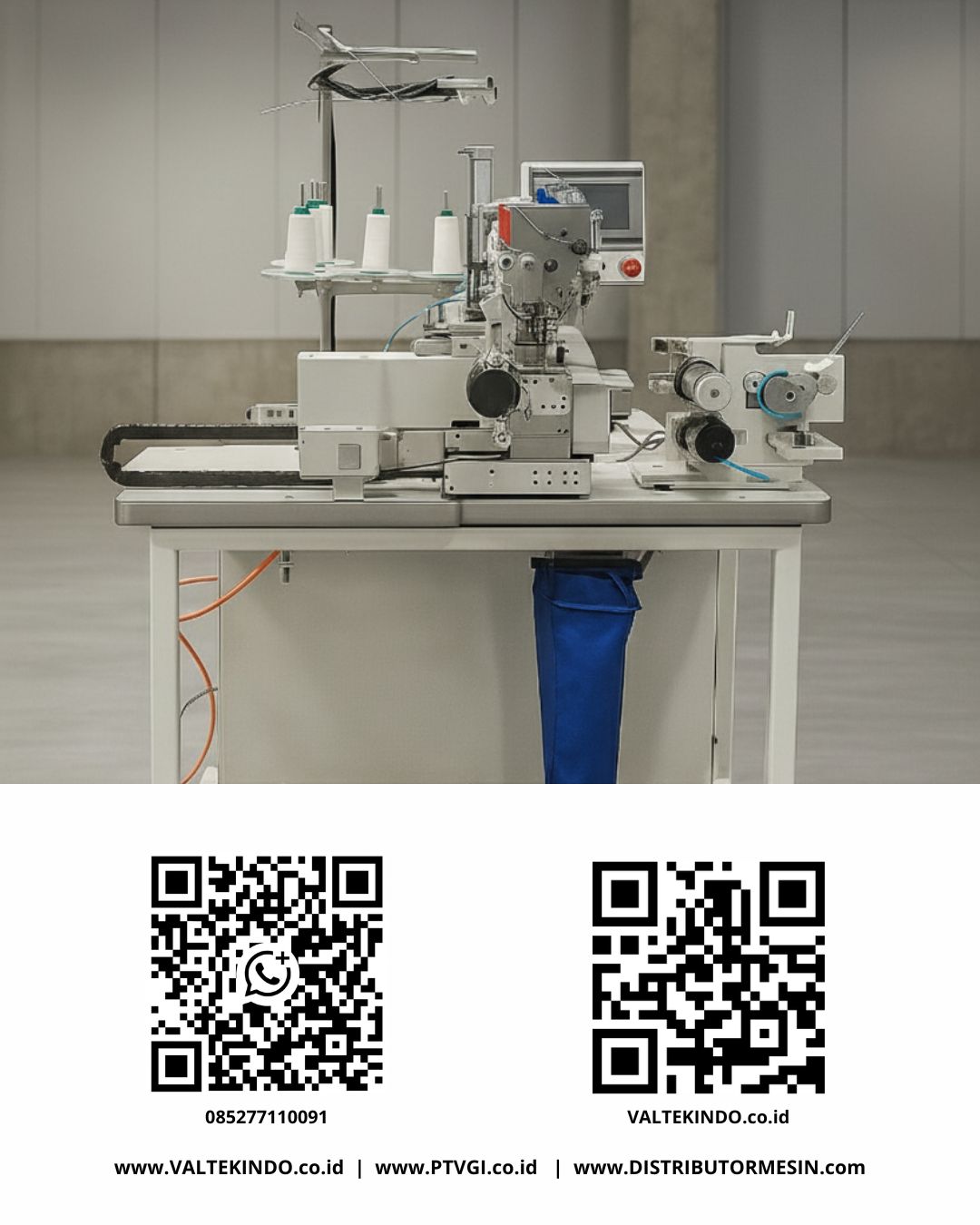
Amidst a rapidly evolving global manufacturing landscape, the garment and textile sector faces unprecedented pressure. The demands of fast fashion, rising minimum wages, thinning profit margins, and consumer expectations for perfect, zero-defect quality have become daily challenges.
Factories still relying on manual or semi-manual processes are now at a crossroads: adapt or be left behind. This is where the concept of factory automation—specifically the adoption of automatic sewing machines—transitions from merely being an "option" to a "strategic necessity."
For many business owners, the word "automation" is often synonymous with "high upfront cost." However, this perspective needs to be reassessed. Investing in automated sewing technology is not merely an expense; it is a smart investment with a measurable and significant Return on Investment (ROI). This article will explore in-depth why an automatic sewing machine is a fundamental step toward efficiency, consistency, and long-term profitability for your factory.
Redefining the "Automatic Sewing Machine"
First, it's crucial to understand what "automatic sewing machine" means in the modern industrial context. This is no longer just a machine with an automatic thread trimmer or digital speed control.
A modern automatic sewing machine, or an automated sewing work-cell, is an integrated system capable of performing a complex series of tasks with minimal operator intervention. This includes:
- Automatic Material Feeding: Advanced sensors and mechanisms precisely feed fabric or components (like elastic) into the machine.
- Programmed Pattern Sewing: The machine follows complex digital patterns, controlled by a PLC (Programmable Logic Controller), to sew components consistently every time.
- Smart Sensors: Detects fabric edges, thickness, or thread errors, then makes real-time adjustments or stops the machine to prevent defects.
- Multi-Process Functions: Combines multiple steps, such as folding, attaching elastic, sewing, and cutting, into one seamless workflow.
Compared to a conventional machine where an operator must manually guide the fabric, stop, pivot, and adjust every piece, the automatic machine handles the majority of these cognitive and motor tasks.
1. A Surge in Productivity and Efficiency
The most powerful argument for automation is the exponential increase in productivity. Automatic sewing machines are designed for speed and continuous operation.
In a manual process, production speed is limited by operator skill and stamina. An operator might take several minutes to complete one complex item. Conversely, an automatic sewing machine can complete the same task in a matter of seconds.
More importantly, one operator who previously handled a single manual machine can now supervise three, four, or even five automatic machines simultaneously. Their job shifts from "sewing" to "production management"—loading new materials, monitoring output, and handling stoppages. This increase in the output-per-operator ratio directly slashes the production cost per unit.
2. Overcoming the Skilled Labor Crisis
The global garment industry faces a significant challenge in finding and retaining skilled sewing operators. This job requires high dexterity, precision, and experience, which is increasingly difficult to find.
Automatic sewing machines cleverly invert this requirement. Instead of needing operators with high-level motor skills, these machines require operators who can be trained to operate a touch-screen interface. Training becomes faster and more standardized.
This reduces the factory's dependence on "star" operators, democratizes the production line, and ensures operations can continue smoothly even with high employee turnover.
3. Quality Consistency: The Ultimate Branding Weapon
In the garment business, especially for export or premium brands, consistency is everything. One uneven stitch, one different elastic tension, or one missed size can lead to the rejection of an entire batch.
Humans, no matter how skilled, are susceptible to fatigue and inconsistency. A stitch sewn at 8 AM might differ in quality from one sewn at 4 PM.
An automatic sewing machine eliminates this human variable. Every single product that comes off the machine is identical. The machine doesn't get tired, lose focus, or have a bad day. The digital program ensures that every pattern, every thread tension, and every cut is a perfect replica of the first.
This consistent quality reduces the defect rate to near-zero, saves on wasted material costs, and, most importantly, builds a solid brand reputation in the eyes of clients and end-consumers.
4. Case Study: High-Precision Niche Automation
The power of automation is seen not just in simple straight stitches, but in complex, technical tasks. Take, for example, the production of underwear or sportswear. The process of attaching an elastic band is one of the most difficult. The elastic must be pulled with precise and consistent tension while being sewn onto a fabric that is often also elastic (like cotton spandex or nylon).
Manually, this is a consistency nightmare. However, a specialized machine like the Fully Automatic Underwear Sewing Machine changes the game.
This machine, distributed by PT Valtekindo Global Intertek, is a perfect example of a smart investment. It comes equipped with features specifically designed to solve this problem:
- Automatic Elastic Tape Guide: Ensures the elastic is fed with consistent tension and millimeter-level precision.
- Automatic Thread Trimming and Foot Lifting: Reduces downtime between cycles.
- Touch Panel Control: Makes it easy for an operator to set programs, monitor production, and make quick adjustments.
By automating this highly technical task, a factory can produce thousands of underwear units with an identical fit and comfort level. This is the level of precision that major brands demand.
5. A Fast and Measurable ROI
Let's do the math. While the initial investment for an automatic machine may seem higher, the savings it generates often pay back the investment cost (payback period) within 12-24 months.
The ROI comes from:
- Reduced Labor Costs: Fewer operators are needed per line.
- Reduced Material Costs: Near-zero defect rates mean no wasted fabric or thread.
- Increased Capacity: More units are produced in the same shift, allowing the factory to take on more orders.
- Reduced Training Costs: The training time for new operators is significantly shorter.
Conclusion: Automation is Not an Option, But a Necessity
The era of "good enough" in garment manufacturing is over. The market demands perfection, speed, and cost-efficiency. Automatic sewing machines are not a threat to the workforce; they are a tool that empowers a business to compete globally.
It is a smart investment because it shifts the factory's focus from "managing labor" to "managing quality and output." It frees up human resources to perform more value-added tasks, such as final quality control, machine maintenance, and product development.
If your factory is still struggling with inconsistency, high labor costs, and tight deadlines, it is time to consider the next strategic move.
Optimize Your Industry Today!
Achieve production efficiency and the highest quality standards with a trusted industrial machinery provider. Explore our wide selection of premium processing and testing equipment at:
Website : valtekindo.co.id
Wesbite : distributormesin.com
Consult your technical needs with our expert sales team:
WhatsApp 1: +62 852-2211-0091
WhatsApp 2: +62 852-7711-0091

Admin
AuthorAdmin is a writer on the Valtekindo website, providing informative content about High Quality Industrial Machinery and Testing Machines.
Related post:
- Pharmaceutical Factory Production Escalation Strategy: Why Investing in an Automatic Capsule Filling Machine is the Most Crucial Business Decision
- High-Precision Wire Cut EDM Technology in 2026: The Ultimate Solution for Mold Making, Stamping Dies, and Automotive Component Fabrication Without Thermal Distortion
- 2026 Automated Carton Sealer & Erector Investment Guide: End-of-Line Automation Strategies for Industrial Plant Efficiency