Exploring Leather Cutting Machine Technologies in the Manufacturing Industry
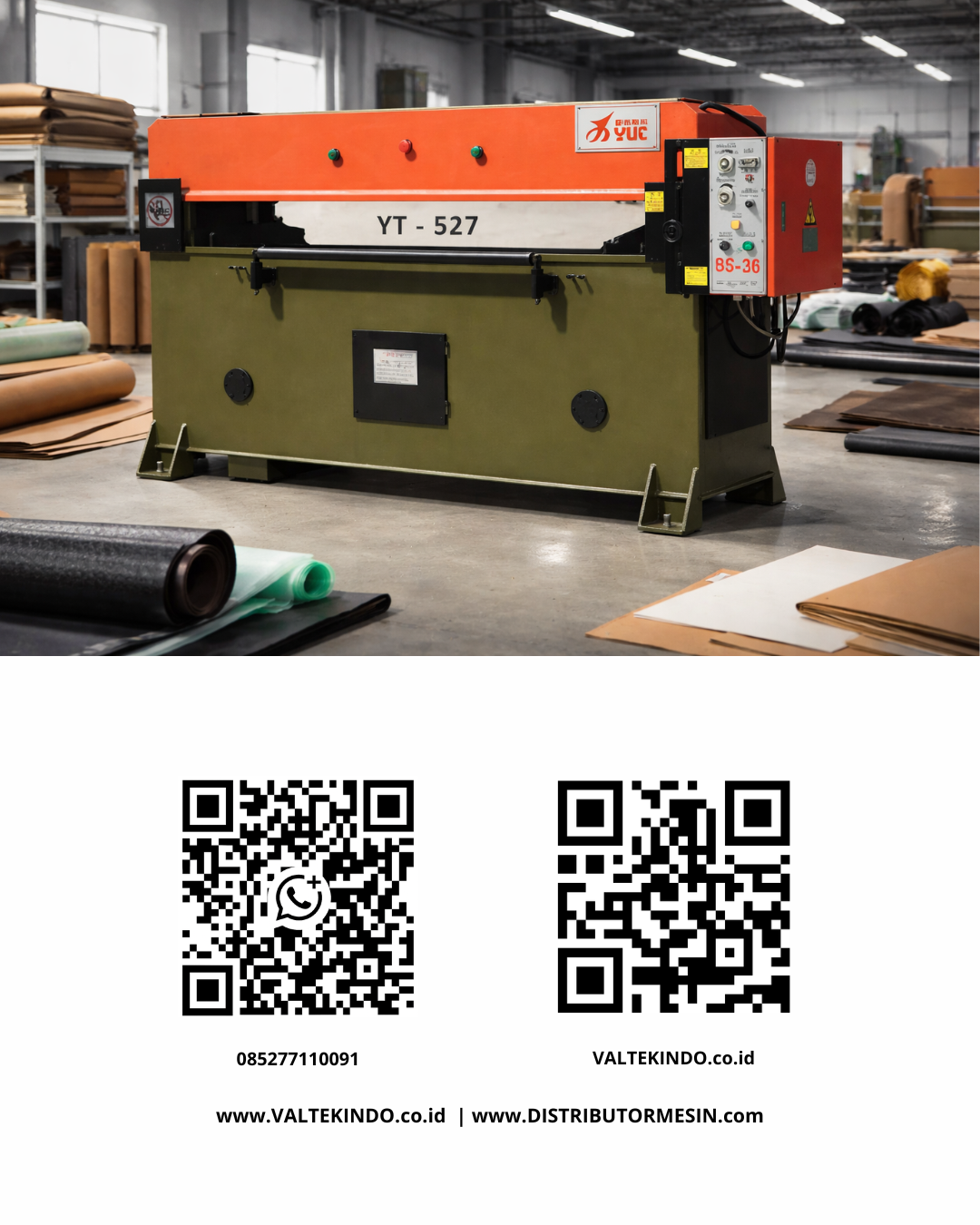
In the leather processing industry—ranging from footwear and handbags to automotive interiors—precision and efficiency are the cornerstones of success. As manufacturing technology evolves, traditional manual cutting methods are rapidly being replaced by advanced machinery designed to minimize material waste and accelerate production cycles. Understanding the various types of leather cutting technologies is essential for manufacturers to determine which equipment best aligns with their production scale.
1. Die Cutting Machines (Hydraulic Press)
Die cutting remains one of the most reliable and widely used techniques in the industry. This method utilizes custom-made metal dies (molds) shaped according to the desired pattern. Hydraulic pressure is then applied to force the die through the leather hides.
A standout variant for large-scale industrial operations is the hydraulic four-column cutting machine. The four-column architecture ensures that pressure is distributed perfectly across the entire cutting area. This stability results in consistent cuts even when processing thick leathers or multiple layers simultaneously. Its primary advantage is high-speed mass production with minimal maintenance.
2. CNC Oscillating Blade Cutting
Unlike die cutting, CNC (Computer Numerical Control) machines do not require physical molds. Instead, they use a high-frequency oscillating blade that follows digital coordinates guided by CAD software.
This technology is ideal for custom production or prototyping, as operators can change patterns instantly by simply uploading a new digital file. Many modern CNC systems also feature integrated scanning cameras that detect natural scars or defects on the leather surface, automatically nesting patterns to avoid damaged areas and maximize material yield.
3. Laser Cutting Technology
Laser cutting uses a focused beam of light to vaporize the leather along a programmed path. The main benefit of laser technology is its ability to execute incredibly intricate designs and perforations that are impossible to achieve with physical blades. Furthermore, the heat from the laser cauterizes the edges of the leather, preventing fraying. However, manufacturers must ensure robust ventilation systems are in place to manage the smoke generated during the process.
4. Swing Arm Clicker Press
For smaller workshops or leather craft businesses, the swing arm press is often the preferred choice. It features a heavy-duty arm that swings over a cutting table. The operator places a die on the leather, swings the arm into position, and triggers the press. While it occupies less floor space and consumes less power than four-column machines, it still offers significantly higher precision and force than manual hand-cutting.
Challenges in Leather Cutting
Cutting leather is more complex than cutting synthetic fabrics. As a natural material, leather possesses non-uniform characteristics; some areas are more elastic, while others are more rigid. Consequently, selecting the right industrial machinery technology requires careful consideration of material thickness, daily production volume, and pattern complexity.
Implementing automated machinery is not just about speed—it is about resource optimization. Using professional nesting software allows the machine to arrange patterns so efficiently that "scrap" material is kept to an absolute minimum. This directly reduces production costs and enhances the overall profitability of the manufacturing line.
Optimize Your Industry Today!
Achieve production efficiency and the highest quality standards with a trusted industrial machinery provider. Explore our wide selection of premium processing and testing equipment at:
Website : valtekindo.co.id
Website : distributormesin.com
Consult your technical needs with our expert sales team:
WhatsApp 1: +62 852-2211-0091
WhatsApp 2: +62 852-7711-0091

Admin
AuthorAdmin is a writer on the Valtekindo website, providing informative content about High Quality Industrial Machinery and Testing Machines.
Related post:
- Pharmaceutical Factory Production Escalation Strategy: Why Investing in an Automatic Capsule Filling Machine is the Most Crucial Business Decision
- High-Precision Wire Cut EDM Technology in 2026: The Ultimate Solution for Mold Making, Stamping Dies, and Automotive Component Fabrication Without Thermal Distortion
- 2026 Automated Carton Sealer & Erector Investment Guide: End-of-Line Automation Strategies for Industrial Plant Efficiency