Comparing Mobile Crawler Crushers vs. Stationary Crushers: When to Use Each?
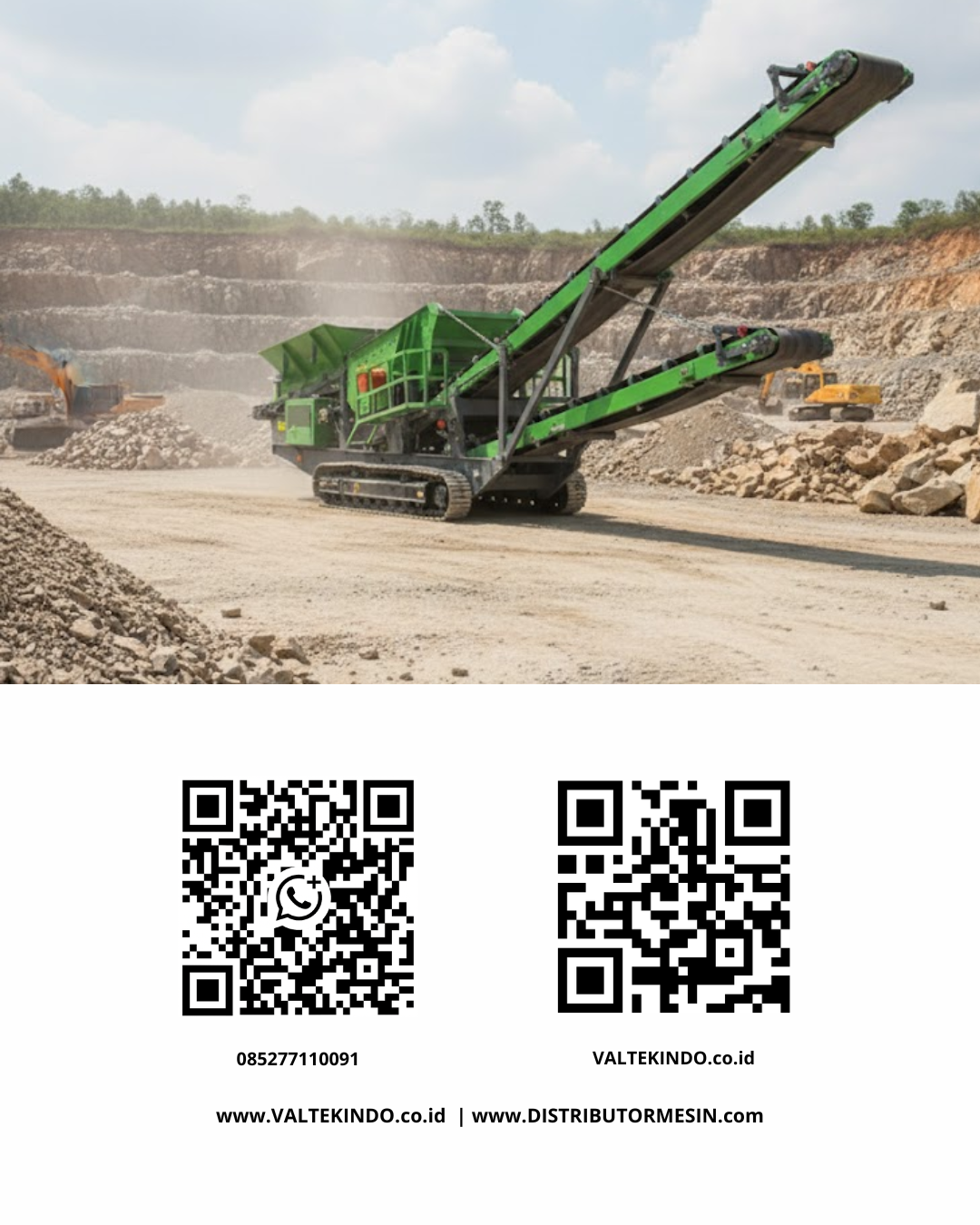
In the construction, mining, and aggregate processing industries, choosing the right crushing unit is a strategic decision that directly impacts cost efficiency and operational speed. A common dilemma faced by project managers is choosing between the high flexibility of a Mobile Crawler Crusher or the heavy-duty stability of a Stationary Crusher.
Both technologies possess distinct mechanical characteristics designed to meet different terrain and production challenges. This article provides an in-depth comparison to help you determine the right choice based on your project's specific requirements.
Understanding the Flexibility of Mobile Crawler Crushers
A mobile crawler crusher is a crushing unit integrated onto a chassis powered by tracks. Its primary advantage lies in high mobility, allowing it to move independently within a project site without the need for towing vehicles or heavy transport once on-site.
These units significantly optimize logistics efficiency. Because the machine can move directly to the raw material piles (the quarry face), operators can drastically reduce the costs associated with hauling material via dump trucks to a central crushing point. Furthermore, the setup time is remarkably fast; unlike permanent systems, a crawler unit is typically ready for operation within hours of arriving at the site. This makes it the premier choice for highway construction projects or land clearing where the work location shifts frequently.
Characteristics and Durability of Stationary Crushers
As the name suggests, stationary crushers are permanently installed on solid concrete foundations. These units are typically part of a large-scale material processing plant designed for long-term operations, generally intended for projects lasting five to ten years or more.
The main advantage of the stationary type is its massive production capacity. These machines are engineered to handle significantly higher volumes of material compared to mobile units. From an operational stability standpoint, because they are mounted statically, machine vibrations are better dampened, and the supporting structures are more robust for handling continuous loads of hard rock. Additionally, these systems allow for easier integration with complex conveyor belts and multiple screening stages within a fixed circuit.
Strategic Comparison: When Should You Choose?
Deciding between these two types of equipment depends heavily on project duration and geographical conditions. If your project has multiple work points spread across a large area or is located in a region with difficult accessibility, a crawler unit is the ideal solution. This technology is highly relevant for contractors who prioritize rapid mobilization.
To ensure maximum workflow, these crushing units are often paired with precision screening solutions that are also mobile-based. This allows for the production of high-quality aggregates directly on-site without the need to transport raw materials to a distant facility.
Conversely, a stationary system is the better choice if you are managing a mine with abundant material reserves at a single fixed location. The primary focus here is achieving the lowest possible cost per ton through stable, continuous mass production. While the initial setup cost is higher due to the need for civil engineering and foundations, the long-term operational costs tend to be more efficient for large-scale industrial needs.
Cost Efficiency and ROI
In terms of initial investment, mobile units may appear more expensive. However, when you factor in the elimination of foundation construction costs and savings on internal haulage fuel, these units are often more economical for short-to-medium-term infrastructure projects. On the other hand, for concrete or cement manufacturing industries that require a consistent daily supply, stationary systems provide a more stable Return on Investment (ROI) over many years.
For industry players operating in Indonesia, understanding equipment specifications is crucial to avoid investment errors. You can explore further details regarding various modern material processing technologies to match machine specifications with the specific type of rock or material to be managed in the field.
Conclusion
There is no absolute winner between mobile crawler crushers and stationary crushers; there is only the tool that is most appropriate for your specific needs. Mobile units excel in flexibility and setup speed, while stationary units excel in volume capacity and long-term production stability.
Optimize Your Industry Today!
Achieve production efficiency and the highest quality standards with a trusted industrial machinery provider. Explore our wide selection of premium processing and testing equipment at:
Website : valtekindo.co.id
Website : distributormesin.com
Consult your technical needs with our expert sales team:
WhatsApp 1: +62 852-2211-0091
WhatsApp 2: +62 852-7711-0091

Admin
AuthorAdmin is a writer on the Valtekindo website, providing informative content about High Quality Industrial Machinery and Testing Machines.
Related post:
- Pharmaceutical Factory Production Escalation Strategy: Why Investing in an Automatic Capsule Filling Machine is the Most Crucial Business Decision
- High-Precision Wire Cut EDM Technology in 2026: The Ultimate Solution for Mold Making, Stamping Dies, and Automotive Component Fabrication Without Thermal Distortion
- 2026 Automated Carton Sealer & Erector Investment Guide: End-of-Line Automation Strategies for Industrial Plant Efficiency