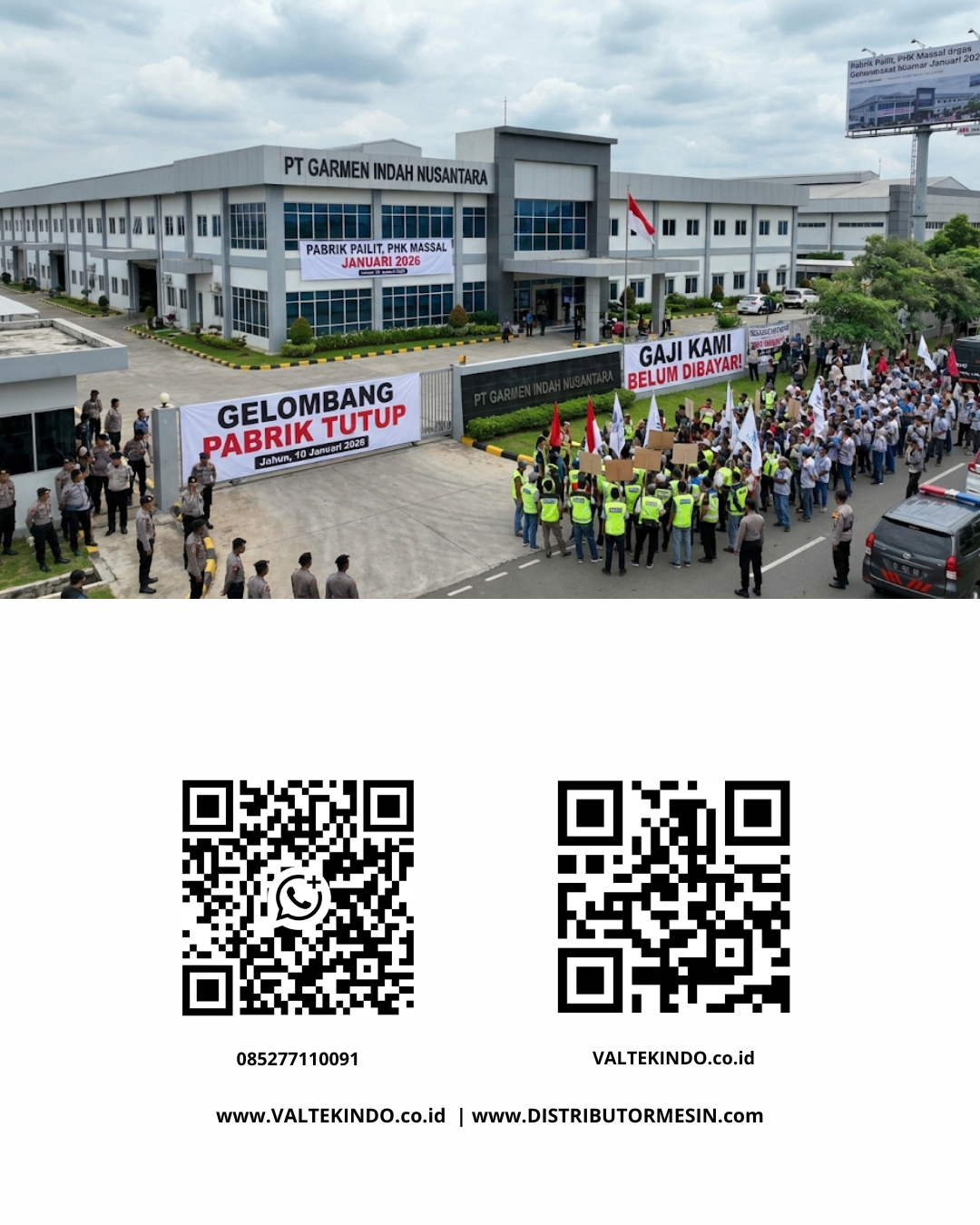
Analysis of the Rising Bankruptcy Trend in the National Garment Industry 2026
Indonesia is currently at a strategic crossroads in its efforts to strengthen national energy security. One of the primary initiatives being pursued is the development of Dimethyl Ether (DME) as a substitute for Liquefied Petroleum Gas (LPG). However, the journey toward energy independence is paved with complex dynamics, ranging from massive investment requirements to the critical calculation of production efficiency, which must compete fiercely with the price of imported fuels in the global market.
The Urgency of DME as an Energy Substitute
The increasing reliance on LPG imports has become a significant burden on the national trade balance. DME has emerged as a viable technical solution because its combustion characteristics are remarkably similar to LPG, allowing it to be used by households and industries with minimal infrastructure modifications.
Technically, DME is produced through the gasification of low-calorie coal, converting raw materials into synthesis gas (syngas), which is then processed into methanol before finally becoming DME. Utilizing domestic resources is expected to buffer the economy against the volatility of international energy prices. To achieve this vision, it is essential to engage with expert industrial technical solution providers to ensure the long-term operational sustainability of these complex production facilities.
The Dilemma: Production Efficiency vs. Investment Value
One of the most significant hurdles in DME investment is the massive Capital Expenditure (CAPEX). Building coal downstreaming facilities requires cutting-edge technology and a massive infrastructure footprint. On the other hand, Operating Expenditure (OPEX) is heavily influenced by the price of raw coal and the efficiency of the conversion technology used.
Production efficiency is the ultimate key to making the selling price of DME competitive. If the conversion process is not optimized, the price per unit of DME energy will far exceed that of imported LPG, which is often influenced by global subsidies or crude oil market fluctuations. Therefore, research and technological development in gasification must be continuously pushed to reach a level of economic feasibility that is attractive to investors.
Competitiveness Against Imported Fuels
The competitiveness of DME is directly challenged by the price stability of international LPG. When global oil prices are low, the economic value of DME projects tends to decrease because the price gap with LPG becomes negligible. This challenge is further compounded by the fact that LPG infrastructure in Indonesia is already mature and widespread.
For DME to compete effectively, consistent regulations and a pricing formula that provides certainty for project developers are required. Furthermore, product quality standardization is a non-negotiable aspect. Every liter of DME produced must undergo rigorous testing to ensure its caloric value and safety. In this phase, the utilization of high-precision oil and gas laboratory testing equipment is crucial to verify chemical compositions and ensure that the final product meets both government standards and international market requirements.
Technical Aspects and Quality Control
The transition from imported energy to domestic alternatives like DME requires thorough technical validation. Laboratories play a vital role in monitoring every stage of production, from gasification characteristics to final purification. Without accurate data analysis, the risk of operational failure or product specification mismatches increases, which could ultimately jeopardize the large-scale investments already made.
Regular testing of physical and chemical parameters is the only way to guarantee that the significant investment in DME projects is not wasted due to quality issues. This includes testing the corrosivity against storage tank materials and pipeline components, given that the chemical properties of DME differ from pure hydrocarbons.
Conclusion and Future Outlook
The future of DME investment in Indonesia depends heavily on the harmony between government policy, technological efficiency, and the availability of reliable supporting tools. While the challenges are substantial—particularly in facing the price volatility of imported energy—the long-term benefits of energy sovereignty and foreign exchange savings remain the primary motivations.
The success of these projects is determined not only by the amount of capital invested but also by precision in technical execution and the sharpness of laboratory analysis to produce an alternative energy source that is high-quality, efficient, and sustainable for the general public.
Optimize Your Industry Today!
Achieve production efficiency and the highest quality standards with a trusted industrial machinery provider. Explore our wide selection of premium processing and testing equipment at:
Website : valtekindo.co.id
Website : distributormesin.com
Consult your technical needs with our expert sales team:
WhatsApp 1: +62 852-2211-0091
WhatsApp 2: +62 852-7711-0091

Admin
AuthorAdmin is a writer on the Valtekindo website, providing informative content about High Quality Industrial Machinery and Testing Machines.
Related post:
- Pharmaceutical Factory Production Escalation Strategy: Why Investing in an Automatic Capsule Filling Machine is the Most Crucial Business Decision
- High-Precision Wire Cut EDM Technology in 2026: The Ultimate Solution for Mold Making, Stamping Dies, and Automotive Component Fabrication Without Thermal Distortion
- 2026 Automated Carton Sealer & Erector Investment Guide: End-of-Line Automation Strategies for Industrial Plant Efficiency